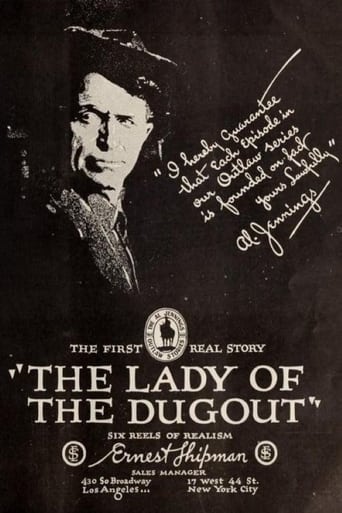
Frank Jennings
Actor
- Active
- 1918-1918
Films 1
About Frank Jennings
Frank Jennings is a very obscure silent-era screen performer whose surviving credit trail places him in at least one known feature, The Lady of the Dugout (1918). Beyond that single film appearance, reliable biographical information about his life, training, and later career is scarce in readily available historical sources, which is common for many minor actors of the early motion-picture era. His filmography suggests that he worked during the late silent period, a time when many performers moved between stage and screen or appeared briefly in regional and independent productions rather than building long, heavily documented studio careers. Because of the limited archival record, it is difficult to confirm whether he continued acting after 1918 or whether he retired from the business shortly thereafter. No dependable evidence has surfaced regarding his birth, death, family background, or personal life, and it is possible that he was one of many working actors whose contributions were recorded only in cast lists and contemporary film ads. Even so, his presence in The Lady of the Dugout places him among the many supporting players who helped populate the silent western and melodrama landscape of the 1910s. For film historians, Jennings is best understood as a documented but little-known participant in early American cinema rather than as a widely recognized star.
More about Frank Jennings
In film history
Frank Jennings does not appear to have left a large public footprint in film history, but his documented presence in an early silent feature is part of the broader cultural record of American cinema's formative years. Performers like Jennings were essential to the functioning of the silent-era industry, especially in westerns, melodramas, and independent pictures that depended on large casts of supporting players to create believable frontier or domestic worlds. Although he is not known to have shaped popular culture in the way major stars did, his work contributes to the surviving mosaic of early screen acting and production practices. For historians and database researchers, even a single verified credit can be valuable evidence of the breadth of the silent-era workforce.
Later reputation
Jennings's legacy is primarily archival: he stands as one of the many early film actors whose careers are only faintly visible through surviving credits and period trade references. In silent cinema history, such figures matter because they remind us that the industry was built not only by marquee names but also by countless supporting performers whose names may now be obscure. His name preserved in cast records helps document the personnel and casting networks of 1910s filmmaking. As a result, his lasting significance lies in historical completeness rather than celebrity, making him a small but real part of cinema's early record.
Influence
There is no evidence that Frank Jennings directly influenced later actors or directors in a traceable or documented way. His influence is best understood indirectly, as part of the collective body of early screen performers who established the conventions of silent-era supporting acting. Those conventions included expressive physicality, readable gestures, and clear visual storytelling, all of which became foundational to cinema acting before synchronized sound. Jennings's surviving credit thus places him within the broader lineage of performers who helped define the medium's early performance vocabulary.
Off screen
No reliable biographical record has been located for Frank Jennings that confirms marriages, children, residences, or other personal details. As with many minor silent-era performers, his private life appears not to have been preserved in the surviving mainstream reference sources. Any further claims about his family background or relationships would be speculative and are therefore not included here.
Credits
- Documented screen credit in the silent feature The Lady of the Dugout (1918)
- Participation in early American silent cinema during the World War I era
- Representation of the many supporting and lesser-documented performers who appeared in regional or modestly budgeted productions of the late 1910s
Roles
- Role in The Lady of the Dugout (1918)
Films
- The Lady of the Dugout (1918)
Notes
- Frank Jennings is chiefly identifiable today through his credit in The Lady of the Dugout (1918).
- He appears to have had an extremely brief or at least extremely under-documented screen career.
- No verified birth or death details are commonly available in standard reference sources.
- He is an example of the many silent-era actors whose work survives more in cast lists than in biographies.
- Because his active period is documented only as 1918-1918, he may have been a one-credit performer or simply a performer whose other credits have not survived in accessible records.
- His case illustrates the archival challenges of researching minor figures from the silent film era.
Questions
Who was Frank Jennings?
Frank Jennings was a silent-era film actor known from surviving records for appearing in The Lady of the Dugout (1918). He appears to have been a minor or poorly documented performer whose broader biography has not been preserved in accessible historical sources.
What films is Frank Jennings best known for?
He is best known for The Lady of the Dugout (1918), which is the principal surviving credit associated with his name. No other verified film titles are readily documented in standard reference sources.
When was Frank Jennings born and when did he die?
His birth and death dates are not currently confirmed in reliable sources. Likewise, his birthplace and nationality are not securely documented from the surviving record.
What awards did Frank Jennings win?
No awards or nominations are known for Frank Jennings. He appears to have been a working supporting actor rather than a decorated star of the silent era.
What was Frank Jennings's acting style?
No detailed contemporary description of his acting style has been preserved. Given the era in which he worked, he would likely have performed in the expressive, gesture-driven style typical of silent cinema, but that remains an informed generalization rather than a verified character assessment.
What is Frank Jennings's legacy in film history?
His legacy is mainly archival, as one of the many early film performers whose existence is preserved through cast records and film references. He contributes to the historical completeness of silent cinema studies, even though he does not appear to have achieved star status.