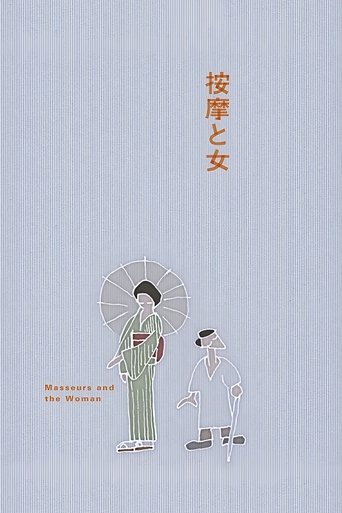
Films
1 film
About Toru Hirose
The 1938 film The Masseurs and a Woman is the only title linked here for Toru Hirose. where he played a supporting role. This film was one of Naruse's early masterpieces that showcased his emerging directorial style focusing on the lives of ordinary people and their struggles. Hirose's brief appearance in this significant work places him within the context of Japan's pre-war cinematic renaissance, a period that saw the emergence of many talented filmmakers and actors who would later become legends. Unfortunately, very little documentation exists about actors who had minor or brief careers during this era, as many records were lost during World War II and the subsequent social upheavals in Japan.
The Craft
On Screen
Based on the era and typical Japanese acting style of the late 1930s, likely employed the subtle, understated performance style characteristic of Japanese cinema, focusing on emotional restraint and nuanced expressions rather than overt dramatic gestures
Milestones
- Appeared in Mikio Naruse's 'The Masseurs and a Woman' (1938)
Best Known For
Iconic Roles
Must-See Films
Working Relationships
Worked Often With
Studios
Why They Matter
Impact on Culture
As a minor actor from Japan's classical cinema era, Toru Hirose's contribution, while small, was part of the larger movement that established Japanese cinema as a significant art form internationally. His participation in a Mikio Naruse film places him within the context of one of Japan's most respected directorial careers, even if his own role was brief.
Lasting Legacy
Toru Hirose represents the countless supporting actors and bit players who were essential to the creation of classic films but whose names have been largely lost to history. His legacy is tied to the preservation of 'The Masseurs and a Woman' as an important work of Japanese cinema history.
Who They Inspired
As a minor actor with only one known credit, there is no documented influence on other performers or filmmakers. However, his contribution to a significant film by a major director represents the collaborative nature of cinema, where even small roles contribute to the overall artistic achievement.
Off Screen
Very little is documented about Toru Hirose's personal life, which was common for supporting actors of this era in Japanese cinema. Many actors from this period came from modest backgrounds and pursued acting as a means of livelihood rather than artistic expression.
Did You Know?
- Appeared in only one known film, 'The Masseurs and a Woman' (1938)
- Worked with director Mikio Naruse, who would later become one of Japan's most acclaimed filmmakers
- The film he appeared in was produced by P.C.L., which later merged to become the famous Toho Studios
- His active years covered only one year according to available records
- The film he appeared in is considered an early masterpiece by Naruse and is still studied by film scholars today
- Many supporting actors from 1930s Japanese cinema have incomplete records due to the destruction of archives during WWII
- The film was one of the first Japanese films to receive international attention at film festivals
Frequently Asked Questions
Who was Toru Hirose?
Japanese with credits in this catalog.' He represents the many supporting actors from Japan's classical cinema era whose careers were brief but contributed to important films.
What films is Toru Hirose best known for?
Titles linked here include The Masseurs and a Woman (1938).
When was Toru Hirose born and when did he die?
Unfortunately, birth and death dates for Toru Hirose are not available in historical records, which was common for minor actors from this era of Japanese cinema. Many personal details of supporting actors from the 1930s were never documented or were lost over time.
What awards did Toru Hirose win?
There are no recorded awards or nominations for Toru Hirose. During the 1930s, the Japanese film industry had fewer formal award ceremonies, and recognition was typically reserved for leading actors and directors rather than supporting performers.
What was Toru Hirose's acting style?
While specific details about his acting style are not documented, actors in 1930s Japanese cinema typically employed a subtle, restrained approach emphasizing emotional depth through minimal gestures and expressions, in contrast to the more theatrical style common in Western films of the era.