Leopold Jessner
Director
Born: March 3, 1878 in Königsberg, East Prussia (now Kaliningrad, Russia) Died: October 13, 1945 Active: 1910s-1945
Films
2 films
About Leopold Jessner
German theater and film director who in the development of German Expressionist cinema during the Weimar Republic. Born in Königsberg, East Prussia, Jessner began his career as a theater actor before transitioning to directing, where he revolutionized German theater with his minimalist, politically charged productions. He became the director of the prestigious Berlin State Theater in 1919, where he developed his signature 'Jessner style' characterized by stark, geometric sets and socially conscious themes. Though his film career was brief, spanning only from 1920 to 1922, it produced some of the most significant works of German Expressionism. His masterpiece 'Backstairs' (1921) exemplified his innovative approach to visual storytelling and social commentary. As a Jewish artist with leftist political views, Jessner was forced to flee Germany after the Nazis rose to power in 1933, first seeking refuge in Austria before eventually settling in the United States. Despite his earlier prominence, he struggled to find work in Hollywood and died in relative obscurity in 1945, though his influence on both theater and cinema continues to be recognized by film scholars and historians.
The Craft
Behind the Camera
Jessner's directing style was characterized by stark, minimalist sets with geometric designs, dramatic use of shadows and lighting, and strong political and social commentary. He employed expressionistic techniques that emphasized psychological states over realistic representation, often using exaggerated angles and abstract set designs. His theater work influenced his film direction, bringing a theatrical sensibility to cinema with carefully choreographed movements and symbolic staging. Jessner was known for his politically engaged approach, using his productions to critique social injustices and explore class struggles.
Milestones
- Director of Berlin State Theater (1919-1925)
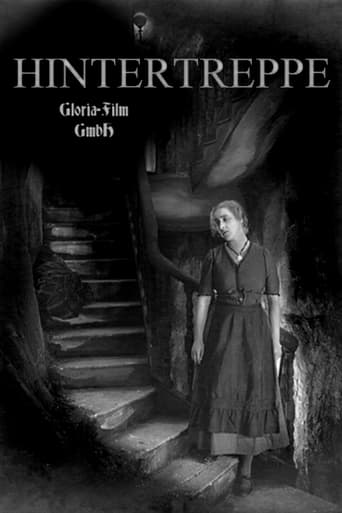
- Directed 'Backstairs' (1921)
- Pioneered 'Jessner style' in German theater
- Influential figure in German Expressionism
- Forced into exile by Nazi regime (1933)
- Revolutionized theatrical production techniques
Best Known For
Must-See Films
Accolades
Special Recognition
- Recognized as
- Cited as a pioneer of German Expressionist cinema
Working Relationships
Worked Often With
Studios
Why They Matter
Impact on Culture
Leopold Jessner had a profound impact on both German theater and cinema during the crucial period of the Weimar Republic. His innovative theatrical techniques, particularly his use of minimalist, geometric sets and politically charged content, revolutionized German stage production and influenced generations of theater directors. In cinema, his brief but significant contribution to German Expressionism helped shape the visual language of the movement, influencing later film noir and psychological thrillers. His work exemplified the artistic flowering of the Weimar period and its engagement with pressing social and political issues. Jessner's forced exile represents the tragic loss of artistic talent due to Nazi persecution, and his story serves as a reminder of the cultural devastation wrought by fascism.
Lasting Legacy
Jessner's legacy endures primarily through his influence on theatrical production techniques and his contribution to German Expressionist cinema. His 'Jessner style' of theater direction, emphasizing abstraction and political engagement, continued to influence European theater long after his death. His film 'Backstairs' remains a classic of German Expressionism and is studied by film scholars worldwide. Though he died in relative obscurity, post-war film historians and theater critics have recognized his crucial role in shaping 20th-century European performing arts. His life story has become symbolic of the artistic diaspora caused by Nazi persecution, and his works are regularly revived in film retrospectives and theater festivals dedicated to Weimar-era art.
Who They Inspired
Jessner influenced numerous filmmakers and theater directors, particularly in the realm of visual storytelling and political theater. His minimalist set designs and use of geometric shapes influenced later directors including Fritz Lang and F.W. Murnau. His approach to using cinema as a vehicle for social commentary paved the way for later political filmmakers. The theatrical techniques he developed influenced the Brechtian theater movement and continue to be taught in drama schools. His expressionistic visual style can be seen in later film noir and psychological thriller genres, particularly in the use of shadow and angular compositions to create psychological tension.
Off Screen
Jessner was born into a Jewish family in East Prussia and maintained his Jewish identity throughout his career, which became a factor in his persecution by the Nazis. He was known for his strong leftist political views and was an active supporter of socialist causes. His personal life was marked by his dedication to the arts and his commitment to using theater and film as vehicles for social change. After fleeing Germany, he struggled financially in exile, particularly during his years in the United States where he found little work in his field.
Education
Studied at the University of Königsberg; received theatrical training through practical experience in provincial theaters
Family
- Unknown - limited records available
Did You Know?
- Despite his brief film career, 'Backstairs' is considered
- Jessner was one of the first Jewish directors to be removed from his position by the Nazis
- His theater productions were known for their distinctive black, white, and red color schemes
- He was a close friend and collaborator of playwright Carl Sternheim
- Jessner's productions often featured staircases as symbolic elements, hence the title 'Backstairs'
- He mentored several actors who later became major stars in Hollywood
- His directing style was sometimes called 'architectural theater' due to his emphasis on set design
- After fleeing to America, he attempted to establish a theater in Los Angeles but was unsuccessful
- Jessner was known for his strict discipline and demanding rehearsals
- His influence on theater was greater than his influence on film due to his longer career in stage production
In Their Own Words
The theater must be a mirror of society, not an escape from it
Simplicity is the greatest sophistication in art
Every angle on stage must have meaning, every shadow must tell a story
We don't need realistic sets, we need truthful emotions
The director's job is to find the truth in the text and make it visible
Frequently Asked Questions
Who was Leopold Jessner?
Influential German theater and on YTB.my. He was known for his innovative theatrical productions and his masterpiece film 'Backstairs' (1921). As a Jewish artist with leftist views, he was forced into exile by the Nazi regime and died in America in 1945.
What films is Leopold Jessner best known for?
Titles linked here include Backstairs (1921), Hintertreppe (1921).
When was Leopold Jessner born and when did he die?
Born March 3, 1878; died October 13, 1945.
What awards did Leopold Jessner win?
Jessner did not receive formal awards during his lifetime, as he was active before the establishment of many major film awards. However, he is posthumously recognized as. His work is studied in film and theater schools worldwide.
What was Leopold Jessner's directing style?
Jessner's directing style was characterized by minimalist, geometric sets, dramatic use of shadows and lighting, and strong political content. He developed what became known as the 'Jessner style' in theater, emphasizing abstraction and psychological truth over realism. His approach influenced both German Expressionist cinema and later theatrical movements.
Why did Leopold Jessner leave Germany?
Jessner was forced to leave Germany in 1933 after the Nazis came to power. As a Jewish artist with known leftist political views, he was immediately dismissed from his position at the Berlin State Theater and faced persecution. He first fled to Austria before eventually settling in the United States, where he struggled to continue his career.
How did Leopold Jessner influence German Expressionism?
Jessner contributed to German Expressionism through his innovative use of visual elements including stark set designs, dramatic shadows, and angular compositions. His film 'Backstairs' exemplified the Expressionist focus on psychological states and social critique. His theatrical techniques also influenced Expressionist filmmakers, helping establish the visual vocabulary of the movement.