
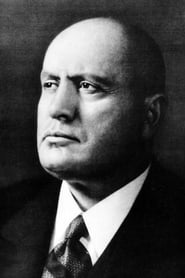
Benito Mussolini
Actor
Born: July 29, 1883 in Dovia di Predappio, Kingdom of Italy Died: April 28, 1945 Active: 1922-1945 (political leadership), archival film appearances throughout this period Birth Name: Benito Amilcare Andrea Mussolini
Films
1 film
About Benito Mussolini
Benito Mussolini was not a traditional film actor but rather the fascist dictator of Italy who ruled from 1922 to 1943. Born in 1883 in Dovia di Predappio, Italy, Mussolini began as a socialist journalist before founding the fascist movement and rising to power as Il Duce. His regime was characterized by authoritarianism, nationalism, and suppression of political opposition. Mussolini heavily utilized propaganda, including cinema, to promote his political agenda and cult of personality. Benito appears in numerous newsreels and propaganda films that documented his speeches, military parades, and public appearances. His government controlled the Italian film industry, using it as a tool for political indoctrination. Mussolini was captured and executed by Italian partisans in April 1945, marking the end of his brutal regime. Any appearance in 'The Fall of Berlin' (1945) would likely be archival footage used for historical context.
The Craft
Milestones
- Founded the National Fascist Party in 1921
- Became Prime Minister of Italy in 1922
- Established totalitarian regime controlling media including cinema
- Used film industry for propaganda purposes
- Allied with Nazi Germany during World War II
- Overthrown in 1943, executed in 1945
Best Known For
Iconic Roles
Must-See Films
Working Relationships
Worked Often With
Studios
Why They Matter
Impact on Culture
Mussolini's impact on cinema was primarily through his systematic use of film as propaganda. His regime established complete control over the Italian film industry, creating organizations like Istituto LUCE to produce newsreels and documentaries that glorified fascism. He understood cinema's power to shape public opinion and used it to build his cult of personality, showing himself as a strong, decisive leader. Mussolini's propaganda techniques influenced other totalitarian regimes, particularly Nazi Germany. His government also attempted to create a Hollywood-style Italian cinema, though with limited success. The legacy of his cinematic propaganda continues to be studied as an example of how authoritarian regimes manipulate media for political ends.
Lasting Legacy
Mussolini's legacy in cinema history is that of a political figure who weaponized film rather than an artist who contributed to cinematic art. His regime's control over Italian cinema set a precedent for how authoritarian governments can use media for propaganda. The films produced under his rule, while technically sophisticated in some cases, are primarily studied today as historical artifacts of fascist ideology. Mussolini's understanding of cinema's political influence demonstrated the medium's power to shape public perception, a lesson that remains relevant in the study of media and politics. His fall also marked the end of a dark period in Italian cinema history, after which the industry had to rebuild and redefine itself away from fascist control.
Who They Inspired
Mussolini's propaganda techniques influenced other totalitarian leaders, particularly Adolf Hitler, who adapted and expanded upon Mussolini's use of film for political purposes. His methods of creating a leader cult through cinema became a template for authoritarian regimes worldwide. The Italian film industry's structure under fascism also influenced how other governments approached state control of media. Post-war Italian cinema, particularly neorealism, emerged partly as a reaction against the artificial propaganda of the fascist era, with filmmakers like Roberto Rossellini and Vittorio De Sica creating more authentic, democratic cinema in direct opposition to Mussolini's legacy.
Off Screen
Mussolini had a complex personal life marked by multiple relationships. He married Rachele Guidi in 1915, with whom he had five children. However, he also maintained numerous extramarital affairs, most notably with his mistress Clara Petacci, who was executed alongside him. His personal life was often intertwined with his political image, as he projected himself as a virile, family man despite his infidelities. His children were raised in the fascist ideology, with some becoming involved in politics themselves. Mussolini's personal relationships and family dynamics reflected the authoritarian nature of his regime.
Education
Attended teacher training college, worked as elementary school teacher briefly before becoming journalist and political activist
Family
- Rachele Guidi (1915-1945)
Did You Know?
- Mussolini was originally a socialist journalist before founding fascism
- He was nicknamed 'Il Duce' (The Leader) by his followers
- His regime created the Venice Film Festival in 1932 as a propaganda tool
- Mussolini appeared in over 200 newsreels during his rule
- His son Vittorio worked as a film producer under the fascist regime
- Mussolini was captured while attempting to escape to Switzerland disguised as a German soldier
- His final execution was filmed and photographed, with images widely distributed
- The Vatican signed the Lateran Treaty with Mussolini's government in 1929
- He initially opposed Hitler before forming the Rome-Berlin Axis
- Mussolini's body was displayed publicly in Milan after his execution
In Their Own Words
All within the state, nothing outside the state, nothing against the state.
It is better to live one day as a lion than 100 years as a sheep.
The truth is that men are tired of liberty.
Democracy is beautiful in theory; in practice it is a fallacy.
We become strong, I feel, when we have no friends upon whom to lean, or to look to for moral guidance.
Frequently Asked Questions
Who was Benito Mussolini?
Benito Mussolini was the fascist dictator of Italy who ruled from 1922 to 1943, founding and leading the National Fascist Party. He was not a professional actor but appeared in numerous propaganda films and newsreels that promoted his political agenda and cult of personality as 'Il Duce'.
What films is Benito Mussolini best known for?
Titles linked here include Various Italian newsreels (1922-1945), Propaganda films documenting fascist rallies.
When was Benito Mussolini born and when did he die?
Born July 29, 1883; died April 28, 1945.
What awards did Benito Mussolini win?
As a political leader rather than a film artist, Mussolini did not receive film industry awards. His regime did, however, establish cultural institutions like the Venice Film Festival and controlled the Italian film industry through organizations like Istituto LUCE.
How did Mussolini influence cinema?
Mussolini's influence on cinema was primarily through his systematic use of film as propaganda. His regime established complete state control over the Italian film industry, using it to promote fascist ideology and build his cult of personality. This approach influenced other totalitarian regimes and demonstrated cinema's power as a political tool.