
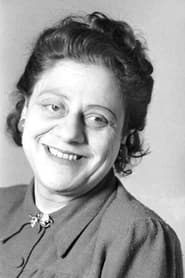
Annemarie Hase
Actor
- Active
- 1923-1923
Films 1
About Annemarie Hase
Annemarie Hase was a German screen actor associated with the silent-film era, and she is documented in surviving filmographies primarily for her appearance in the 1923 production The Mysteries of a Hairdresser's Shop. Like many performers from early German cinema, her recorded screen career is fragmentary, and only a limited number of verified credits have survived in widely accessible reference sources. She worked during a period when the German film industry was one of the most artistically important in the world, but available evidence suggests that her on-screen career was brief and may have been supplemented by stage work or other performance activity that is not fully preserved in current film histories. Because of the scarcity of archival biographical data, details of her upbringing, training, and later life remain uncertain. Her filmography places her among the many actors whose names appear in the credits of early Weimar-era productions but whose personal histories have been only partially reconstructed by researchers. Even with limited documentation, her credit helps preserve the record of the diverse ensemble of performers who contributed to the silent-era German screen.
More about Annemarie Hase
On screen
No detailed contemporary criticism of Annemarie Hase's performance style is readily documented in surviving reference material. As a silent-era actor, her work would have relied on expressive facial movement, body language, and visual clarity rather than spoken dialogue. Beyond that general context, there is not enough verified information to describe a distinctive, individual acting technique with confidence.
In film history
Annemarie Hase's cultural importance lies less in a large surviving body of work than in what her documented credit reveals about the breadth of talent active in early German silent cinema. Performers like Hase were part of the large creative workforce that supported the growth of Weimar film culture, even when their names did not become widely famous. Her surviving credit helps historians and database researchers reconstruct production casts more accurately, which is especially important for films from the silent era where records are often incomplete or inconsistent. In this sense, her contribution is a small but meaningful part of the historical record of European cinema. She also stands as an example of the many actors whose careers can only be partially recovered, yet whose presence mattered to the texture of early film production.
Later reputation
Her legacy is primarily archival: she remains part of the documented cast history of a 1923 silent film and thus belongs to the wider memory of German cinema's formative years. For film historians, even a brief and sparsely recorded career can be valuable because it helps confirm production personnel and enrich the historical understanding of silent-era casts. Annemarie Hase's name endures where many performers of the period have been lost to incomplete records, which gives her a modest but real place in film history. She is representative of the numerous early cinema actors whose work is preserved more in credits and catalogues than in full biographical narratives.
Influence
There is no verified evidence that Annemarie Hase directly influenced later actors or directors in a documented, traceable way. Her influence is best understood indirectly, through her participation in the professional culture of early German silent film. By contributing to the ensemble work of the era, she formed part of the performance tradition that later historians use to study acting styles, casting practices, and production networks in Weimar cinema.
Off screen
Very little reliably documented personal information survives about Annemarie Hase in readily accessible film reference sources. Her family background, marital history, and private life are not clearly recorded in the standard filmographies and databases available for early German cinema. No verified biographical account has been widely preserved that would allow a more detailed reconstruction of her life outside the screen.
Education
Unknown; no verified educational background is readily available in surviving reference sources.
Credits
- Appeared in the 1923 silent film The Mysteries of a Hairdresser's Shop, the principal verified screen credit associated with her name.
- Worked during the Weimar-era silent film period, when German cinema was internationally influential and artistically innovative.
- Represents the many lesser-documented performers whose credits survive in film records even when personal biographical details are scarce.
- Her documented screen presence contributes to the surviving cast history of early 1920s German cinema.
Roles
- Performer in The Mysteries of a Hairdresser's Shop (1923)
Films
Notes
- Her best-known surviving screen credit is from 1923, placing her squarely in the silent-film era.
- She is associated with German cinema rather than Hollywood or the Anglo-American studio system.
- The scarcity of biographical data about her is typical of many lesser-known performers from early 20th-century film history.
- Her documented film work appears to be very limited, suggesting either a short screen career or incomplete surviving records.
- She is a useful example of how film archives preserve cast names even when personal details are lost.
- Her name is sometimes encountered in film databases without extensive biographical notes, reflecting the patchy survival of silent-era documentation.
Questions
Who was Annemarie Hase?
Annemarie Hase was a German actor associated with the silent-film era. She is best documented for her appearance in The Mysteries of a Hairdresser's Shop (1923), though surviving biographical information about her life is very limited.
What films is Annemarie Hase best known for?
She is best known for The Mysteries of a Hairdresser's Shop (1923), which is the principal verified screen credit currently associated with her. Because her documented filmography is extremely small in surviving reference sources, additional titles may be absent from accessible records.
When was Annemarie Hase born and when did she die?
Her birth and death dates are not currently verified in accessible classic-cinema reference sources. The surviving record is too sparse to establish exact dates and places with confidence.
What awards did Annemarie Hase win?
No awards or nominations are currently documented for Annemarie Hase in the available surviving sources. This is common for many silent-era performers whose careers were briefly recorded but not widely publicized.
What was Annemarie Hase's acting style?
There is no detailed critical description of her individual style in the surviving record. As a silent-film performer, her work would have depended on expressive gestures, facial nuance, and visual storytelling rather than spoken dialogue.
What is Annemarie Hase's legacy in film history?
Her legacy is mainly historical and archival: she remains part of the documented cast record of an early German silent film. That makes her a small but meaningful presence in the reconstruction of Weimar-era cinema and its performers.