Victor Turin
Director
Born: 1895 in Russia Died: 1944 Active: 1929-1930s Birth Name: Viktor Turin
Films
1 film
About Victor Turin
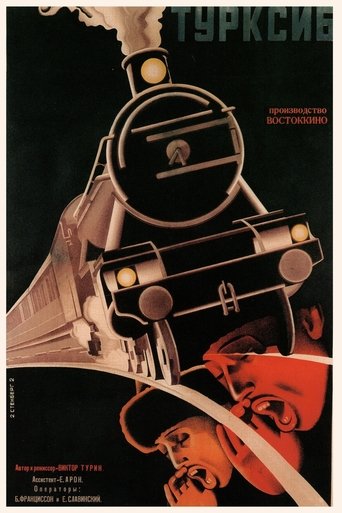
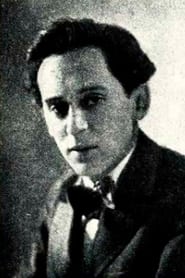
Soviet filmmaker of the late silent era, best known for his documentary masterpiece 'The Steel Road' (1929). Born in Russia, Turin emerged as part of the avant-garde Soviet cinema movement that sought to capture the industrialization and social transformation of the young Soviet state. His most celebrated work, 'The Steel Road,' documented the monumental construction of the Turkestan-Siberian Railway, exemplifying the Soviet documentary tradition that emphasized collective labor and technological progress. Turin's filmmaking approach was influenced by the montage theories of Eisenstein and Vertov, though he developed his own distinctive visual language focused on industrial subjects. Despite his significant contribution to Soviet documentary cinema, Turin's career was relatively brief, with 'The Steel Road' standing as his most recognized and influential work. His films were characterized by their epic scale, innovative camera techniques, and celebration of Soviet industrial achievements. Turin's work represents an important chapter in the history of documentary filmmaking and Soviet cinema's golden age.
The Craft
Behind the Camera
Victor Turin's directing style was characterized by epic scale, innovative montage techniques, and a focus on industrial and construction subjects. He employed dynamic camera movements, dramatic compositions, and rhythmic editing to capture the grandeur of Soviet industrial projects. His approach combined documentary realism with artistic flourishes, creating a cinematic language that celebrated technological progress and collective labor. Turin's work often featured sweeping landscape shots combined with intimate details of human labor, emphasizing both the monumental scale and human element of Soviet construction achievements.
Milestones
- Directed 'The Steel Road' (1929)
- Pioneered Soviet industrial documentary filmmaking
- Contributed to the Soviet montage cinema movement
- Documented major Soviet construction projects
Best Known For
Must-See Films
Accolades
Special Recognition
- Recognized as a significant contributor to Soviet documentary cinema
- His film 'The Steel Road' is studied in film schools as a classic of documentary filmmaking
Working Relationships
Worked Often With
Studios
Why They Matter
Impact on Culture
Victor Turin's work, particularly 'The Steel Road,' had a significant impact on the development of documentary cinema both within and beyond the Soviet Union. His film exemplified the Soviet approach to documentary filmmaking that combined artistic innovation with ideological messaging, influencing documentary filmmakers worldwide. Turin's techniques for capturing industrial processes and large-scale construction projects became reference points for subsequent documentary work. His films helped establish the visual language of industrial cinema and demonstrated how documentary could serve both artistic and political purposes. 'The Steel Road' remains an important historical document of Soviet industrialization and proof of the power of cinema to capture and shape social transformation.
Lasting Legacy
Victor Turin's legacy endures primarily through his masterpiece 'The Steel Road,' which is recognized as a classic of world documentary cinema. The film continues to be studied by film scholars and screened at film festivals and retrospectives of Soviet cinema. Turin's work represents an important chapter in the history of documentary filmmaking, demonstrating how the medium can capture the scale and significance of major human endeavors. His approach to filming industrial subjects influenced subsequent generations of documentary filmmakers working in similar genres. Though his career was brief and his body of work limited, Turin's contribution to the development of documentary cinema and Soviet film art remains significant.
Who They Inspired
Turin influenced the development of industrial and construction documentary filmmaking, demonstrating how cinema could capture the drama and significance of large-scale engineering projects. His work showed subsequent filmmakers how to combine technical documentation with artistic vision, creating films that were both informative and emotionally powerful. His techniques for shooting and editing construction sequences became reference points for documentary filmmakers worldwide. Turin's success in balancing artistic innovation with ideological requirements provided a model for other filmmakers working within state-sponsored film systems.
Off Screen
Limited information is available about Victor Turin's personal life. As a Soviet filmmaker during the early decades of the Soviet Union, he worked within the state-controlled film industry, which significantly influenced his career trajectory and creative choices. His life and career were shaped by the political and cultural demands of the Soviet system, which emphasized films that promoted socialist ideals and celebrated Soviet achievements.
Education
Limited information available about his formal education, though he was clearly trained in cinematic techniques and was influenced by the major Soviet film theorists of his time.
Did You Know?
- 'The Steel Road' is also known by its Russian title 'Stalnoy put' and alternative title 'Turksib'
- The film documented the construction of the 1,447-mile Turkestan-Siberian Railway
- Turin used innovative camera techniques to capture the massive scale of the railway construction
- The film took over a year to shoot, covering the entire construction process
- 'The Steel Road' was one of the first films to comprehensively document a major engineering project
- The film exemplifies the Soviet fascination with industrial progress and technological achievement
- Turin's work was part of a broader Soviet cultural movement celebrating the Five-Year Plans
- The film's editing style reflects the influence of Soviet montage theory
- Despite its documentary nature, the film contains dramatic elements and artistic compositions
- The film was distributed internationally and helped showcase Soviet industrial achievements to global audiences
Frequently Asked Questions
Who was Victor Turin?
Soviet filmmaker active in the late 1920s, best known for directing 'The Steel Road' (1929), a documentary about the construction of the Turkestan-Siberian Railway. He was part of the avant-garde Soviet cinema movement that combined artistic innovation with documentary realism.
What films is Victor Turin best known for?
Titles linked here include The Steel Road (1929), Turksib (1929).
When was Victor Turin born and when did he die?
Born 1895; died 1944.
What awards did Victor Turin win?
While specific awards for Victor Turin are not well-documented, his film 'The Steel Road' has been recognized as a significant contribution to documentary cinema and continues to be studied in film schools as a classic of the genre.
What was Victor Turin's directing style?
Turin's directing style combined documentary realism with artistic innovation, using montage techniques and dynamic camera work to capture industrial subjects. He emphasized both the epic scale of construction projects and the human labor involved, creating films that were both informative and visually compelling.
What is the significance of 'The Steel Road'?
'The Steel Road' is significant as a documentary that captured one of the Soviet Union's most ambitious engineering projects. It exemplifies the Soviet approach to documentary filmmaking that combined artistic innovation with ideological messaging and influenced subsequent documentary filmmakers worldwide.
How did Victor Turin influence cinema?
Turin influenced the development of industrial and construction documentary filmmaking, demonstrating techniques for capturing large-scale engineering projects. His work showed how documentary could combine technical documentation with artistic vision, influencing filmmakers working in similar genres.