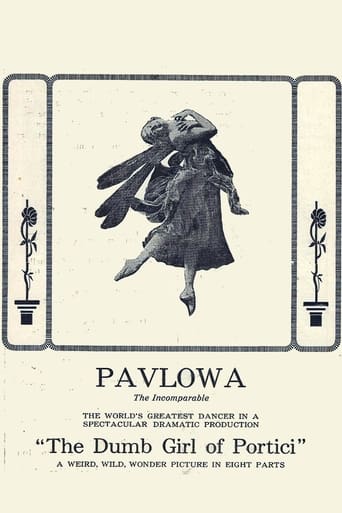

Anna Pavlova
Actor
Born: January 31, 1881 in St. Petersburg, Russia Died: January 23, 1931 Active: 1899-1931 (dance), 1916 (film) Birth Name: Anna Matveyevna Pavlova
Films
1 film
About Anna Pavlova
Anna Pavlova was born in St. Petersburg, Russia in 1881 and rose to become and influential ballerinas of all time. After training at the Imperial Ballet School, she joined the Mariinsky Theatre where her exceptional talent quickly garnered international recognition. In 1911, Pavlova formed her own dance company and embarked on extensive worldwide tours, bringing the art of ballet to audiences who had never before experienced it. Her most famous solo, 'The Dying Swan,' was choreographed specifically for her by Michel Fokine and became her signature piece. In 1916, she made her film debut in 'The Dumb Girl of Portici,' an American silent film that showcased her remarkable dance abilities on screen. Despite her brief cinematic career, this film remains a significant document of her artistic legacy. Pavlova continued performing relentlessly until her death in 1931, leaving an indelible mark on both the dance world and briefly, the history of cinema.
The Craft
On Screen
Primarily a dancer, her screen presence in 'The Dumb Girl of Portici' showcased her classical ballet technique and dramatic expressiveness through movement rather than dialogue. Her performance style emphasized graceful, flowing movements and emotional storytelling through dance, typical of the silent era's emphasis on physical expression.
Milestones
- Graduated from Imperial Ballet School (1899)
- Joined Mariinsky Theatre as principal dancer
- Created 'The Dying Swan' solo (1907)
- Formed her own dance company (1911)
- Starred in 'The Dumb Girl of Portici' (1916)
- World tours spanning over 20 years
- Performed over 4,000 concerts during her career
Best Known For
Iconic Roles
Must-See Films
Accolades
Won
- Order of St. Anna (Russia)
- Legion of Honour (France)
Special Recognition
- One of the greatest ballerinas of all time
- International Dance Hall of Fame
- Her name given to the 'Pavlova' dessert (though disputed)
Working Relationships
Worked Often With
Studios
Why They Matter
Impact on Culture
Anna Pavlova revolutionized ballet by making it accessible to global audiences through her extensive world tours, bringing high art to regions that had never experienced classical dance. Her appearance in 'The Dumb Girl of Portici' represented one of the earliest successful crossovers between classical ballet and cinema, helping to bridge the gap between performing arts and the emerging film industry. Pavlova's artistic vision and technical excellence elevated the status of ballet as a serious art form internationally, particularly in countries like the United States, England, Australia, and parts of Asia where she performed. Her influence extended beyond dance into popular culture, as her name became synonymous with grace and artistic excellence, though she was reportedly displeased with the dessert named after her.
Lasting Legacy
Anna Pavlova's legacy endures through her contributions to both the dance world and early cinema. Her interpretation of 'The Dying Swan' remains. The film 'The Dumb Girl of Portici' stands as a valuable historical document capturing one of history's greatest dancers at the peak of her career, providing insight into early 20th-century performance styles. Pavlova's dedication to bringing ballet to international audiences helped establish dance as a global art form and inspired generations of dancers. Her name continues to be associated with artistic excellence and grace, and her influence can be seen in the continued popularity of ballet as both an art form and entertainment medium.
Who They Inspired
Pavlova influenced countless dancers and choreographers through her technical innovations and artistic approach to performance. Her emphasis on emotional expression and storytelling through dance helped shape modern ballet interpretation. Her successful touring model inspired later dance companies to take classical ballet to international audiences. In cinema, her brief but notable film career demonstrated the potential for capturing dance on film, paving the way for later dance films and documentaries. Her artistic philosophy of bringing beauty and art to the masses influenced how performing arts were presented and marketed to broader audiences.
Off Screen
Anna Pavlova was intensely private about her personal life, dedicating herself almost entirely to her art. She married her manager and companion, Victor Dandré, though the exact nature and date of their marriage remains unclear. The couple had no biological children, but they informally adopted a young girl named Anna Pavlova, Jr., who was an orphan they met during their travels. Pavlova was known for her extreme dedication to her craft, often practicing relentlessly and maintaining a strict regimen to preserve her physical abilities. Her personal life was largely overshadowed by her professional commitments and her relentless touring schedule.
Education
Imperial Ballet School, St. Petersburg (graduated 1899)
Family
- Victor Dandré (relationship began around 1900, marriage details unclear)
Did You Know?
- She was reportedly terrified of cameras and only agreed to make 'The Dumb Girl of Portici' after extensive persuasion
- Her famous quote about her deathbed wish was 'Prepare my swan costume'
- She traveled over 500,000 miles during her career, more than any other dancer of her time
- Her last performance was in the Netherlands, where she died of pleurisy shortly after
- She kept swans in her garden at her home in London
- Her feet were unusually arched and flexible, contributing to her unique dancing style
- She never performed in Russia after forming her own company
- Her company included dancers from 16 different nationalities
- She was one of the first artists to understand the importance of international touring
- The famous 'Pavlova' dessert was created in her honor during one of her tours
In Their Own Words
Success depends not on fame or fortune, but on the satisfaction of knowing that you have done your best.
No one can arrive from being talented alone. God gives talent; work transforms talent into genius.
To follow, without halt, one aim: There's the secret of success.
Master technique and then forget about it and be natural.
I do not know what I have done, but I know that I have done my best.
Frequently Asked Questions
Who was Anna Pavlova?
Legendary Russian ballerina who became. She gained international fame through her exceptional technique and artistic expression, particularly in her signature solo 'The Dying Swan.' In 1916, she also appeared in the silent film 'The Dumb Girl of Portici,' making her one of the first classical dancers to bridge the gap between ballet and cinema.
What films is Anna Pavlova best known for?
Titles linked here include The Dumb Girl of Portici (1916).
When was Anna Pavlova born and when did she die?
Born January 31, 1881; died January 23, 1931.
What awards did Anna Pavlova win?
Anna Pavlova received numerous honors during her lifetime, including the Order of St. Anna from Russia and the Legion of Honour from France. While she didn't receive traditional film awards due to her limited cinema work, she was widely recognized as one of the greatest dancers in history and has been posthumously inducted into the International Dance Hall of Fame.
What was Anna Pavlova's acting/directing style?
Anna Pavlova's screen presence in 'The Dumb Girl of Portici' reflected her classical ballet background, emphasizing graceful movement and emotional expression through dance rather than dialogue. Her performance style was characterized by fluid, flowing movements and dramatic storytelling through physical expression, typical of silent era performers who relied on body language to convey emotion. She was not a director but an interpreter of choreography.