
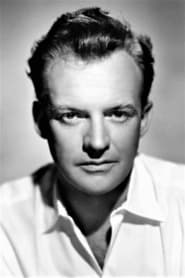
Arthur Kennedy
Actor
Born: February 17, 1914 in Worcester, Massachusetts, USA Died: January 5, 1990 Active: 1940-1989
Films
2 films
About Arthur Kennedy
American actor: five decades, renowned for his intense portrayals of complex, often troubled characters. Born in Worcester, Massachusetts, he developed an interest in acting while studying at Carnegie Mellon University, where he initially pursued journalism before switching to drama. After gaining experience in regional theater and on Broadway, Kennedy made his film debut in 1940 and quickly established himself as one of Hollywood's most reliable character actors. His breakthrough came with his Oscar-nominated performance in 'Champion' (1949), which launched a string of critically acclaimed roles throughout the 1950s. Kennedy was particularly adept at playing ordinary men pushed to extraordinary circumstances, bringing psychological depth and authenticity to every performance. He received five Academy Award nominations for Best Supporting Actor, proof of his consistent excellence and versatility. Later in his career, he found success in European cinema and television, maintaining his reputation as a serious, dedicated actor until his death in 1990.
The Craft
On Screen
Kennedy was known for his method-inspired approach to acting, characterized by emotional intensity and psychological realism. He excelled at portraying morally complex characters with internal conflicts, often playing ordinary men facing extraordinary circumstances. His performances were marked by subtle nuances, naturalistic delivery, and an ability to convey deep emotional states through minimal gestures. Kennedy was particularly skilled at portraying vulnerability and inner turmoil, bringing authenticity to roles that required significant emotional range. He avoided theatricality in favor of grounded, believable performances that emphasized the psychological truth of his characters.
Milestones
- Broadway debut in 'Everywhere I Roam' (1938)
- Film debut in 'City for Conquest' (1940)
- First Academy Award nomination for 'Champion' (1949)
- Five total Oscar nominations without a win
- Golden Globe win for 'Bright Victory' (1951)
- Successful transition to European cinema in the 1960s
- Tony Award nomination for 'Death of a Salesman' (1949)
Best Known For
Iconic Roles
Must-See Films
Accolades
Won
Nominated
- Academy Award for Best Supporting Actor for 'Champion' (1949)
- Academy Award for Best Supporting Actor for 'Trial' (1955)
- Academy Award for Best Supporting Actor for 'Peyton Place' (1957)
- Academy Award for Best Supporting Actor for 'Some Came Running' (1958)
- Academy Award for Best Supporting Actor for 'Elmer Gantry' (1960)
- Tony Award for Best Featured Actor in a Play for 'Death of a Salesman' (1949)
Special Recognition
- Hollywood Walk of Fame star (located at 6652 Hollywood Blvd)
- Arthur Kennedy Theatre at Worcester Academy named in his honor
Working Relationships
Worked Often With
Studios
Why They Matter
Impact on Culture
Arthur Kennedy significantly influenced the evolution of character acting in American cinema, particularly during Hollywood's golden age. His ability to portray complex, morally ambiguous characters helped pave the way for more sophisticated and psychologically nuanced storytelling in mainstream films. Kennedy's work with directors like Elia Kazan contributed to the development of method acting techniques in cinema, influencing subsequent generations of actors. His five Oscar nominations without a win became part of Hollywood lore, often cited in discussions about the Academy's voting patterns. Kennedy's career also demonstrated the viability of American actors finding success in European productions, helping to bridge the gap between Hollywood and international cinema.
Lasting Legacy
Arthur Kennedy's legacy endures through his extensive body of work, particularly his five Oscar-nominated performances that showcased his remarkable range and dedication to his craft. He is remembered as one of Hollywood's most reliable and versatile character actors, capable of elevating any material with his intense, psychologically grounded performances. His influence extends beyond American cinema through his significant contributions to European film productions in the 1960s and 1970s. The Arthur Kennedy Theatre at Worcester Academy stands as a lasting tribute to his impact on the performing arts. Film historians and critics continue to study his performances as examples of method acting at its most effective and subtle.
Who They Inspired
Kennedy's method-inspired approach to acting influenced many actors who came after him, particularly those interested in psychological realism and character-driven performances. His work with directors like Elia Kazan helped establish new standards for naturalistic acting in American cinema. Many contemporary character actors cite Kennedy as an influence for his ability to bring depth and complexity to supporting roles. His dedication to authenticity and emotional truth in performance helped shape the evolution of acting techniques from the studio era to the new Hollywood of the 1960s and 1970s.
Off Screen
Arthur Kennedy married Mary Cheffey in 1938, and their marriage lasted until her death in 1975. They had two children together, Terence and Laurie. Kennedy was known for being intensely private and avoided the Hollywood social scene, preferring to focus on his craft and family. He was a dedicated family man who maintained a relatively low public profile despite his success. After his wife's death, Kennedy lived a quieter life in Connecticut, continuing to work in film and television until his health began to decline. He passed away from cancer on January 5, 1990, at the age of 75.
Education
Carnegie Mellon University (formerly Carnegie Institute of Technology) - studied drama, Worcester Academy - high school education
Family
- Mary Cheffey (1938-1975)
Did You Know?
- Was a skilled amateur boxer before pursuing acting
- Served in the Army Air Corps during World War II
- Was a founding member of the Actors Studio
- Often played characters who were morally conflicted or troubled
- Received five Oscar nominations but never won an Academy Award
- Spent much of the 1960s and 1970s working in European cinema
- Was known for his intense preparation and research for roles
- Originally studied journalism before switching to drama
- Was a close friend and contemporary of Marlon Brando
- His final film role was in 'Signs of Life' (1989)
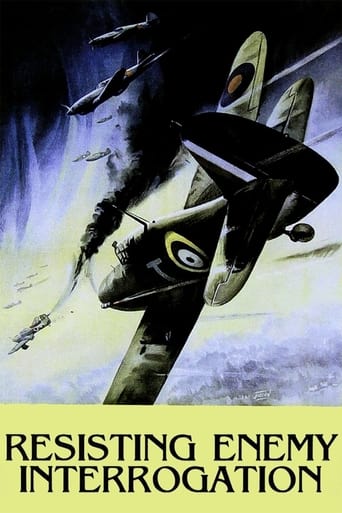
- Appeared in both 'Resisting Enemy Interrogation' (1944) and 'Too Late for Tears' (1949)
- Was nominated for Oscars in five different decades (1940s-1960s)
In Their Own Words
Acting is not about being someone different. It's finding the similarity in what is apparently different, then finding myself in there.
I've always been more interested in the truth of a character than in making him likable.
The camera doesn't lie. It either sees truth or it doesn't. There's no place to hide.
I never thought about being a star. I always thought about being an actor.
Every role is a challenge to find the truth in that character's situation.
Frequently Asked Questions
Who was Arthur Kennedy?
Highly respected American with credits in this catalog. He received five Academy Award nominations for Best Supporting Actor and was renowned for his ability to portray complex, morally ambiguous characters with psychological depth and authenticity.
What films is Arthur Kennedy best known for?
Titles linked here include Champion (1949), Bright Victory (1951).
When was Arthur Kennedy born and when did he die?
Born February 17, 1914; died January 5, 1990.
What awards did Arthur Kennedy win?
While Arthur Kennedy never won an Academy Award despite five nominations, he did win a Golden Globe Award for Best Actor for 'Bright Victory' (1951) and received several other honors including the National Board of Review Award and New York Film Critics Circle Award for 'Champion' (1949). He also has a star on the Hollywood Walk of Fame.
What was Arthur Kennedy's acting style?
Kennedy was known for his method-inspired approach characterized by emotional intensity and psychological realism. He excelled at portraying morally complex characters with internal conflicts, using subtle nuances and naturalistic delivery to convey deep emotional states. His style emphasized authenticity and the psychological truth of his characters over theatricality.
Did Arthur Kennedy work in European cinema?
Yes, Kennedy spent a significant portion of the 1960s and 1970s working in European film productions, appearing in numerous international films that helped expand his career beyond Hollywood and demonstrated his versatility across different film industries and cultures.
Was Arthur Kennedy a founding member of the Actors Studio?
Yes, Arthur Kennedy was one of the founding members of the Actors Studio in 1947, along with other leading actors and directors like Elia Kazan, Lee Strasberg, and Cheryl Crawford, which became a crucial institution for the development of method acting in America.