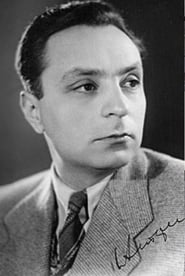
Iosif Kheifits
Director
Born: January 17, 1905 in Minsk, Russian Empire (now Belarus) Died: April 24, 1995 Active: 1928-1985 Birth Name: Iosif Yevseyevich Kheifits
Films
2 films
About Iosif Kheifits
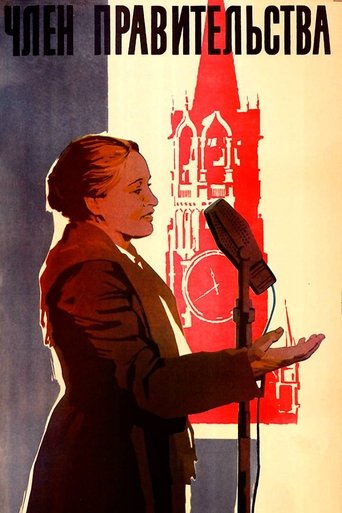
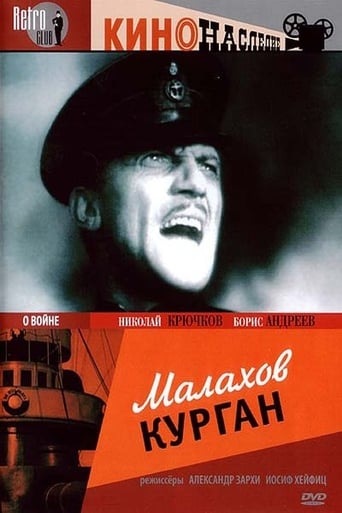
Iosif Yevseyevich Kheifits was one of Soviet cinema's most directors, renowned for his masterful literary adaptations and profound war films. Born in Minsk in 1905, he began his career in the 1920s as an assistant director before establishing himself at the prestigious Lenfilm studio in Leningrad. Kheifits gained international acclaim for his sensitive interpretations of Chekhov's works, particularly 'The Lady with the Dog' (1960), which showcased his ability to capture psychological depth and emotional nuance. During World War II, he served as a war correspondent and directed several significant war films including 'Malakhov Kurgan' (1944), documenting the heroic defense of Sevastopol. His 1939 film 'Member of the Government' was for its portrayal of a woman's rise to political power in Soviet society. Throughout his career spanning six decades, Kheifits demonstrated remarkable versatility, moving seamlessly between intimate character studies and epic historical narratives. He was particularly celebrated for his collaboration with actresses, helping launch the careers of several Soviet cinema legends. Kheifits continued directing into the 1980s, leaving an indelible mark on Russian film culture until his death in Saint Petersburg in 1995.
The Craft
Behind the Camera
Kheifits was known for his meticulous psychological realism and literary sensibility, often adapting classic Russian literature with remarkable sensitivity. His directing style emphasized subtle character development over melodrama, using nuanced performances and carefully composed visual storytelling. He had a particular gift for working with actresses, drawing out complex, layered performances that became the emotional core of his films. His war films balanced grand historical scope with intimate human stories, while his literary adaptations captured the essence of the original texts while creating distinctly cinematic experiences.
Milestones
- Directed 'Member of the Government' (1939), a film about women in Soviet leadership
- Created acclaimed war documentary 'Malakhov Kurgan' (1944) during WWII
- Achieved international recognition with 'The Lady with the Dog' (1960)
- Launched Inna Churikova's career with 'The Beginning' (1970)
- Received People's Artist of the USSR honor (1964)
- Won Stalin Prize for wartime contributions (1946)
- Directed over 20 feature films spanning six decades
Best Known For
Must-See Films
Accolades
Won
- Stalin Prize (1946) for 'Malakhov Kurgan'
- State Prize of the RSFSR (1971) for 'The Beginning'
- Vasilyev State Prize (1975) for 'The Lady with the Dog'
- Order of the Red Banner of Labour
- Order of the Patriotic War (2nd class)
- Order of Friendship of Peoples
Nominated
- Cannes Film Festival Palme d'Or nomination (1960) for 'The Lady with the Dog'
- Venice Film Festival Golden Lion nomination (1970) for 'The Beginning'
Special Recognition
- People's Artist of the USSR (1964)
- Honored Artist of the RSFSR (1950)
- Full member of the USSR Academy of Arts
- Lenfilm studio's Master of Cinema designation
Working Relationships
Worked Often With
Studios
Why They Matter
Impact on Culture
Iosif Kheifits significantly shaped Soviet cinema's approach to literary adaptation, establishing a standard for psychological realism that influenced generations of Russian filmmakers. His films about women in positions of power, particularly 'Member of the Government,' challenged traditional gender roles in Soviet society and contributed to discussions about women's emancipation. During WWII, his frontline documentaries and war films served as crucial morale-boosting propaganda while maintaining artistic integrity. His Chekhov adaptations helped preserve and popularize Russian literary classics for Soviet audiences, bridging the gap between high literature and popular cinema. Kheifits' work at Lenfilm helped establish Leningrad as a major center of Soviet film production, rivaling Moscow's film studios.
Lasting Legacy
Kheifits left an enduring legacy as one of Soviet cinema's most humanist directors, remembered for his ability to find universal emotional truths in both historical epics and intimate character studies. His films continue to be studied in film schools for their masterful blend of psychological depth and visual poetry. The 'Kheifits style' of literary adaptation became a benchmark for Russian filmmakers working with classic literature. His discovery and development of actress Inna Churikova created one of Soviet cinema's most iconic performers. Several of his films, particularly 'The Lady with the Dog,' remain in the canon of greatest Russian films ever made and continue to be screened internationally. His influence extends to contemporary Russian directors who seek to balance commercial appeal with artistic integrity.
Who They Inspired
Kheifits influenced Soviet and Russian cinema through his emphasis on psychological realism and literary adaptation techniques. His approach to directing actresses, focusing on nuanced emotional performances rather than stereotypical portrayals, became a model for subsequent generations of Russian filmmakers. His war films demonstrated how to balance patriotic themes with humanistic storytelling, influencing later Soviet war cinema. Contemporary Russian directors like Andrei Zvyagintsev and Alexander Sokurov have cited Kheifits' work as an inspiration for their own blend of visual poetry and psychological depth. His methods of adapting classic literature for the screen continue to be studied in Russian film academies.
Off Screen
Kheifits was married twice during his lifetime. His first marriage was to actress Vera Yanova, with whom he had one son. His second marriage was to screenwriter Svetlana Karmalita, who collaborated with him on several later films. Despite his prominence in Soviet cinema, Kheifits maintained a relatively private personal life, focusing intensely on his craft. He survived the Siege of Leningrad during WWII, an experience that deeply influenced his later war films. In his later years, he taught at the Leningrad State Institute of Theatre, Music and Cinematography, mentoring the next generation of Soviet filmmakers.
Education
Graduated from the Leningrad Institute of Screen Arts (1928), studied under prominent Soviet film theorists including Sergei Eisenstein
Family
- Vera Yanova (1930s-1940s)
- Svetlana Karmalita (1950s-1995)
Did You Know?
- Survived the 900-day Siege of Leningrad during WWII
- Initially wanted to be a painter before turning to cinema
- His film 'The Lady with the Dog' was banned in the US during the Cold War
- Worked as a war correspondent for Pravda newspaper during WWII
- Was one of the few Soviet directors allowed to travel to Western film festivals during the 1960s
- His 1970 film 'The Beginning' was a box office phenomenon in the USSR
- Mentored future Oscar-winning director Nikita Mikhalkov
- Spent his final years living in the same apartment building where he had lived since the 1930s
- His films were frequently shown at the Museum of Modern Art in New York during Soviet film retrospectives
- Was a passionate chess player and often played with cast and crew between takes
In Their Own Words
Cinema is not just entertainment; it is the mirror of our society's soul
To adapt Chekhov for the screen, you must first understand his silence
War films should not glorify battle, but reveal its human cost
The greatest actors are those who can convey emotion without words
A director's most important tool is empathy
Every film is a conversation between the past and present
Frequently Asked Questions
Who was Iosif Kheifits?
Prominent Soviet on YTB.my. He worked primarily at Lenfilm studio and was celebrated for his psychological realism and masterful direction of actresses. His active years covered from the 1920s to the 1980s, making him one of Soviet cinema's most enduring figures.
What films is Iosif Kheifits best known for?
Titles linked here include Member of the Government (1939), Malakhov Kurgan (1944).
When was Iosif Kheifits born and when did he die?
Born January 17, 1905; died April 24, 1995.
What awards did Iosif Kheifits win?
Kheifits received numerous honors including the Stalin Prize (1946), State Prize of the RSFSR (1971), Vasilyev State Prize (1975), and was named People's Artist of the USSR in 1964. He also received multiple state orders for his contributions to Soviet cinema.
What was Iosif Kheifits's directing style?
Kheifits was known for his psychological realism, literary sensibility, and nuanced character development. He excelled at adapting classic Russian literature, particularly Chekhov, with remarkable sensitivity. His style emphasized subtle performances over melodrama and balanced intimate human stories with broader historical contexts.