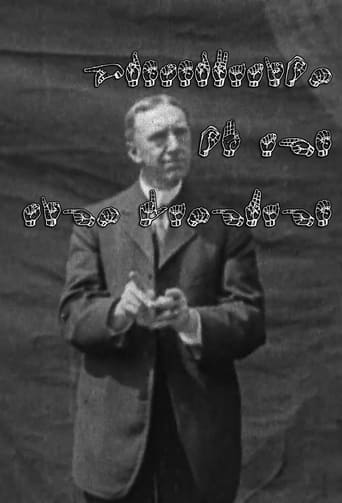
George Veditz
Actor
Born: August 13, 1861 in Baltimore, Maryland, USA Died: March 16, 1937 Active: 1913-1913 Birth Name: George William Veditz
Films
1 film
About George Veditz
George William Veditz — deaf educator, author, and filmmaker who became figures in deaf education and advocacy in early 20th century America. Born in Baltimore, Maryland, he lost his hearing at age 11 due to scarlet fever and later attended Gallaudet College, graduating in 1884. Veditz served as a teacher and administrator at several schools for the deaf throughout his career, including the Maryland School for the Deaf and the Colorado School for the Deaf and Blind. His most significant contribution to cinema came in 1913 when he produced and appeared in 'Preservation of the Sign Language,' one of the earliest films ever created specifically to document and preserve sign language for future generations. As president of the National Association of the Deaf from 1904 to 1910, he championed the rights of deaf individuals and fought against oralism in deaf education. Veditz's film was not only for its subject matter but also for its technical achievement in capturing sign language on early motion picture equipment. His work laid the foundation for the preservation and study of American Sign Language, making him a crucial figure in both deaf history and early documentary filmmaking.
The Craft
On Screen
Natural signing style in his documentary film, focused on clear articulation of American Sign Language for preservation purposes
Milestones
- Graduated from Gallaudet College (1884)
- Served as President of National Association of the Deaf (1904-1910)
- Produced 'Preservation of the Sign Language' (1913)
- Advocated for sign language preservation
- Fought against oralism in deaf education
Best Known For
Iconic Roles
Must-See Films
Accolades
Special Recognition
- Inducted into Gallaudet University's Athletic Hall of Fame
- Veditz Legacy Award named in his honor by National Association of the Deaf
Working Relationships
Worked Often With
Why They Matter
Impact on Culture
George Veditz's 1913 film 'Preservation of the Sign Language' represents one of the earliest and most important efforts to document sign language on motion picture, creating an invaluable historical record that has preserved early 20th century American Sign Language for posterity. His work came during a critical period when oralism was threatening to eradicate sign language from deaf education, and his film served as both a preservation tool and a political statement in defense of deaf culture. The film has become an essential document for linguists studying the evolution of ASL and remains one of the earliest examples of documentary filmmaking focused on linguistic preservation. Veditz's advocacy through this medium helped establish the precedent for using film as a tool for cultural and linguistic documentation, influencing countless future documentary filmmakers and preservationists.
Lasting Legacy
George Veditz is remembered as a visionary who recognized the importance of preserving sign language long before modern recording technology made such efforts commonplace. His 1913 film remains. The National Association of the Dead established the Veditz Legacy Award in his honor, recognizing individuals who have made significant contributions to the preservation and promotion of sign language. His work laid the groundwork for the eventual recognition of ASL as a legitimate language and helped ensure that deaf culture and language would survive the oralist movement of the early 20th century.
Who They Inspired
Veditz influenced generations of deaf educators, linguists, and filmmakers by demonstrating the power of visual media to preserve and communicate language and culture. His use of film for language preservation prefigured modern efforts in linguistic documentation and inspired later deaf filmmakers to use cinema as a means of cultural expression. His advocacy work helped shape the modern deaf rights movement and contributed to the eventual acceptance of sign language in deaf education. Contemporary ASL scholars and documentary filmmakers continue to cite Veditz as an inspiration for their work in preserving endangered languages and cultural practices.
Off Screen
George Veditz married Mary Elizabeth 'Bessie' Smith in 1888, and together they had three children. Despite his deafness, he was an active and engaged member of both deaf and hearing communities throughout his life. He was known for his intellectual pursuits, writing extensively on deaf education and sign language preservation. Veditz spent his later years in Colorado Springs, Colorado, where he continued his advocacy work until his death at age 75.
Education
Gallaudet College (now Gallaudet University), graduated 1884
Family
- Mary Elizabeth 'Bessie' Smith (1888-1937)
Did You Know?
- His 1913 film was one of the first motion pictures ever made specifically for language preservation
- The film was shot using early motion picture technology that required Veditz to sign very slowly and deliberately
- Veditz learned German Sign Language during his travels in Europe and was fluent in multiple sign languages
- His film was considered lost for decades before being rediscovered and restored
- The National Association of the Deaf used the film as evidence in their fight against oralism in deaf education
- Veditz — accomplished writer and poet, publishing works in both English and through sign language
- He was one of the first deaf individuals to recognize the potential of motion pictures for deaf education
- His film predates most early documentary films by several years
- Veditz's advocacy helped establish the principle that deaf individuals have the right to their own language and culture
- The film he created is now considered
In Their Own Words
'As long as we have deaf people on earth, there will be sign language. It is the noblest gift God has given to deaf people.' - from his 1913 film
'The sign language is the deaf man's mother tongue. It is his most precious possession.' - from National Association of the Deaf proceedings
'We must preserve our sign language for future generations, for it is the soul of our people.' - from his writings on deaf education
Frequently Asked Questions
Who was George Veditz?
deaf educator, advocate, and early filmmaker who served as president of the National Association of the Deaf and created the historic 1913 film 'Preservation of the Sign Language' to document American Sign Language for future generations.
What films is George Veditz best known for?
Titles linked here include Preservation of the Sign Language (1913).
When was George Veditz born and when did he die?
Born August 13, 1861; died March 16, 1937.
What awards did George Veditz win?
While Veditz didn't receive traditional film awards during his lifetime, he has been honored posthumously with the establishment of the Veditz Legacy Award by the National Association of the Deaf and induction into Gallaudet University's Athletic Hall of Fame.
What was George Veditz's contribution to cinema?
Veditz's contribution to cinema was creating one of the earliest documentary films specifically designed for language preservation, using motion picture technology to save American Sign Language during a time when it was threatened by the oralist movement in deaf education.