Films
1 film
About Boris Buneev
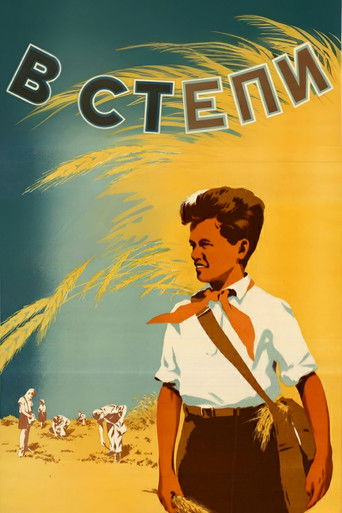
Soviet film director active during the early post-war period of Soviet cinema. His career appears to have been concentrated around the year 1950, with his most notable work being the film 'On the Steppe' (V stepi), which reflected the Soviet Union's focus on agricultural themes and rural life during this era. As a director working in the Stalinist period, Buneev would have operated within the strict ideological constraints of Socialist Realism, creating films that promoted Soviet values and collective achievements. His work on 'On the Steppe' demonstrated the Soviet film industry's emphasis on depicting the transformation of rural life through collectivization and industrialization. Despite the limited documentation of his career, Buneev represents the generation of Soviet filmmakers who worked to rebuild and expand the national cinema industry following World War II. His directorial approach would have been shaped by the state-controlled film system, with projects typically assigned by major studios like Mosfilm or Gorky Film Studio.
The Craft
Behind the Camera
Likely adhered to Socialist Realist principles, focusing on collective themes and Soviet ideological values
Milestones
- Directed 'On the Steppe' (1950)
- Worked during the post-war reconstruction period of Soviet cinema
Best Known For
Must-See Films
Working Relationships
Studios
Why They Matter
Impact on Culture
Boris Buneev's contribution to Soviet cinema, while limited in scope, represents the broader effort of Soviet filmmakers to create content that reflected the state's ideological priorities during the early Cold War period. His work on 'On the Steppe' would have contributed to the cinematic representation of rural Soviet life and the promotion of collectivization as a successful socialist achievement. Films of this type served both as entertainment and as tools for political education, reinforcing official narratives about Soviet progress and the benefits of the collective system.
Lasting Legacy
As a relatively obscure figure in Soviet cinema history, Boris Buneev's legacy is primarily preserved through his work on 'On the Steppe,' which serves as an example of the type of ideologically-driven filmmaking produced in the Soviet Union during the early 1950s. His career illustrates the vast network of filmmakers who contributed to the Soviet film industry's output during this period, even if they did not achieve the fame of directors like Eisenstein or Pudovkin. The film itself stands as a historical document of Soviet cinematic approaches to rural themes and the state's cultural priorities during the Stalin era.
Who They Inspired
Given the limited scope of his documented work, specific influences on other filmmakers are difficult to trace. However, like all Soviet directors of his era, Buneev would have been influenced by the established masters of Soviet cinema and the prevailing aesthetic of Socialist Realism that dominated the industry during his active period.
Off Screen
Very limited information is available about Boris Buneev's personal life, which is common for many Soviet-era filmmakers who worked primarily within the state system and did not achieve international recognition.
Did You Know?
- The film 'On the Steppe' (1950) was produced during the height of Stalin's rule, when film content was heavily censored and controlled
- Soviet films from 1950 often focused on agricultural themes to promote the success of collective farms
- Directors with brief filmographies like Buneev were common in the Soviet system, where many filmmakers worked on assigned projects without building extensive personal catalogs
- The title 'On the Steppe' suggests the film was set in the vast agricultural regions of the Soviet Union
- 1950 was a significant year for Soviet cinema as the industry was recovering from the disruptions of World War II
Frequently Asked Questions
Who was Boris Buneev?
Soviet on YTB.my.' He worked during the early post-war period of Soviet cinema, creating films that reflected the ideological priorities of the Stalin era.
What films is Boris Buneev best known for?
Titles linked here include On the Steppe (1950).
When was Boris Buneev born and when did he die?
Specific birth and death dates for Boris Buneev are not readily available in documented sources, which is common for many Soviet-era filmmakers who did not achieve international recognition.
What awards did Boris Buneev win?
There are no documented awards or nominations for Boris Buneev in available sources, which suggests he did not receive the major state honors that were sometimes bestowed upon prominent Soviet directors.
What was Boris Buneev's directing style?
While specific details about Buneev's directing style are limited, as a Soviet filmmaker in 1950 he would have worked within the Socialist Realist tradition, focusing on collective themes and promoting Soviet ideological values through his cinematic work.