Alfred Ames
Director
Born: September 4, 1866 in Machias, Maine, USA Died: May 19, 1950 Active: 1930 Birth Name: Alfred Kellar Ames
Films
1 film
About Alfred Ames
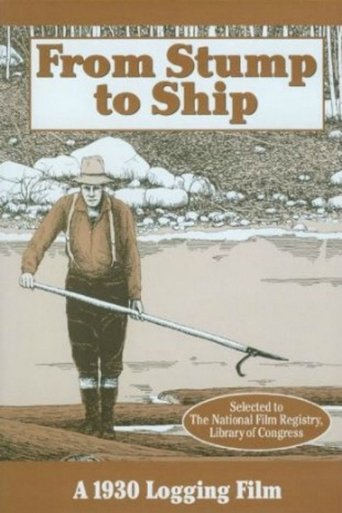
Alfred Kellar Ames — prominent Maine industrialist, politician, and amateur filmmaker whose primary contribution to cinema is the historically significant documentary 'From Stump to Ship' (1930). Born into a family of lumber magnates in Machias, Maine, Ames spent his life managing the Machias Lumber Company, a business his father and brother had led for decades. In 1930, recognizing that the traditional long-lumber industry was rapidly declining, Ames purchased a 16mm camera to create a permanent visual record of the logging process. He collaborated with Dr. Howard Kane to capture the grueling winter labor, the dangerous spring log drives, and the final milling operations. Beyond his business interests, Ames — dedicated public servant, serving three terms in the Maine Senate and later running for Governor of Maine. Although he never intended to be a professional director, his meticulous documentation of a vanishing way of life earned him a permanent place in American film history when his work was inducted into the National Film Registry.
The Craft
Behind the Camera
Ames utilized an observational, documentary-style approach that prioritized technical accuracy and chronological flow. His work is characterized by a 'process-film' structure, meticulously following the lifecycle of lumber from the forest to the sea. He often included 'Hitchcock-style' cameos of himself and his workers, providing a personal, human element to the industrial footage. His directing was functional and archival, designed to educate and preserve rather than to entertain in a traditional cinematic sense.
Milestones
- Directed the seminal industrial documentary 'From Stump to Ship' in 1930
- Served three terms in the Maine Senate (1915–1920)
- Republican nominee for Governor of Maine in 1934
- President of the Machias Lumber Company
- Induction of his film into the National Film Registry in 2002
Best Known For
Iconic Roles
Must-See Films
Accolades
Won
- National Film Registry Induction (2002)
Special Recognition
- Preservation by the Library of Congress
- Subject of the Maine Humanities Council restoration project (1985)
Working Relationships
Worked Often With
Studios
Why They Matter
Impact on Culture
Alfred Ames's work provided. At a time when the industry was shifting toward pulp and paper, Ames captured the 'long-log' era that had defined Maine's economy for centuries. The film became a cultural touchstone for the state of Maine, used by Ames himself during his 1932 and 1934 gubernatorial campaigns to demonstrate his connection to the working class and the state's natural resources. Its rediscovery in the 1980s sparked a renewed interest in regional film preservation and the value of amateur 'home movies' as vital historical documents.
Lasting Legacy
Ames's legacy is defined by the survival and eventual canonization of 'From Stump to Ship.' While many industrial films of the era were lost or destroyed, Ames's meticulous care for his footage allowed it to be restored by Northeast Historic Film and the Maine Humanities Council in 1985. In 2002, the Library of Congress recognized his contribution by naming the film to the National Film Registry, placing an amateur Maine lumberman's work alongside the greatest masterpieces of Hollywood. He is remembered as a pioneer of the industrial documentary and a guardian of Maine's maritime and forestry heritage.
Who They Inspired
Ames influenced the field of film preservation, specifically the recognition of amateur and industrial films as significant historical artifacts. His work demonstrated that non-professional filmmakers could capture essential cultural history that major studios often overlooked. Modern documentary filmmakers focusing on industrial history often look to his work as a primary source for authentic 1930s logging techniques.
Off Screen
Alfred Ames was the son of John Keller Ames and Sarah Albee Sanborn. He was part of a powerful Maine family with deep roots in the timber and navigation industries. He lived in a notable English colonial-style home in Machias, which was famous for its expansive gardens. Ames was deeply involved in his local community and the Republican party, using his film as a tool for political engagement and regional pride.
Education
Educated in local Maine schools; likely received business training through the family's Machias Lumber Company operations.
Family
- Nellie E. Hill (Married 1890s/early 1900s)
Did You Know?
- Ames originally performed the film's narration live during screenings using a typed script.
- The 'K' in his name stands for Kellar.
- He used the film as a campaign tool during his run for Governor of Maine.
- The film was shot on 16mm black and white reversal film, a format popular with amateurs at the time.
- Ames sold 115,000 acres of his company's land shortly after the film was completed.
- The 1985 restoration features narration by Maine humorist Tim Sample, reading Ames's original words.
- The film includes rare footage of the schooner 'Lucy Evelyn,' one of the last of its kind.
- Ames's co-director, Dr. Howard Kane, was a prominent Washington D.C. Obstetrician.
In Their Own Words
Knowing that the long lumber industry in Maine was a thing of the past in 1930, I purchased a moving picture camera to make a record of the long lumber operations on the river.
This is what I call the twilight of my career as a lumberman.
Frequently Asked Questions
Who was Alfred Ames?
Alfred Kellar Ames — Maine state senator and the president of the Machias Lumber Company, best known for directing the 1930 documentary 'From Stump to Ship.'
What is Alfred Ames's most famous film?
His most famous and only known film is 'From Stump to Ship' (1930), which documents the Maine logging industry.
Why is 'From Stump to Ship' significant?
It is significant for providing a rare, detailed visual record of traditional logging and was inducted into the National Film Registry in 2002.
Did Alfred Ames win any awards?
While he did not win traditional film industry awards during his life, his work received the highest honor of being preserved in the National Film Registry by the Library of Congress.
What was Alfred Ames's profession outside of filmmaking?
He was primarily a businessman in the lumber industry and a politician who served in the Maine Senate and ran for Governor.
How did Alfred Ames use his film politically?
Ames used 'From Stump to Ship' as a campaign tool during his 1932 and 1934 runs for Governor, narrating it live to show voters his industry expertise.