Films
1 film
About Benjamín Doniger
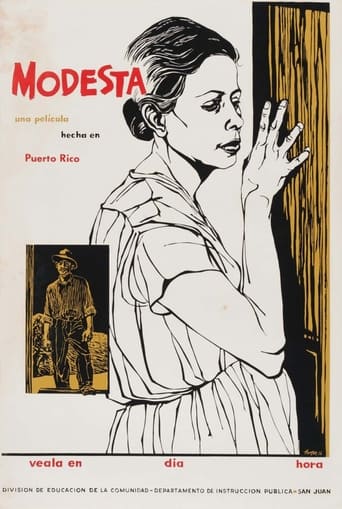
Film director best known for his work with Puerto Rico's Division of Community Education (DIVEDCO) during the 1950s. His most significant contribution to cinema was directing 'Modesta' in 1956, a film that addressed women's rights and domestic violence in rural Puerto Rico. The film was part of a broader cultural and educational initiative by the Puerto Rican government to use cinema as a tool for social change and community development. Doniger's work with DIVEDCO placed him among a select group of filmmakers who helped establish Puerto Rican cinema as a medium for social commentary. While his filmography appears limited to this period, his impact through 'Modesta' has endured as an important document of mid-20th century Latin American social cinema. The director's approach combined educational messaging with artistic filmmaking techniques, creating works that both informed and entertained Puerto Rican audiences.
The Craft
Behind the Camera
Social realist approach with educational messaging, combining documentary techniques with narrative storytelling to address social issues affecting rural Puerto Rican communities
Milestones
- Directed 'Modesta' (1956) for DIVEDCO
- Contributed to Puerto Rican educational cinema movement
- Created film addressing women's rights in Latin America
Best Known For
Must-See Films
Accolades
Special Recognition
- Recognized as part of DIVEDCO's film movement
- Film 'Modesta' preserved as important cultural document
Working Relationships
Studios
Why They Matter
Impact on Culture
Benjamín Doniger's work, particularly 'Modesta,' played a significant role in the development of Puerto Rican cinema and the broader Latin American social film movement. The film was groundbreaking for its time, addressing issues of women's rights and domestic violence in a context where such topics were rarely discussed openly in cinema. As part of DIVEDCO's film program, Doniger contributed to a cultural renaissance in Puerto Rico that used cinema as a tool for education and social change. His work helped establish a model for how government-sponsored filmmaking could address social issues while maintaining artistic integrity. The influence of 'Modesta' can be seen in subsequent Latin American films that tackled feminist themes and social justice issues.
Lasting Legacy
Benjamín Doniger's legacy is primarily tied to his contribution to Puerto Rican cinema through 'Modesta,' which remains an important historical document of mid-20th century social reform movements in Latin America. The film has been studied by scholars interested in the intersection of cinema, education, and social change. While his filmography may be limited, Doniger represents a generation of filmmakers who worked outside the commercial studio system to create meaningful cinema with social purpose. His work is frequently cited in academic discussions of Latin American feminist cinema and the role of film in post-colonial societies. 'Modesta' continues to be screened at film festivals and academic conferences focused on Latin American cinema history.
Who They Inspired
Doniger's work influenced subsequent generations of Latin American filmmakers who sought to combine social commentary with artistic expression. His approach to addressing women's issues through narrative film prefigured later feminist cinema movements in Latin America. The DIVEDCO model that he participated in influenced similar educational film programs in other Latin American countries. His film demonstrated how cinema could be used as an effective tool for social education and consciousness-raising, influencing documentary and social issue filmmakers throughout the region.
Off Screen
Limited biographical information is available about Benjamín Doniger's personal life, as he appears to have been primarily active within the institutional framework of Puerto Rico's educational film program rather than as a commercial filmmaker.
Did You Know?
- 'Modesta' was one of the first films to address domestic violence in Latin American cinema
- The film was produced as part of Puerto Rico's post-war modernization and education initiatives
- DIVEDCO films like 'Modesta' were often screened in rural communities using mobile projection units
- The film's protagonist Modesta became an iconic figure representing women's empowerment in Puerto Rico
- Despite its educational purpose, 'Modesta' employed sophisticated cinematic techniques
- The film was part of a broader cultural movement that included visual arts, literature, and theater in Puerto Rico
- Doniger worked alongside other notable DIVEDCO filmmakers like Amílcar Tirado and Luis A. Rosario
- The film's message about women's rights was considered radical for its time in conservative Puerto Rican society
Frequently Asked Questions
Who was Benjamín Doniger?
Puerto Rican on YTB.my.
What films is Benjamín Doniger best known for?
Titles linked here include Modesta (1956).
When was Benjamín Doniger born and when did he die?
Specific birth and death dates for Benjamín Doniger are not readily available in historical records, as he appears to have been primarily active within Puerto Rico's educational film program during the 1950s.
What awards did Benjamín Doniger win?
While specific awards for Benjamín Doniger are not documented, his film 'Modesta' has been recognized as an important cultural and historical document in Puerto Rican cinema history and is frequently studied in academic contexts.
What was Benjamín Doniger's directing style?
Doniger's directing style combined social realist approaches with educational messaging, using narrative storytelling and documentary techniques to address social issues affecting rural Puerto Rican communities, particularly women's rights and domestic violence.