Films
1 film
About Barrio Sonadora Community
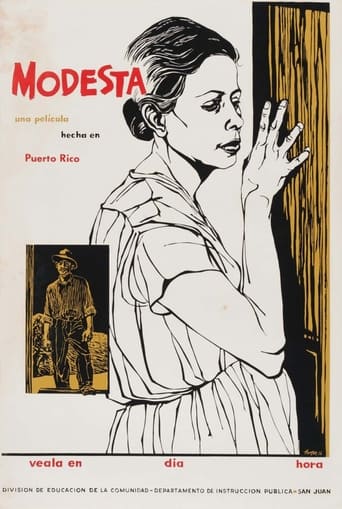
Barrio Sonadora Community refers to the residents of Barrio Sonadora, a rural community in Puerto Rico that participated in the 1956 film 'Modesta.' Rather than being an individual actor, this was a collective of community members who appeared in the film as themselves, representing authentic Puerto Rican rural life. The community's involvement was part of the Puerto Rican government's Division of Community Education (DIVEDCO) initiative, which aimed to use cinema as an educational tool for social change. Their participation in 'Modesta' helped create a realistic portrayal of Puerto Rican rural communities and their struggles with traditional gender roles. The community members were not professional actors but ordinary residents who brought genuine authenticity to the film. Their contribution represents an important moment in Puerto Rican cinema history, where real communities were given a voice in national filmmaking.
The Craft
On Screen
Naturalistic and authentic, representing real community members rather than trained actors
Milestones
- Participation in landmark film 'Modesta' (1956)
- Representation of authentic Puerto Rican rural life
- Contribution to DIVEDCO's educational cinema movement
Best Known For
Iconic Roles
Must-See Films
Accolades
Special Recognition
- Recognized as part of Puerto Rico's cinematic heritage through DIVEDCO's historical significance
Working Relationships
Worked Often With
Studios
Why They Matter
Impact on Culture
Barrio Sonadora Community's participation in 'Modesta' represents a significant moment in Latin American cinema history, where real communities were given agency to tell their own stories. Their authentic portrayal of rural Puerto Rican life helped challenge stereotypes and provided a platform for discussions about women's rights and social change. The film became part of Puerto Rico's cultural heritage and is studied as an important example of community-based filmmaking and social cinema. Their involvement demonstrated the power of using non-professional actors to create more authentic and impactful narratives.
Lasting Legacy
The legacy of Barrio Sonadora Community lives on through their contribution to one of Puerto Rico's most important social films. 'Modesta' remains a landmark in Puerto Rican cinema, and the community's authentic performance helped establish a precedent for community participation in filmmaking. Their work is now recognized as part of the broader movement of educational cinema that transformed Puerto Rican society in the mid-20th century. The film continues to be studied in film schools and shown in retrospectives of Latin American cinema.
Who They Inspired
Barrio Sonadora Community's approach to authentic representation influenced subsequent generations of Puerto Rican and Latin American filmmakers who sought to incorporate real communities into their work. Their participation demonstrated that non-professional actors could bring powerful authenticity to social narratives, influencing documentary and social cinema movements throughout Latin America.
Off Screen
As a community collective rather than an individual, Barrio Sonadora Community represented the everyday lives of rural Puerto Rican families in the 1950s. Their participation in the film reflected the real social dynamics, traditions, and challenges faced by women in Puerto Rican society during that period.
Did You Know?
- Barrio Sonadora is not an individual actor but a community collective from a rural area in Puerto Rico
- The film 'Modesta' was part of Puerto Rico's DIVEDCO program, which used cinema for educational purposes
- Community members were not paid actors but volunteered to participate in the film
- The film addressed women's rights issues in Puerto Rican society
- 'Modesta' was directed by Luis Molina Casanova, a pioneer of Puerto Rican cinema
- The film is now considered a classic of Puerto Rican social cinema
- Barrio Sonadora Community's authentic portrayal helped make the film more impactful for Puerto Rican audiences
- The film was produced in both Spanish and English versions
- DIVEDCO films like 'Modesta' were often shown in community centers and schools throughout Puerto Rico
In Their Own Words
As a community collective, their 'dialogue' consisted of authentic representations of everyday rural Puerto Rican life and traditions
Frequently Asked Questions
Who was Barrio Sonadora Community?
Barrio Sonadora Community was not an individual actor but a collective of residents from Barrio Sonadora, Puerto Rico, who participated as themselves in the 1956 film 'Modesta.' They were part of a government initiative to use authentic community members in educational films.
What film is Barrio Sonadora Community known for?
They are known for their participation in 'Modesta' (1956), a landmark Puerto Rican film about women's rights that was produced as part of the DIVEDCO educational cinema program.
Was Barrio Sonadora Community a professional actor?
No, Barrio Sonadora Community consisted of ordinary rural residents who were not professional actors. Their participation was part of an effort to create authentic representations of Puerto Rican community life.
What was the purpose of using community members in 'Modesta'?
The use of real community members was part of Puerto Rico's DIVEDCO program, which aimed to create educational films that would resonate authentically with local audiences and promote social change, particularly regarding women's rights.