Films
1 film
About Parts His Hair
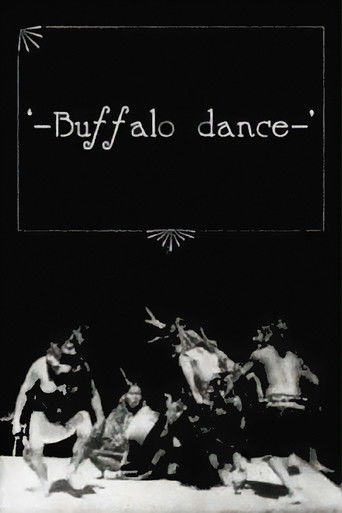
Parts His Hair worked on very early days of cinema during the experimental period of the 1890s. He is known exclusively for his participation in the Edison Manufacturing Company production 'Buffalo Dance' in 1894, one of the first films ever made and one of the earliest to feature Native American performers. The film was a short, silent black-and-white kinetoscope clip directed by William K.L. Dickson, Edison's primary filmmaker, at the company's studio in West Orange, New Jersey. In the 16-second performance, Parts His Hair, alongside fellow Native American performers His Last Fight and Last Horse, demonstrated a traditional Sioux buffalo dance. His appearance represents a significant moment in film history as it documents authentic cultural practices from an indigenous perspective, albeit within the controlled environment of an early film studio. His career, like many performers of this nascent era, was incredibly brief, confined to this single documented appearance in 1894 before disappearing from the historical record. His real identity, life before and after this performance, and his ultimate fate remain unknown, making him a mysterious yet vital figure from the dawn of motion pictures.
The Craft
On Screen
As a performer in an 1894 kinetoscope film, Parts His Hair's 'acting' was not theatrical in the traditional sense but rather a documentation of a traditional cultural dance. His performance was likely authentic and non-scripted, intended to showcase a genuine aspect of Sioux culture for the curious audiences of Edison's peep-show devices. The style was purely presentational, lacking the narrative acting techniques that would soon develop in cinema.
Milestones
- Appeared in 'Buffalo Dance' (1894), one of the earliest surviving motion pictures
- Participated in one of the first films to feature authentic Native American performers
- Contributed to the documentation of indigenous culture through the new medium of film
Best Known For
Iconic Roles
Must-See Films
Working Relationships
Worked Often With
Studios
Why They Matter
Impact on Culture
Parts His Hair's cultural impact is profound yet indirect, stemming from his participation in a film that serves as an invaluable time capsule of Native American culture at a pivotal moment in history. 'Buffalo Dance' is one of the very first moving images to depict indigenous peoples of the Americas, providing a rare, albeit staged, glimpse into a traditional Sioux ritual. His performance contributed to the early visual record of Native American life, predating the more pervasive and often stereotypical portrayals that would dominate Hollywood westerns for decades. The film stands as a significant artifact of ethnographic cinema, capturing a piece of cultural heritage that might otherwise have been lost, and his role in it, however brief, cements his place as an unwitting pioneer in the representation of Native Americans on screen.
Lasting Legacy
The legacy of Parts His Hair is intrinsically tied to the legacy of 'Buffalo Dance' as a landmark of early cinema. While he is an anonymous figure in film history, he is part of a small group of performers who represent the genesis of Native American representation in motion pictures. His work is studied by film historians, anthropologists, and scholars of indigenous cinema as a foundational text. His name, preserved in the film's intertitle, ensures that he is remembered not as an anonymous extra, but as an individual who participated in the birth of a new art form, leaving behind a moving image that has survived for over 130 years.
Who They Inspired
Given the brevity and obscurity of his career, Parts His Hair had no direct influence on subsequent actors or filmmakers. His influence is historical and archival. He influenced the course of film history by being part of an early production that demonstrated the medium's potential for cultural documentation. The existence of his performance has influenced generations of scholars and filmmakers who look back to the origins of cinema, serving as a primary example of how the camera was first used to capture 'exotic' cultures for a mass audience.
Off Screen
Virtually nothing is known about the personal life of Parts His Hair outside of his single film appearance. He was a member of the Sioux people who was brought to the Edison Black Maria studio to perform for the camera. His reasons for participating, whether he was part of a touring troupe like Buffalo Bill's Wild West or was recruited specifically for this film, are lost to history. There are no records of his family, marriages, children, or life before or after 1894.
Did You Know?
- 'Buffalo Dance' is only 16 seconds long.
- The film was shot at Edison's 'Black Maria' studio, the world's first film production studio.
- Parts His Hair performed alongside two other Native American men identified as His Last Fight and Last Horse.
- The film was one of the first to be exhibited on Thomas Edison's Kinetoscope, a peep-show device for individual viewing.
- Unlike many early films that staged Native American scenes with white actors in makeup, this film featured actual Sioux performers.
- The film was long thought to be lost but a copy survived and is preserved by the Library of Congress.
- The performers are believed to have been part of a Sioux troupe that was touring with Buffalo Bill's Wild West show or a similar exhibition.
- The dance performed was a ritual meant to ensure success in an upcoming buffalo hunt.
- The film is considered a precursor to both the Western genre and ethnographic film.
- Parts His Hair is one of the very first named Native American actors in film history.
Frequently Asked Questions
Who was Parts His Hair?
Screen credits include the 1894 Edison film 'Buffalo Dance'. He is one of the earliest known Native American actors in film history, though his life outside of this single appearance is completely unknown.
What film is Parts His Hair best known for?
He is known exclusively for his role in the 16-second film 'Buffalo Dance' (1894), directed by William K.L. Dickson for the Edison Manufacturing Company. This short film is a landmark of early cinema.
When was Parts His Hair born and when did he die?
The birth and death dates of Parts His Hair are unknown. All available information about him is confined to his film appearance in the year 1894, after which he disappears from the historical record.
What awards did Parts His Hair win?
Parts His Hair did not receive any awards or nominations. He performed in an era long before the establishment of formal film awards like the Academy Awards, which began in 1929.
What was Parts His Hair's acting style?
His performance was not 'acting' in the dramatic sense but a documentation of a traditional cultural dance. He performed an authentic Sioux buffalo dance for the camera in a presentational style typical of early actuality films.