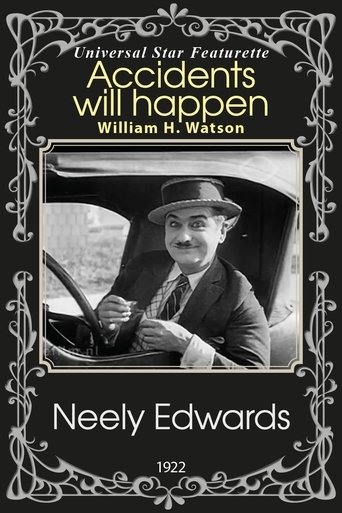
Films
1 film
About William Watson
Director during the silent film era who is known primarily for his single directorial effort, 'Accidents Will Happen' in 1922. Very little is documented about his career beyond this one film, suggesting he may have been a one-time director or had an extremely brief tenure in the film industry. The lack of extensive records about Watson is not uncommon for directors from this period, many of whom worked on modest productions that have since been lost to time. His film 'Accidents Will Happen' appears to have been a short comedy, a popular genre during the early 1920s. The brevity of his known filmography indicates he may have transitioned out of directing quickly or possibly worked in other capacities within the film industry that were not well-documented. Like many figures from the silent era, much of Watson's personal story and professional journey remains largely unknown to modern film historians.
The Craft
Behind the Camera
Likely followed the conventions of silent comedy direction of the early 1920s, emphasizing physical comedy and visual storytelling typical of the era
Milestones
- Directed 'Accidents Will Happen' (1922)
Best Known For
Must-See Films
Why They Matter
Impact on Culture
William Watson's cultural impact appears to have been minimal due to the extremely limited scope of his known directorial work. His single film 'Accidents Will Happen' represents the typical output of countless independent producers and directors during the silent era who created short comedies for the voracious market of the 1920s. While his individual contribution may not have been significant, he was part of the broader ecosystem of filmmakers who helped establish the language of cinema during its formative years. The loss of detailed records about directors like Watson illustrates how much of early film history has been forgotten, with only the most prominent figures remaining in the public consciousness.
Lasting Legacy
William Watson's legacy is primarily that of an obscure figure from the silent era, representing the thousands of filmmakers whose contributions to early cinema have been largely lost to history. His name survives only through filmography listings and archives that document even the most minor productions of the period. The fact that his work is remembered at all, however minimally, speaks to the comprehensive nature of film preservation efforts that seek to document every contributor to cinema's development. His story serves as a reminder of how many talented individuals from the early film industry have been forgotten, their work either lost to time or overshadowed by the more prominent figures of the era.
Who They Inspired
Given the limited documentation of Watson's career and his single known directorial effort, it's difficult to assess his influence on other filmmakers. He was likely more influenced by the prevailing styles and techniques of early 1920s comedy filmmaking rather than being an innovator himself. Directors working on modest productions during this period typically followed established conventions rather than developing new approaches to the medium.
Off Screen
Virtually no personal information about William Watson has survived in historical records, which is not uncommon for directors of minor silent films whose careers were brief and who worked outside the major studio system.
Did You Know?
- William Watson's entire known directorial career consists of just one film from 1922
- 'Accidents Will Happen' was likely a short comedy film, a popular format in the early 1920s
- The lack of information about Watson is typical of many directors who worked on minor silent films
- His career span appears to be exactly one year, making him one of the briefest careers in film history
- No records of his birth, death, or personal life have survived in accessible archives
- The film 'Accidents Will Happen' itself may be a lost film, as many silent shorts have not survived
- Watson represents the thousands of anonymous filmmakers who contributed to early cinema
Frequently Asked Questions
Who was William Watson?
on YTB.my. Very little is known about his life or career beyond this single directorial credit.
What films is William Watson best known for?
Titles linked here include Accidents Will Happen (1922).
When was William Watson born and when did he die?
The birth and death dates of William Watson are not known, as is common with many minor figures from the silent era whose personal records have not survived in historical archives.
What awards did William Watson win?
There are no records of William Watson receiving any awards or nominations for his work, which is not surprising given his extremely limited filmography consisting of just one film.
What was William Watson's directing style?
While specific details about Watson's directing style are unknown, he likely followed the conventions of early 1920s silent comedy, emphasizing visual gags and physical humor typical of short comedies of that period.
Why is so little known about William Watson?
The scarcity of information about William Watson is typical of many filmmakers from the silent era who worked on minor productions. Records were often poorly maintained, and many independent filmmakers' stories were never documented in industry publications.