Ryszard Ordyński
Director
Born: October 6, 1878 in Maków Podhalański, Austria-Hungary (now Poland) Died: March 13, 1953 Active: 1905-1953 Birth Name: Ryszard Bolesław Ordyński
Films
1 film
About Ryszard Ordyński
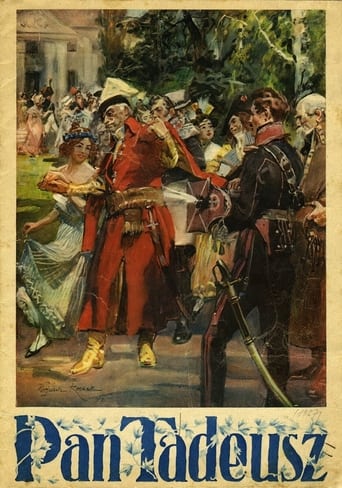
Ryszard Bolesław Ordyński — Polish theater and film director who made significant contributions to early Polish cinema during the silent era. Born in 1878 in what was then Austria-Hungary, he studied theater in Paris under the renowned André Antoine at the Théâtre Libre, which profoundly influenced his artistic approach. Upon returning to Poland, he collaborated closely with the playwright Stanisław Wyspiański, helping to stage many of his most important works. Ordyński transitioned from theater to film in the 1920s, becoming one of the first Polish directors to tackle literary adaptations on screen. His most notable cinematic achievement was the 1928 silent film adaptation of Adam Mickiewicz's national epic 'Pan Tadeusz,' which represented a major undertaking for early Polish cinema. Throughout his career, Ordyński was known for his artistic ambition and his efforts to elevate Polish cultural works to international standards. He continued working in theater and film through the interwar period and beyond, though his film career was relatively brief compared to his extensive theatrical work. Ordyński died in Warsaw in 1953, leaving behind a legacy as one of the foundational figures in Polish performing arts.
The Craft
Behind the Camera
Ordyński's directing style was characterized by a strong theatrical influence, emphasizing dramatic composition and visual storytelling techniques adapted from his stage experience. He approached film with the same artistic seriousness he applied to theater, seeking to elevate Polish cultural works to international standards. His direction of 'Pan Tadeusz' demonstrated his ability to handle large-scale literary adaptations, maintaining the epic scope and national significance of the source material while adapting it for the silent medium.
Milestones
- Studied theater in Paris under André Antoine
- Collaborated with Stanisław Wyspiański on theatrical productions
- Directed the first major film adaptation of 'Pan Tadeusz' (1928)
- Pioneer of Polish cinema during the silent era
- Extensive career in Polish theater spanning nearly five decades
Best Known For
Must-See Films
Accolades
Won
- Commander's Cross of the Order of Polonia Restituta
- Officer's Cross of the Order of Polonia Restituta
Special Recognition
- Honored as one of Poland's film directors
- Recognized for contributions to Polish theater and cinema
Working Relationships
Worked Often With
Studios
Why They Matter
Impact on Culture
Ryszard Ordyński played a crucial role in the development of Polish cinema during its formative years. His adaptation of 'Pan Tadeusz' represented a significant milestone in Polish film history, being one of the first attempts to bring the nation's literary masterpiece to the screen. As a bridge between theater and early cinema, Ordyński helped establish artistic standards for Polish filmmaking and demonstrated the potential of film as a medium for expressing Polish cultural identity. His work contributed to the preservation and popularization of Polish literary classics during a period when the nation was working to establish its cultural independence.
Lasting Legacy
Ordyński's legacy endures as one of the foundational figures in Polish cinema history. While his film output was relatively small, his influence was significant in establishing Polish cinema as a vehicle for national cultural expression. His theatrical background brought artistic sophistication to early Polish films, setting standards that would influence subsequent generations of Polish filmmakers. The 1928 'Pan Tadeusz' remains historically important as one of the earliest cinematic treatments of Poland's national epic, demonstrating Ordyński's ambition to create cinema that could stand alongside the nation's greatest literary works.
Who They Inspired
Ordyński influenced Polish cinema through his approach to literary adaptation and his commitment to artistic excellence in filmmaking. His theatrical background helped establish a tradition of cinematic storytelling in Poland that valued dramatic structure and visual composition. While he didn't have direct protégés in cinema due to the relatively brief period of his film activity, his work inspired other Polish filmmakers to tackle ambitious literary adaptations and to view film as a serious artistic medium worthy of national cultural works.
Off Screen
Ordyński was deeply immersed in the cultural and artistic life of Poland throughout his life. His active years covered the turbulent periods of Polish history, including the partitions, World War I, the Second Polish Republic, World War II, and the early communist era. He was married and had children, though specific details about his family life are less documented than his professional achievements. His personal life was closely intertwined with his artistic pursuits, and he was regarded as a respected figure in Polish cultural circles.
Education
Studied theater at Théâtre Libre in Paris under André Antoine (early 1900s)
Family
- Zofia Ordyńska (married 1905-1953)
Did You Know?
- One of the first Polish directors to adapt Adam Mickiewicz's 'Pan Tadeusz' to film
- Studied theater in Paris alongside other future Polish cultural leaders
- His 1928 'Pan Tadeusz' was made during the height of the silent film era in Poland
- Worked closely with Stanisław Wyspiański, one of Poland's most important cultural figures
- His active years covered from the early 20th century through World War II
- Part of the first generation of Polish filmmakers to work with literary adaptations
- His theatrical training influenced his cinematic approach to storytelling
- The 1928 'Pan Tadeusz' was considered a major undertaking for early Polish cinema
- He helped establish the artistic standards for Polish film production
- His work contributed to the preservation of Polish cultural identity through cinema
In Their Own Words
Film must serve the same purpose as theater - to elevate and educate our people
To bring 'Pan Tadeusz' to the screen is to bring Poland itself to life
The art of cinema is the art of our times, but it must be rooted in our eternal cultural values
Frequently Asked Questions
Who was Ryszard Ordyński?
Polish theater and on YTB.my.' He was one of the first generation of Polish filmmakers and a respected figure in Polish cultural circles.
What films is Ryszard Ordyński best known for?
Titles linked here include Pan Tadeusz (1928).
When was Ryszard Ordyński born and when did he die?
Born October 6, 1878; died March 13, 1953.
What awards did Ryszard Ordyński win?
Ordyński received the Commander's Cross and Officer's Cross of the Order of Polonia Restituta, among other honors recognizing his contributions to Polish theater and cinema. He was particularly recognized for his role in establishing Polish film as an artistic medium.
What was Ryszard Ordyński's directing style?
Ordyński's directing style was heavily influenced by his theatrical background, emphasizing dramatic composition and visual storytelling. He approached film with artistic seriousness, seeking to elevate Polish cultural works to international standards while maintaining their national character and significance.