
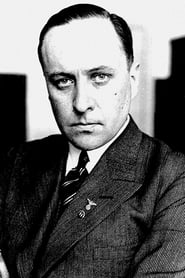
Richard Walther Darré
Actor
Born: July 14, 1895 in Belgrano, Buenos Aires, Argentina Died: September 14, 1953 Active: Not applicable - not a cinema professional
Films
1 film
About Richard Walther Darré
Richard Walther Darré was not a classic cinema actor but rather a prominent Nazi official who appeared in archival footage in the 1943 documentary 'Why We Fight: Divide and Conquer.' Born in Argentina to German parents, Darré rose to become Reich Minister of Food and Agriculture and an SS-Obergruppenführer in Nazi Germany. He was a key ideologue in the Nazi party, particularly known for his theories on blood and soil (Blut und Boden) which emphasized the connection between the German people and their land. After World War II, he was tried at the Nuremberg Trials for war crimes and sentenced to seven years imprisonment. His appearance in the Frank Capra documentary was through archival newsreel footage showing Nazi officials, not through any acting performance. Darré died in Munich in 1953, shortly after his release from prison.
The Craft
Milestones
- Appointed Reich Minister of Food and Agriculture (1933)
- Promoted to SS-Obergruppenführer (1936)
- Key Nazi ideologue on agricultural and racial policies
- Tried at Nuremberg Trials (1947)
Best Known For
Iconic Roles
Must-See Films
Why They Matter
Impact on Culture
Richard Walther Darré had no cultural impact on cinema as he was not involved in the film industry. His historical significance lies in his role as a Nazi official and agricultural theorist whose 'blood and soil' ideology influenced Nazi racial and agricultural policies.
Lasting Legacy
Darré's legacy is that of a convicted war criminal and Nazi ideologue, not a cinema personality. His theories on agriculture and racial purity contributed to Nazi policies that led to persecution and genocide. Any appearance in film is solely through historical documentation in newsreels and wartime documentaries.
Who They Inspired
He influenced Nazi agricultural policy and racial ideology, but had no influence on cinema or filmmaking.
Off Screen
Richard Walther Darré was married twice. His first marriage was to Alma Staadt, with whom he had two daughters. After their divorce, he married Ilse-Margarete von Wulffen. He spent his final years in relative obscurity after his release from prison, dying in Munich at age 58.
Education
Studied at the Colonial School in Witzenhausen and later at the University of Halle where he earned a doctorate in agriculture
Family
- Alma Staadt (1928-1936)
- Ilse-Margarete von Wulffen (1937-1953)
Did You Know?
- Born in Argentina to German parents
- His 'Blut und Boden' (Blood and Soil) ideology became a core Nazi concept
- Was one of the few Nazi officials to have a doctorate in agriculture
- His theories emphasized the superiority of German peasant farmers
- Was tried at the subsequent Nuremberg Trials rather than the main trial
- Served only 3 years of his 7-year sentence before being released
- His appearance in 'Why We Fight' is through archival footage, not acting
In Their Own Words
The peasant is our most important resource in the struggle for existence
The new nobility would arise from the soil
Blood and soil are the two foundations of our existence
Frequently Asked Questions
Who was Richard Walther Darré?
Nazi official who served as Reich Minister of Food and Agriculture from 1933 to 1942. He was an SS-Obergruppenführer and key Nazi ideologist known for his 'blood and soil' theories, not a cinema actor.
Did Richard Walther Darré act in films?
No, Richard Walther Darré was not an actor. His appearance in 'Why We Fight: Divide and Conquer' (1943) was through archival newsreel footage showing him as a Nazi official, not through any acting performance.
When was Richard Walther Darré born and when did he die?
Born July 14, 1895; died September 14, 1953.
What was Richard Walther Darré's role in the Nazi regime?
Darré served as Reich Minister of Food and Agriculture and was an SS-Obergruppenführer. He was the chief Nazi ideologue on agricultural and racial policies, promoting the 'blood and soil' concept.
What happened to Richard Walther Darré after World War II?
Darré was tried at the Nuremberg Trials for war crimes, convicted, and sentenced to 7 years imprisonment. He was released early in 1950 and died in Munich in 1953.