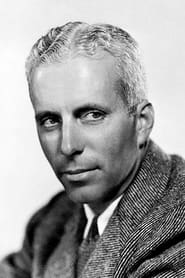
Howard Hawks
Director
Born: May 30, 1896 in Goshen, Indiana, USA Died: December 26, 1977 Active: 1926-1970 Birth Name: Howard Winchester Hawks
Films
4 films

About Howard Hawks
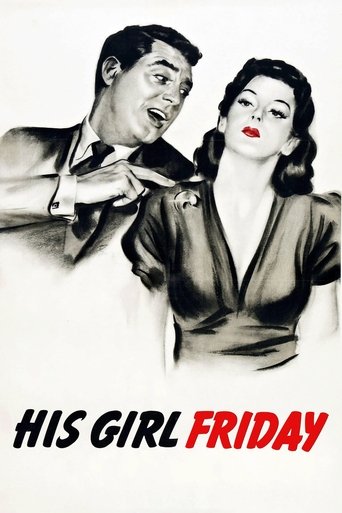
Howard Winchester Hawks was versatile and influential directors in Hollywood history, known for his mastery across multiple genres including westerns, screwball comedies, film noir, and war films. He began his career in the silent era after serving as a pilot in World War I and working as an aircraft designer, transitioning to filmmaking through his connections in the industry. Hawks successfully navigated the transition to sound, directing films like the gangster epic 'Scarface' (1932) and the screwball comedy genre with 'His Girl Friday' (1940). Throughout his career, he was known for discovering and developing major stars including Cary Grant, Humphrey Bogart, and Lauren Bacall, while creating some of Hollywood's most films like 'Bringing Up Baby' (1938), 'To Have and Have Not' (1944), 'The Big Sleep' (1946), 'Red River' (1948), and 'Rio Bravo' (1959). Despite being nominated five times for Best Director, he never won a competitive Oscar but received an honorary Academy Award in 1975 in recognition of his contributions to cinema. His films were characterized by overlapping dialogue, ensemble casts, and themes of professional competence and camaraderie, establishing him as a master craftsman whose work filmmakers today.
The Craft
Behind the Camera
Hawks was known for his distinctive directorial style characterized by rapid-fire overlapping dialogue, efficient storytelling, and focus on professional groups working together. His films often featured strong ensemble casts with clear character hierarchies, themes of male camaraderie and professional competence, and a blend of action, comedy, and romance. Hawks pioneered techniques like overlapping dialogue to create more naturalistic conversations, maintained a fast pace throughout his films, and was famous for his 'three rules of good filmmaking': 'Three good scenes and no bad ones.' His approach emphasized entertainment value while exploring complex relationships between men and women, often featuring strong, intelligent female characters who could match their male counterparts in wit and capability.
Milestones
- Directed the controversial gangster film 'Scarface' (1932)
- Pioneered screwball comedy with 'His Girl Friday' (1940)
- Discovered and launched Lauren Bacall's career in 'To Have and Have Not' (1944)
- Created the classic western 'Red River' (1948)
- Received an Honorary Academy Award for Lifetime Achievement (1975)
- Directed over 45 films spanning five decades
- Worked with virtually every major star of Hollywood's Golden Age
Best Known For
Must-See Films
Accolades
Won
- Honorary Academy Award for Lifetime Achievement (1975)
- Golden Globe Cecil B. DeMille Award (1974)
- Directors Guild of America D.W. Griffith Award (1975)
- New York Film Critics Circle Award for Best Director (1940) for 'His Girl Friday' and 'Sergeant York'
Nominated
- Academy Award nomination for Best Director for 'Sergeant York' (1941)
- Academy Award nomination for Best Director for 'Air Force' (1943)
- Academy Award nomination for Best Director for 'The Big Sleep' (1946)
- Academy Award nomination for Best Director for 'Red River' (1948)
- Academy Award nomination for Best Director for 'The Big Sky' (1952)
- Academy Award nomination for Best Picture for 'Sergeant York' (1941)
- Venice Film Festival Golden Lion nomination for 'Red River' (1948)
Special Recognition
- AFI Life Achievement Award (1975)
- Hollywood Walk of Fame star at 1708 Vine Street
- Inducted into the Western Writers Hall of Fame (1974)
- National Film Registry selections for 'His Girl Friday' (1993), 'The Big Sleep' (1997), 'Red River' (1990), 'Scarface' (1994)
- Ranked #4 on Entertainment Weekly's list of 50 Greatest Directors (2002)
Working Relationships
Worked Often With
Studios
Why They Matter
Impact on Culture
Howard Hawks profoundly influenced American cinema through his genre-spanning filmography and innovative techniques. He essentially created or perfected several major film genres, including the screwball comedy with 'His Girl Friday' and the modern action film with 'Red River.' His use of overlapping dialogue revolutionized film sound, creating more naturalistic conversations that influenced countless directors. Hawks' portrayal of professional competence and group dynamics became a template for ensemble films, while his strong female characters challenged gender norms of the era. His films have been referenced and homaged by directors from Martin Scorsese to Quentin Tarantino, and his work continues to be studied in film schools for its technical mastery and entertainment value. The 'Hawksian woman' - intelligent, witty, and capable of holding her own with male counterparts - became an archetype in Hollywood cinema.
Lasting Legacy
Howard Hawks left an indelible mark on Hollywood as. Despite never winning a competitive Academy Award, his films have endured as classics, with many selected for preservation in the National Film Registry. His influence extends beyond his own films to the directors he inspired, including Peter Bogdanovich, who wrote extensively about Hawks' work, and contemporary filmmakers like the Coen brothers who cite him as a major influence. Hawks' ability to work across genres while maintaining a consistent authorial voice demonstrated the possibility of personal filmmaking within the studio system. His films continue to be rediscovered by new audiences, cementing his status as one of cinema's great auteurs whose entertainment-focused approach never compromised artistic integrity.
Who They Inspired
Howard Hawks influenced generations of filmmakers through his technical innovations and storytelling approach. His rapid-fire dialogue style influenced directors like Preston Sturges and Billy Wilder, while his action sequences inspired filmmakers from Sam Peckinpah to John Carpenter. The French New Wave critics, particularly Jean-Luc Godard and François Truffaut, championed Hawks as a prime example of the 'auteur theory,' celebrating his consistent vision across genres. Contemporary directors including Quentin Tarantino, Robert Rodriguez, and the Coen brothers frequently reference Hawks' films and techniques. His emphasis on ensemble casts and group dynamics influenced directors from Robert Altman to Christopher Nolan. Hawks' ability to blend multiple genres within a single film paved the way for the postmodern genre-mixing common in contemporary cinema.
Off Screen
Howard Hawks was married three times and had four children. He was known as a sophisticated, well-educated man who enjoyed flying, hunting, and socializing with Hollywood's elite. Despite his public success, Hawks was relatively private about his personal life. He was a close friend of many Hollywood stars including Cary Grant and John Wayne, and was known for hosting legendary parties at his home. Hawks was also an accomplished pilot and incorporated his love of aviation into several of his films. His later years were spent in retirement at his Palm Springs home, where he died of natural causes at age 81.
Education
Graduated from Cornell University in 1918 with a degree in mechanical engineering. Also studied at Phillips Exeter Academy and briefly attended Stanford University before joining the Army Air Corps during World War I.
Family
- Athole Shearer (1928-1940)
- Nancy Gross (1941-1947)
- Jane Loring (1953-1977)
Did You Know?
- Was a licensed pilot and incorporated aviation into many films
- Served as a flight instructor in World War I
- Was a skilled mechanical engineer before entering films
- Discovered Lauren Bacall and cast her in her first film
- His film 'Scarface' (1932) was so controversial it was banned in several states for years
- Was friends with Ernest Hemingway and adapted two of his novels
- Never won a competitive Academy Award despite five nominations
- His films often featured his own rules of storytelling
- Was an accomplished big-game hunter
- His daughter Kitty Hawks became a successful photographer
- Turned down directing 'The Bridge on the River Kwai' (1957)
- His brother Kenneth Hawks was also a director who died in a plane crash
- Often worked with the same crew members across multiple films
- Was one of the first directors to form his own production company
- His films often featured characters with professional skills and codes of conduct
In Their Own Words
'A good movie is three good scenes and no bad scenes.'
''I don't think a director should have any style. His style should be the story he's telling.'
''The only thing important about a picture is whether it's entertainment.'
''I'm not a storyteller, I'm a picture-maker.'
''The best way to make a picture is to get a good story, get good actors, and stay out of their way.'
''I don't make messages. I make movies.'
''The director is the only one who knows what the picture is about.'
''I don't rehearse. I don't like to rehearse. I think it spoils it.'
''The only thing I know about directing is that you have to know what you want to do and then do it.'
''I'm not interested in making art. I'm interested in making entertainment.'
Frequently Asked Questions
Who was Howard Hawks?
Howard Hawks was. His active years covered five decades, during which he worked with virtually every major star of Hollywood's Golden Age and created enduring films like 'His Girl Friday,' 'The Big Sleep,' and 'Red River.'
What films is Howard Hawks best known for?
Titles linked here include His Girl Friday (1940), The Big Sleep (1946).
When was Howard Hawks born and when did he die?
Born May 30, 1896; died December 26, 1977.
What awards did Howard Hawks win?
Despite being nominated five times for the Academy Award for Best Director, Howard Hawks never won a competitive Oscar. However, he received an Honorary Academy Award for Lifetime Achievement in 1975, the Golden Globe Cecil B. DeMille Award in 1974, and the Directors Guild of America's D.W. Griffith Award in 1975. He also won the New York Film Critics Circle Award for Best Director in 1940.
What was Howard Hawks' directing style?
Howard Hawks' directing style was characterized by rapid-fire overlapping dialogue, efficient storytelling, and focus on professional groups working together. He pioneered techniques like overlapping dialogue for more naturalistic conversations, maintained fast pacing, and emphasized entertainment value. His films often featured strong ensemble casts, themes of male camaraderie and professional competence, and intelligent female characters who could match their male counterparts in wit and capability.