
Films
2 films
About Rani Bala
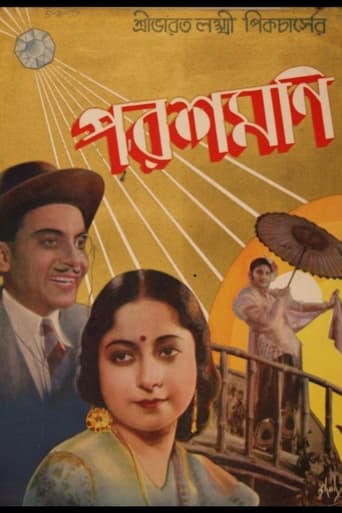
Indian film actress who emerged during the silent era of Indian cinema in the 1920s and continued her career into the early sound period. She gained recognition for her role in the landmark Indo-German co-production 'The Light of Asia' (1925), which was one of the first Indian films to achieve international acclaim. Working primarily with the Bombay Talkies and similar production houses, she was part of the generation of Indian film actors who helped establish the country's cinematic language. Her the crucial transition from silent films to talkies, demonstrating her versatility as a performer across different mediums. In 'The Light of Asia,' she played a supporting role alongside Seeta Devi and Himanshu Rai, contributing to what would become a historically significant film in Indian cinema history. Her later work in 'Parashmoni' (1939) showed her continued relevance in the evolving Bengali film industry. Though her filmography was relatively brief, spanning from 1925 to 1939, her contributions during this formative period of Indian cinema were significant.
The Craft
On Screen
Rani Bala's acting style was characteristic of the silent era, emphasizing expressive facial gestures and body language to convey emotions without dialogue. Her performances in early Indian cinema reflected the theatrical influences that were common in films of that period, with exaggerated expressions to ensure emotional clarity reached the audience. As cinema transitioned to sound, she adapted her technique to incorporate vocal performance while maintaining the dramatic intensity required by early Indian films.
Milestones
- Appeared in 'The Light of Asia' (1925), one of India's first internationally acclaimed films
- Worked during the transition from silent era to talkies
- Participated in the early Indo-German film collaborations
- Acted in both Hindi and Bengali cinema
- Contributed to the foundational period of Indian cinema
Best Known For
Iconic Roles
Must-See Films
Working Relationships
Worked Often With
Studios
Why They Matter
Impact on Culture
Rani Bala was part of the generation of Indian film actors who helped establish the foundation of Indian cinema during its formative years. Her participation in 'The Light of Asia' contributed to one of the earliest examples of international film collaboration involving India, helping to put Indian cinema on the global map. As a woman working in the film industry during the 1920s and 1930s, she was among the early female performers who helped normalize women's participation in Indian cinema, which was still considered a controversial profession for women in conservative Indian society. Her work during the transition from silent films to talkies represents an important chapter in the technical and artistic evolution of Indian filmmaking.
Lasting Legacy
Rani Bala's legacy, while not extensively documented, lies in her contribution to the foundational period of Indian cinema. Her appearance in 'The Light of Asia' ensures her place in film history as part of a groundbreaking production that demonstrated India's capability to produce films of international quality. As one of the early actresses who worked across different Indian film industries, she represents the cosmopolitan nature of early Indian cinema. Though detailed records of her career are limited, her work serves as an important reference point for film historians studying the development of Indian cinema from its silent era beginnings through the early sound period.
Who They Inspired
While specific records of Rani Bala's direct influence on other actors are scarce, her work in early Indian cinema contributed to establishing acting conventions and techniques that would be built upon by subsequent generations. As part of early Indo-German collaborations, she helped demonstrate the possibilities of international co-production, influencing future cross-border film projects in India. Her active years covered a crucial transitional period in Indian cinema, and her adaptability from silent to sound films likely served as an example for other actors navigating this technological and artistic shift.
Off Screen
Very limited information is available about Rani Bala's personal life, which was common for actors of her era, especially women in early Indian cinema. Like many performers of the silent and early sound period, detailed biographical information was not systematically preserved, and personal details often remained private due to social norms of the time.
Did You Know?
- 'The Light of Asia' (1925) was one of the first Indian films to be released internationally, screening in London and other European cities
- The film was an Indo-German collaboration between Himanshu Rai and German director Franz Osten
- Rani Bala worked during a time when acting was still considered a controversial profession for women in conservative Indian society
- The Light of Asia was based on Edwin Arnold's 1879 poem 'The Light of Asia' about the life of Buddha
- The film was shot in India with German technical expertise, representing one of the earliest international film co-productions
- Silent film actors like Rani Bala had to rely heavily on facial expressions and body language to convey emotions
- The transition to sound films in the early 1930s ended many silent film careers, but Rani Bala successfully made the transition
- Early Indian cinema often drew from religious and mythological themes, as seen in 'The Light of Asia'
- Film preservation from this era was poor, making surviving works featuring actors like Rani Bala extremely rare and valuable
- The success of 'The Light of Asia' helped establish Himanshu Rai as a major figure in early Indian cinema
Frequently Asked Questions
Who was Rani Bala?
Indian film actress active during the silent era and early sound period of Indian cinema (1925-1939). She is best known for her role in the landmark film 'The Light of Asia' (1925), one of India's first internationally acclaimed films that was an Indo-German co-production.
What films is Rani Bala best known for?
Titles linked here include The Light of Asia (1925), Parashmoni (1939).
When was Rani Bala born and when did she die?
Unfortunately, specific birth and death dates for Rani Bala are not available in historical records, which is common for many actors from early Indian cinema. Her active career period is documented as spanning from 1925 to 1939.
What awards did Rani Bala win?
There are no documented awards or formal recognitions for Rani Bala, which was typical for actors of her era as India's film award system had not yet been established. Her significance lies in her contributions to early Indian cinema rather than formal accolades.
What was Rani Bala's acting style?
Rani Bala's acting style was characteristic of the silent era, emphasizing expressive facial gestures and body language to convey emotions without dialogue. Like other actors of her time, she used theatrical techniques adapted for the camera, with exaggerated expressions to ensure emotional clarity reached the audience.
What was the significance of 'The Light of Asia'?
'The Light of Asia' (1925) was historically significant as one of the first Indian films to gain international acclaim and represented an early Indo-German collaboration. It demonstrated India's capability to produce films of international quality and helped establish Indian cinema on the global stage, featuring Rani Bala in a supporting role.