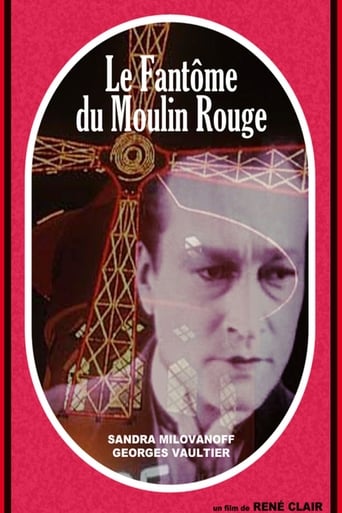

Georges Vaultier
Actor
- Active
- 1925-1925
Films 1
About Georges Vaultier
Georges Vaultier is a little-documented French screen performer from the silent era whose surviving film credit places him in the 1925 production The Phantom of the Moulin-Rouge. Available reference sources preserve his name primarily through filmographic listings rather than through extensive biographical profiles, which suggests that he may have worked in a limited acting capacity or in a career for which archival records are incomplete. Because of this scarcity, many personal details about his life, training, and off-screen career have not been reliably preserved in standard film reference works. What can be said with confidence is that he belonged to the generation of European performers active during the height of silent cinema and appeared in at least one feature associated with the French popular-melodrama tradition. His surviving credit connects him to a period when Parisian settings, stage-inspired mysteries, and atmosphere-driven storytelling were highly prominent in French filmmaking. Beyond that documented appearance, his wider career arc remains unclear, and no authoritative body of evidence currently establishes a fuller filmography. As a result, Georges Vaultier is best understood as an obscure but real participant in silent-era French cinema whose name survives in archival film records rather than in modern celebrity histories.
More about Georges Vaultier
In film history
Georges Vaultier's cultural impact is limited by the scarcity of surviving documentation, but his presence in a 1925 French silent film places him within an important phase of European screen culture. Performers like Vaultier contributed to the texture and realism of silent-era storytelling, especially in productions that depended heavily on expressive ensemble work, visual atmosphere, and recognizable Parisian iconography. Even when not widely famous, such actors helped shape the historical memory of early French cinema by participating in works that reflected contemporary urban legend, theatricality, and melodramatic suspense. His legacy therefore lies less in star persona than in the archival record of the silent era itself, where many artists are known only through cast lists and surviving prints or trade references.
Later reputation
Vaultier's lasting legacy is that of an obscure but documented participant in silent French filmmaking. Because no extensive personal archive or widely circulated biography is presently known, his importance rests primarily on the preservation of his screen credit and the reminder that cinema history is built not only on major stars but also on the many lesser-known actors who gave early films their character. For historians, names like Georges Vaultier are valuable because they help reconstruct production networks, casting practices, and the breadth of talent active in 1920s French cinema. His record also underscores the fragility of silent-era fame: many performers were once working professionals whose names now survive only in film databases and archival listings. In that sense, his legacy is emblematic of the many forgotten contributors whose labor made classic cinema possible.
Influence
There is no evidence that Georges Vaultier exerted a documented influence on later actors or directors in the way major stars or auteurs did. His significance is historical rather than stylistic or pedagogical: he stands as part of the wider body of performers whose work supported the development of silent film performance conventions. In a broader sense, the existence of actors like Vaultier influenced film history by contributing to the ensemble culture of early European cinema, where expressive physical acting and atmospheric presence were essential. Any direct influence on later artists cannot be confidently established from currently available sources.
Off screen
No reliable, widely cited biographical material is currently available concerning Georges Vaultier's personal life. Standard surviving film references do not provide confirmed information about marriages, family background, private interests, or later life. Because the archival record is thin, any detailed claims about his personal circumstances would be speculative and are best avoided until supported by primary documentation.
Credits
- Appeared in the silent-era French film The Phantom of the Moulin-Rouge (1925)
- Survives in film history as a documented cast member from the late silent period
- Represents the lesser-known character and supporting performers who populated French popular cinema of the 1920s
Roles
- Role in The Phantom of the Moulin-Rouge (1925) not specifically identified in surviving standard references
Films
Studios
- French silent cinema production circles of the mid-1920s
Notes
- Georges Vaultier is currently best known through a single surviving film credit rather than through a large documented career.
- His identified screen appearance is in a 1925 silent French production, placing him at the end of the silent era.
- He is associated with The Phantom of the Moulin-Rouge, a title that evokes the popular Parisian imagery often used in French cinema of the period.
- Unlike major stars of the era, Vaultier does not appear to have a widely preserved biography in standard modern reference sources.
- His obscurity makes him an example of how many silent-era performers are remembered today only through cast lists and film archives.
- No reliable evidence currently confirms his birth date, death date, or private life details.
- The limited record suggests he may have been a supporting or character performer rather than a headline star.
- His name survives as part of the broader historical fabric of 1920s French filmmaking.
Questions
Who was Georges Vaultier?
Georges Vaultier was a French actor from the silent-film era who is currently documented primarily for his appearance in The Phantom of the Moulin-Rouge (1925). Surviving references provide very little biographical detail, so he is best known as an obscure but real participant in classic French cinema.
What films is Georges Vaultier best known for?
He is best known for The Phantom of the Moulin-Rouge (1925), which is the principal surviving screen credit associated with his name. At present, no broader confirmed filmography is widely documented in standard reference sources.
When was Georges Vaultier born and when did he die?
His birth and death dates are not currently verified in the available historical record. Likewise, his birthplace and later life details have not been reliably preserved in widely accessible film references.
What awards did Georges Vaultier win?
No awards or formal nominations are currently documented for Georges Vaultier. This is not unusual for lesser-known silent-era performers whose careers were recorded less comprehensively than those of major stars.
What was Georges Vaultier's acting style?
No contemporary critical description of his individual style has been reliably preserved. Given his era, he would have worked within silent-film performance conventions that emphasized physical expressiveness, clear gesture, and visual storytelling, but any more specific claim would be speculative.
What is Georges Vaultier's legacy in film history?
His legacy lies in the historical record of silent French cinema rather than in star celebrity. He represents the many supporting performers whose names survive in archives and databases, helping film historians reconstruct the full cast of early productions.