Films
1 film
About Gregori Chmara
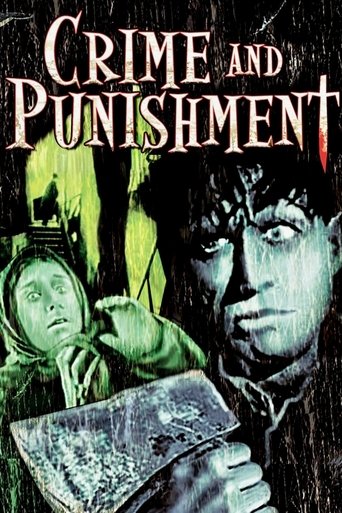
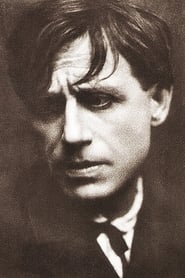
Gregori Chmara is credited on a single production — Crime and Punishment (1923). Most notably starring in the 1923 German adaptation of Fyodor Dostoevsky's Crime and Punishment. Born in the late 19th century in the Russian Empire, Chmara emerged as a performer during the revolutionary period that saw many Russian artists emigrate to Western Europe. His portrayal of Raskolnikov in Robert Wiene's 1923 film adaptation represents his most significant and perhaps only major film role, showcasing the intense psychological acting style characteristic of German Expressionist cinema. The film itself was a landmark production, being one of the earliest cinematic adaptations of Dostoevsky's masterpiece. Chmara's performance captured the tormented intellectualism and moral conflict of the protagonist, though his career appears to have been brief, possibly due to the challenges faced by Russian émigré actors in European cinema. His work exemplifies the transnational nature of early European cinema, where Russian performers found opportunities in German and French productions during the 1920s. Despite his limited filmography, Chmara's contribution to silent cinema remains significant through his interpretation of one of literature's most complex characters.
The Craft
On Screen
Chmara's acting style was characteristic of German Expressionist cinema, featuring intense psychological portrayal and dramatic gestures. His performance as Raskolnikov emphasized the character's internal torment and moral conflict through exaggerated facial expressions and body language typical of silent film acting. He embodied the intellectual angst and psychological complexity that defined Expressionist performances, using his physical presence to convey the character's descent into madness and guilt.
Milestones
- Starred as Raskolnikov in the 1923 German film adaptation of Crime and Punishment directed by Robert Wiene
- Worked during the German Expressionist film movement
- Participated in one of the earliest cinematic adaptations of Dostoevsky's work
Best Known For
Iconic Roles
Must-See Films
Working Relationships
Worked Often With
Studios
Why They Matter
Impact on Culture
Gregori Chmara's cultural impact, while limited by his brief filmography, is significant through his contribution to the early adaptation of Russian literature for cinema. His portrayal of Raskolnikov in the 1923 German production helped establish the template for bringing Dostoevsky's complex psychological characters to the screen. The film itself represents an important moment in cinema history, demonstrating how Russian literary classics were interpreted through the lens of German Expressionism. Chmara's work exemplifies the cross-cultural exchange that characterized European cinema in the 1920s, where Russian stories found new life through German artistic sensibilities.
Lasting Legacy
Gregori Chmara's legacy rests primarily on his single but significant performance in the 1923 adaptation of Crime and Punishment. As one of the first actors to portray Raskolnikov on film, he helped establish how this complex literary character could be translated to the cinematic medium. His work represents an important bridge between Russian literature and German Expressionist cinema, showcasing how émigré artists contributed to the European silent film. Though his career was brief, his performance continues to be studied by film scholars interested in early adaptations of classic literature and the transnational nature of 1920s European cinema.
Who They Inspired
Due to his limited filmography, Gregori Chmara's direct influence on subsequent actors appears minimal. However, his interpretation of Raskolnikov may have influenced later performers who tackled the same role in subsequent adaptations of Crime and Punishment. His work exemplifies the psychological approach to acting that would become more refined in later years, showing how silent film actors could convey complex emotional states through physical performance alone.
Off Screen
Very little is known about Gregori Chmara's personal life outside of his film career. As a Russian actor working in Germany during the early 1920s, he was likely part of the wave of Russian émigré artists who fled their homeland following the Russian Revolution. His brief film career suggests he may have returned to other artistic pursuits or perhaps returned to Russia when circumstances changed.
Did You Know?
- The 1923 Crime and Punishment was directed by Robert Wiene, famous for The Cabinet of Dr. Caligari (1920)
- Chmara's film was one of the earliest adaptations of Dostoevsky's novel for the screen
- The film was a German production despite its Russian literary source
- Chmara was part of the Russian émigré community in Germany during the 1920s
- His career appears to have been limited to silent films, with no known talkie appearances
- The 1923 Crime and Punishment is now considered a lost film, with only fragments surviving
- German Expressionism heavily influenced the visual style and acting approach in Chmara's film
- The film was produced during the height of the Weimar Republic's golden age of cinema
Frequently Asked Questions
Who was Gregori Chmara?
Russian with credits in this catalog.
What films is Gregori Chmara best known for?
Titles linked here include Crime and Punishment (1923).
When was Gregori Chmara born and when did he die?
Born 1890; died death date not listed.
What was Gregori Chmara's acting style?
Chmara's acting style was characteristic of German Expressionist cinema, featuring intense psychological portrayal, dramatic gestures, and exaggerated facial expressions typical of silent film performance.
What was the significance of Chmara's Crime and Punishment film?
The 1923 Crime and Punishment was significant as one of the earliest cinematic adaptations of Dostoevsky's masterpiece, directed by Robert Wiene of The Cabinet of Dr. Caligari fame, though the film is now considered lost with only fragments surviving.