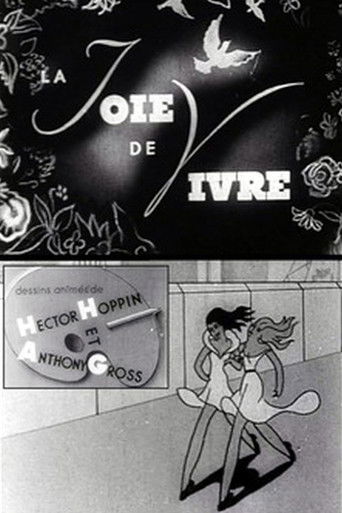
Anthony Gross
Director
- Born
- April 27, 1905, Lambeth, London, England
- Died
- January 21, 1984
- Active
- 1934-1934
Films directed 1
About Anthony Gross
Anthony Gross was a British artist, illustrator, printmaker, and occasional filmmaker whose work bridged the worlds of fine art, design, and cinema in the early 20th century. He is credited as director of The Joy of Life (1934), a short film that reflects the experimental and visually attentive sensibility associated with his broader artistic career rather than with commercial studio filmmaking. Gross was far better known for his achievements in graphic art, book illustration, and painting than for an extended career behind the camera, which is why his filmography remains extremely small and specialized. His reputation in cinema history rests largely on this one early-1930s directing credit and on the fact that his visual training gave his moving-image work a distinctive pictorial quality. Outside film, he became recognized in Britain for his contributions to illustration and printmaking, and his art was strongly associated with careful draftsmanship, clarity of composition, and an interest in atmosphere. Because his screen career was brief and limited, there is comparatively little documentation of his direct involvement in studio production, but the surviving record places him among those artist-filmmakers whose work crossed disciplinary boundaries. Gross therefore occupies a niche place in classic cinema history as an example of an interwar artist who experimented with film as an extension of visual art.
More about Anthony Gross
Behind the camera
Gross's directing style, as inferred from his background and the nature of his film work, appears to have been shaped by the principles of illustration and graphic composition rather than by mainstream studio realism. His approach likely emphasized carefully arranged imagery, visual rhythm, and a painterly sense of light, line, and balance. Because his filmography is extremely limited, there is not enough surviving documentation to describe a fully developed directorial method in the way one might for a major film director. Even so, his work stands out historically as the product of an artist using film as a visual medium, with an emphasis on form and atmosphere over industrial convention.
In film history
Anthony Gross’s cultural impact in cinema is specialized rather than broad, but he is significant as part of the interwar movement of artists who approached film as an extension of fine art. His presence in film history illustrates how cinema in the early sound era could attract painters, illustrators, and designers interested in exploring motion, rhythm, and visual narrative outside the strict confines of commercial production. While The Joy of Life is not widely known as a major landmark of British film, Gross’s involvement underscores the permeability between art-world experimentation and early cinematic practice. In that sense, he contributes to our understanding of how British visual culture in the 1930s allowed artists to test film as a medium of composition and atmosphere.
Later reputation
Gross’s legacy in film history is modest but distinctive: he is remembered less as a mainstream director than as an artist who briefly entered cinema and left behind a rare directing credit. That makes him of interest to scholars of crossover creativity, especially those studying how illustrators and printmakers influenced the visual language of early film. His broader legacy rests more securely in the art world, where he is recognized as a serious British visual artist. Within cinema databases, however, he remains valuable precisely because his limited film record documents a moment when the boundaries between illustrated art and motion pictures were especially fluid.
Influence
Gross influenced cinema indirectly through the example of an artist applying the principles of composition, design, and visual storytelling to film. He belongs to a lineage of creatives whose background in illustration helped shape a more graphic, image-conscious approach to screen work. While there is no strong evidence that he directly mentored a generation of filmmakers, his career demonstrates the broader influence of visual artists on the aesthetics of short-form and experimental cinema. His work is most useful historically as a reminder that early film culture often drew talent from outside the studio system.
Off screen
Anthony Gross was primarily known for his professional life as a visual artist rather than for a heavily publicized personal life. Publicly available classic-cinema sources preserve much less about his marriages, family, and domestic background than about his artistic output, so detailed personal information is limited. He is remembered more as a British creative figure working across several visual disciplines than as a celebrity personality in the film industry. Because of that, surviving references tend to focus on his art and his occasional work in film rather than on private affairs.
Education
He trained as an artist in Britain, but detailed film-oriented educational records are not consistently documented in the available classic-cinema sources. His work suggests formal grounding in drawing, composition, and print-related techniques, which later informed his illustration and film work.
Credits
- Directed the short film The Joy of Life (1934), his only widely documented screen directing credit
- Built a respected parallel career as a British artist, illustrator, and printmaker
- Contributed to the interwar tradition of artist-filmmakers whose work blended fine-art composition with moving images
- Gained recognition in art circles for his strong draftsmanship and visually precise design sensibility
- Established a career that connected book arts, illustration, and visual storytelling
Films
- The Joy of Life (1934)
Notes
- Anthony Gross is best known in film history for a single directing credit, The Joy of Life (1934).
- He was more prominent as an artist, illustrator, and printmaker than as a filmmaker.
- His film work is often discussed as part of the broader relationship between fine art and early cinema.
- He was British, born in London, and worked during a period when modernist visual culture was strongly influencing the arts.
- Because his screen career was so brief, many film databases list him primarily through that one title.
- His career is a good example of an interwar creative who moved fluidly between different visual media.
- His background in drawing and composition likely informed the visual qualities of his film work.
- He remains a niche figure for classic-cinema historians but an important one for historians of interdisciplinary art.
Questions
Who was Anthony Gross?
Anthony Gross was a British artist, illustrator, printmaker, and occasional filmmaker best known in cinema history for directing The Joy of Life (1934). He is not remembered as a major studio director, but rather as a visual artist whose work briefly crossed into film. His importance lies in the intersection of fine art and early British screen culture.
What films is Anthony Gross best known for?
He is primarily known for The Joy of Life (1934), the only film credit that is consistently associated with his directing work in classic-cinema references. Because his filmography is extremely limited, that title is the main reason he appears in film databases. His broader reputation comes from his art rather than from a long cinematic career.
When was Anthony Gross born and when did he die?
Anthony Gross was born on April 27, 1905, in Lambeth, London, England, and he died on January 21, 1984. His life spanned much of the 20th century, though his direct involvement in film was brief. Most surviving documentation emphasizes his later career as a visual artist.
What awards did Anthony Gross win?
No major film awards, nominations, or Hollywood honors are prominently documented for Anthony Gross in the classic-cinema record. He was primarily recognized in the art world, where his reputation rested on illustration, printmaking, and painting. If awards existed in those fields, they are not widely cited in standard film references.
What was Anthony Gross's directing style?
Gross's directing style appears to have been shaped by his background as a visual artist, with an emphasis on composition, atmosphere, and pictorial clarity. Rather than a long studio career with a clearly documented method, his film work seems to reflect an artist's eye for framing and design. This makes him especially interesting as an example of a filmmaker who approached cinema from the world of fine art.
What is Anthony Gross's legacy in film history?
His legacy in film history is specialized but meaningful: he represents the artists who briefly used film as an extension of their visual practice. Though not a major director in commercial cinema, he remains notable to historians studying cross-disciplinary creativity in the 1930s. His name survives because of that rare intersection between art, illustration, and early British film.