Eleonora Duse
Actor
Born: October 3, 1858 in Vigevano, Lombardy, Italy Died: April 21, 1924 Active: 1874-1924 (Film: 1916-1916)
Films
1 film
About Eleonora Duse
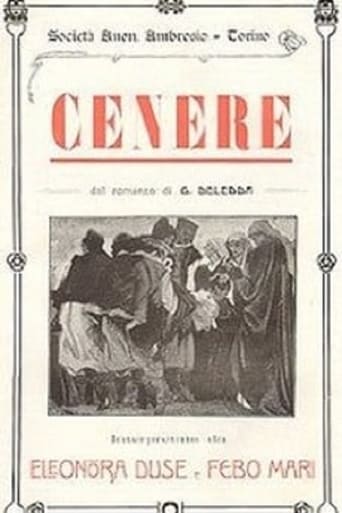
Revolutionary Italian actress who transformed the art of performance through her naturalistic style. Born into a family of traveling actors, she made her stage debut at age four and quickly developed a reputation for her intense emotional authenticity and psychological depth. Unlike the theatrical conventions of her time, Duse rejected artificial gestures and melodramatic delivery, instead drawing on her own experiences to create deeply human performances. She achieved international acclaim touring throughout Europe and America, becoming actresses of the late 19th and early 20th centuries. Her most famous stage roles included Nora in Ibsen's 'A Doll's House' and Marguerite Gautier in 'La Dame aux Camélias.' In 1916, at the age of 58, she made her only film appearance in 'Ashes' (Cenere), bringing her stage presence to the silent medium. Despite suffering from poor health in her later years, she continued performing until shortly before her death in 1924, leaving an indelible mark on the evolution of modern acting.
The Craft
On Screen
naturalistic and psychologically deep approach that rejected the artificial gestures and declamatory style common in 19th-century theater. Duse drew on her own emotional experiences, creating performances of remarkable authenticity and subtlety. Her technique emphasized internal emotional truth over external showmanship, using minimal gestures and nuanced vocal modulation to convey complex psychological states. She was known for her ability to completely inhabit her characters, bringing unprecedented realism and emotional depth to her roles.
Milestones
- Stage debut at age 4 in traveling theater company
- International touring success throughout Europe and America (1890s-1910s)
- Revolutionary naturalistic acting style that influenced modern performance
- Acclaimed performances in Ibsen and Dumas adaptations
- Film debut and only appearance in 'Ashes' (1916)
- Formation of her own theater company
- Recognition as one of the greatest actresses of her time
Best Known For
Iconic Roles
Must-See Films
Accolades
Won
- Commander of the Order of the Crown of Italy (1905)
- Grand Officer of the Order of the Crown of Italy (1919)
Special Recognition
- First actress to have her image appear on an Italian postage stamp (1958)
- Numerous theaters named in her honor throughout Italy
- International recognition as one of the greatest actresses in theatrical history
Working Relationships
Worked Often With
Studios
Why They Matter
Impact on Culture
Eleonora Duse fundamentally transformed the art of acting by naturalistic performance techniques that rejected the artificiality of 19th-century theater. Her approach emphasized psychological truth and emotional authenticity, laying groundwork for modern method acting and influencing generations of performers. She broke new ground for women in theater by forming her own company and demanding artistic control over her roles. Duse's international success helped establish Italian theater on the world stage and demonstrated that emotional subtlety could transcend language barriers. Her brief but powerful film appearance in 'Ashes' brought her revolutionary stage technique to cinema, influencing early film acting styles.
Lasting Legacy
Duse's legacy endures as. She is remembered as the first modern actress, whose naturalistic style revolutionized performance art and influenced the development of method acting. Theaters throughout Italy bear her name, and she remains a subject of scholarly study for her contributions to performance theory. Her only film, 'Ashes,' is preserved as a historical document capturing her legendary talent. Duse's emphasis on psychological authenticity continues to influence actors today, from stage performers to film stars. She represents the transition from classical to modern acting techniques and remains a symbol of artistic integrity and emotional truth in performance.
Who They Inspired
Duse's naturalistic acting technique directly influenced the development of modern acting methods, including Stanislavski's system and later method acting approaches. Her emphasis on emotional authenticity and psychological depth inspired actors across generations, from early film stars to contemporary performers. Directors and acting teachers continue to study her performances as models of naturalistic technique. Her success as an independent woman artist also paved the way for greater artistic autonomy for performers, particularly women in theater and film.
Off Screen
Duse led a complex personal life marked by intense relationships and professional dedication. She never married but had a famous romantic relationship with Italian poet and playwright Gabriele D'Annunzio, which ended bitterly. She had one daughter, Enrichetta, from a relationship with journalist Martino Cafiero. Duse was known for her intellectual pursuits, extensive reading, and spiritual interests. She suffered from poor health throughout her life, particularly respiratory issues, which ultimately led to her death while on tour in Pittsburgh, Pennsylvania.
Education
No formal education; trained in the theater through her family's traveling company from early childhood, learning through practical experience rather than academic study.
Did You Know?
- Made only one film in her entire career - 'Ashes' (1916)
- Was the first actress to be featured on an Italian postage stamp
- Often performed despite being seriously ill, including during her final American tour
- Rejected multiple film offers before finally agreeing to 'Ashes'
- Was a rival of Sarah Bernhardt, though the two respected each other's talent
- Spoke multiple languages fluently, allowing her to perform internationally
- Was known for her intense preparation method, often living as her characters offstage
- Her relationship with D'Annunzio inspired much of his poetic work
- Died in Pittsburgh while on tour, far from her Italian homeland
- Her daughter Enrichetta also became a successful stage actress
- Was known for her charitable work and support of struggling artists
- Maintained extensive correspondence with intellectuals and artists of her time
In Their Own Words
The theater is the involuntary reflex of the ideas of the crowd.
I have no life apart from my art. I am nothing when I am not acting.
To be a great actress, one must be able to feel everything and express nothing.
The truth of art consists in removing the mask rather than putting it on.
I do not play at being someone else - I become that person completely.
Frequently Asked Questions
Who was Eleonora Duse?
Revolutionary Italian actress (1858-1924) who transformed acting through her naturalistic style. She was.
What films is Eleonora Duse best known for?
Titles linked here include Ashes (Cenere) (1916).
When was Eleonora Duse born and when did she die?
Born October 3, 1858; died April 21, 1924.
What awards did Eleonora Duse win?
During her lifetime, Duse received several honors including being named Commander of the Order of the Crown of Italy in 1905 and Grand Officer of the Order of the Crown of Italy in 1919. She was also the first actress to appear on an Italian postage stamp, honored posthumously in 1958.
What was Eleonora Duse's acting style?
Duse pioneered a naturalistic acting style that rejected the artificial gestures and melodramatic delivery common in 19th-century theater. She emphasized psychological truth and emotional authenticity, drawing on her own experiences to create deeply human performances with minimal external showmanship.