
Films
2 films
About Ernest C. Warde
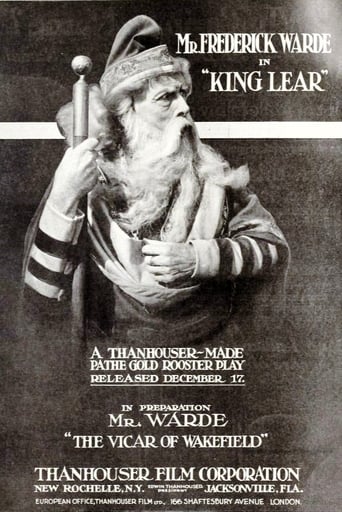
Silent film director and actor who worked during the early days of American cinema. He was the son of renowned Shakespearean stage actor Frederick Warde, which significantly influenced his career path in the performing arts. Ernest followed his father into the entertainment industry, finding his niche during the transitional period when stage actors were moving into the emerging medium of film. His most significant and well-documented work was the 1916 adaptation of Shakespeare's King Lear, which he both directed and acted in, featuring his father in the titular role. This production was notable as one of the earliest feature-length Shakespearean adaptations in American cinema, representing an important milestone in bringing classical theater to the silver screen. Warde's career appears to have been concentrated primarily in the mid-1910s, with limited documentation of other works beyond this landmark production. His contribution to early cinema, while brief, represents an important bridge between classical theatrical traditions and the new art form of motion pictures.
The Craft
On Screen
Classical theatrical approach adapted for silent film medium, likely drawing from Shakespearean training
Behind the Camera
Classical adaptation approach, focusing on bringing theatrical works to the emerging medium of film
Best Known For
Iconic Roles
Must-See Films
Working Relationships
Worked Often With
Studios
Why They Matter
Impact on Culture
Ernest C. Warde's contribution to cinema, while brief, represents an important moment in the adaptation of classical literature to film. His 1916 King Lear was among the first feature-length Shakespeare adaptations in American cinema, helping to establish the precedent that serious literary works could be successfully translated to the new medium of motion pictures. This work demonstrated that silent film could handle complex dramatic material and classical themes, paving the way for future Shakespeare adaptations. The collaboration between Ernest and his father Frederick Warde symbolized the transition from stage to screen that many theatrical artists experienced during this period. Their work helped legitimize cinema as a medium capable of handling sophisticated artistic content, not just simple entertainment.
Lasting Legacy
Ernest C. Warde's legacy is primarily preserved through his work on the 1916 King Lear, which stands as an important artifact of early American cinema and Shakespeare adaptation history. While his career was not extensive, his contribution represents a crucial moment in the evolution of film as an art form capable of handling classical material. The film itself, though partially lost to time, remains significant in film history circles as an example of early cinematic storytelling based on classical literature. Warde's work exemplifies the bridge between theatrical traditions and cinematic innovation that characterized the transitional period of the 1910s. His collaboration with his father also represents one of the earliest examples of family partnerships in American filmmaking.
Who They Inspired
Ernest C. Warde's influence on later filmmakers is primarily seen through his work in adapting Shakespeare to cinema. His approach to bringing classical theater to the screen helped establish methods that later directors would refine and expand upon. The 1916 King Lear demonstrated that silent film could effectively convey the emotional depth and dramatic complexity of Shakespeare's work, influencing subsequent adaptations of classical literature. While not widely known to modern audiences, his work contributed to the growing acceptance of cinema as a legitimate medium for serious artistic expression, influencing how filmmakers and studios approached literary adaptations in the decades that followed.
Off Screen
Ernest C. Warde was born into a theatrical family as the son of Frederick Warde,. This family background provided him with unique access to and understanding of classical theater, which he later applied to his work in early cinema. His relationship with his father appears to have been both personal and professional, with their collaboration on the 1916 King Lear representing a significant moment in early film history. Details about his personal life, including marital status or children, are not well-documented in historical records, which was common for many figures in early cinema whose personal lives were not extensively recorded.
Did You Know?
- Son of famous Shakespearean actor Frederick Warde
- The 1916 King Lear was one of the earliest feature-length Shakespeare adaptations in American cinema
- Worked with Thanhouser Film Corporation, one of the early American film studios
- Played the Duke of Burgundy in King Lear while his father played the title role
- The film was released during World War I, a time when international film distribution was challenging
- His career appears to have been brief, concentrated primarily in the mid-1910s
- The 1916 King Lear represents an important bridge between stage and screen traditions
- Like many early films, only portions of King Lear survive today
- His work exemplifies the transition of theatrical families into the new medium of cinema
Frequently Asked Questions
Who was Ernest C. Warde?
Silent on YTB.my.
What films is Ernest C. Warde best known for?
Titles linked here include King Lear (1916).
What was Ernest C. Warde's relationship to Frederick Warde?
Ernest C. Warde was the son of Frederick Warde, a famous Shakespearean stage actor. Their collaboration on the 1916 King Lear represented a unique father-son partnership in early cinema.
When was Ernest C. Warde active in filmmaking?
Ernest C. Warde was primarily active in 1916, with his most documented work being the King Lear adaptation. His career appears to have been concentrated in the mid-1910s during the silent film era.
What was the significance of the 1916 King Lear film?
The 1916 King Lear was significant as one of the earliest feature-length Shakespeare adaptations in American cinema, demonstrating that silent film could effectively handle complex classical material and helping establish cinema as a medium for serious artistic content.