Anton Giulio Bragaglia
Director
- Born
- February 11, 1890, Frosinone, Kingdom of Italy
- Died
- July 5, 1960
- Active
- 1910s-1960
Films directed 1
About Anton Giulio Bragaglia
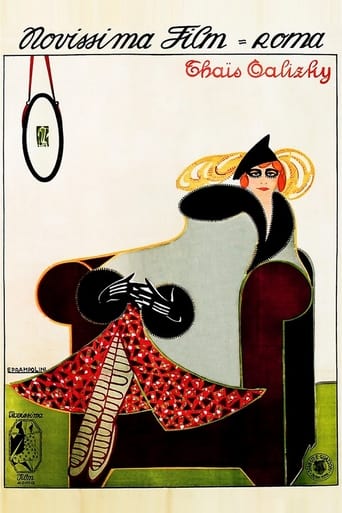
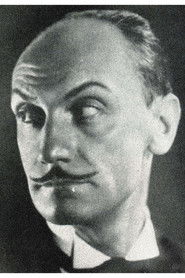
Anton Giulio Bragaglia was an Italian avant-garde artist, theorist, critic, photographer, and film director best remembered in cinema history for the single feature he directed, Thaïs (1917), one of the most strikingly experimental Italian silent films of the 1910s. Born into a cultured Roman family, he became associated with Futurism and the broader modernist movement, writing extensively on aesthetics, theater, photography, and the relationship between movement and image. In film, Bragaglia approached cinema less as a commercial entertainment medium and more as a laboratory for visual abstraction, rhythm, and symbolic design, which made Thaïs a singular work of Italian silent cinema. Outside filmmaking, he was deeply active in the experimental theater world and became an important figure in interwar Italian cultural life, helping promote avant-garde performance and visual culture. His cinematic reputation rests almost entirely on the originality and historical importance of Thaïs, which has been studied for its innovative set design, stylized composition, and decadent atmosphere. Although he did not build a large directorial filmography, Bragaglia’s ideas and multidisciplinary activity helped shape early twentieth-century Italian avant-garde aesthetics. He remained a significant intellectual presence in Italian arts until his death, and his name endures primarily through his contributions to Futurist modernism and early experimental cinema.
More about Anton Giulio Bragaglia
Behind the camera
Bragaglia's directing style in Thaïs is best described as avant-garde, highly stylized, and visually symbolic rather than naturalistic. He emphasized theatrical composition, abstract patterning, ornate and sometimes claustrophobic set design, and a strong sense of visual rhythm that aligned with Futurist interest in dynamism and modernity. The film favors expressive imagery, bold framing, and decorative excess over conventional narrative realism, making it one of the most idiosyncratic silent films of its era. His approach reflects a desire to merge cinema with other modern arts, especially stage design, photography, and visual theory.
In film history
Anton Giulio Bragaglia occupies an important place in cultural history because he represents the crossing of Futurist theory, theater experimentation, photography, and cinema in early twentieth-century Italy. Thaïs stands as a crucial example of how silent film could be used as an art object rather than simply a narrative entertainment, making it valuable to historians interested in early cinematic modernism. His work helped define a distinctly Italian strain of avant-garde expression, one that was visually ornate, intellectually ambitious, and often intentionally anti-naturalistic. Beyond film, his writings and theatrical activity contributed to the broader climate of artistic experimentation that helped modernize Italian performance culture. Even though his filmography is extremely small, his impact is disproportionate because Thaïs remains a key reference point in studies of Futurist cinema and silent-era visual innovation.
Later reputation
Bragaglia's legacy lies in the fact that he proved cinema could function as a medium of modernist abstraction and not only as a vehicle for storytelling. Thaïs continues to be examined for its striking production design, symbolic imagery, and its place in the genealogy of avant-garde film. He is remembered less as a prolific filmmaker than as an interdisciplinary experimenter whose ideas anticipated later dialogues between cinema, performance, and visual art. In film history, his name is often invoked when discussing the relationship between Futurism and the screen, and his reputation has been preserved through scholarly interest rather than mainstream fame.
Influence
Bragaglia influenced later generations mainly through aesthetic example and critical theory rather than through a large body of direct cinematic work. His emphasis on movement, rhythm, stylization, and the fusion of artistic disciplines resonated with later experimental filmmakers and theater practitioners. Scholars of Italian avant-garde culture often treat him as an important bridge between Futurist ideas and screen experimentation, and his work has helped shape academic understanding of silent cinema as a site of visual modernism. His interdisciplinary model also anticipated later artists who moved fluidly between photography, theater, film, and criticism.
Off screen
Anton Giulio Bragaglia came from a notable Italian family and was the brother of Arturo Bragaglia, who was also involved in the arts and cinema. He lived through the major artistic upheavals of early twentieth-century Italy and moved in circles connected to Futurism, theater experimentation, and modernist criticism. Much of his public identity was intellectual and artistic rather than celebrity-based, and he is remembered more for his ideas and cultural activity than for a large body of film work. Detailed information about marriages and children is not widely documented in standard film references, so his private family life is less accessible than his artistic biography.
Education
Formal educational details are not consistently documented in standard film references; he was primarily self-fashioned as an artist, theorist, and cultural critic within avant-garde circles.
Credits
- Directed Thaïs (1917), one of the landmark experimental films of Italian silent cinema
- Became a prominent Futurist-associated critic and theorist on art, movement, and modern visual culture
- Worked extensively in experimental theater and performance, bridging cinema with stage avant-garde practices
- Helped establish and promote innovative modernist aesthetics in Italian cultural life during the early twentieth century
- Earned lasting historical recognition as a key figure in Italian Futurism and early cinematic experimentation
Films
- Thaïs (1917)
Collaborators
- Set designers and visual artists associated with Thaïs and Futurist performance
- Artistic and theatrical collaborators in Italian avant-garde circles
- His brother Arturo Bragaglia
Studios
- Italian silent film production circles
- Futurist and avant-garde theater organizations
Notes
- He directed only one widely recognized feature film, Thaïs (1917), which has become his defining cinematic work.
- Bragaglia is more famous in art and theater history than in mainstream film history.
- He was closely connected to Futurist ideas, especially the celebration of movement, speed, and modern visual sensation.
- His brother Arturo Bragaglia was also involved in the arts, contributing to the Bragaglia family's cultural prominence.
- Thaïs is often discussed as one of the most visually daring Italian silent films of its time.
- Bragaglia also worked as a photographer and theorist, not just as a filmmaker.
- He was a major advocate of experimental theater and helped shape avant-garde performance culture in Italy.
- His artistic reputation survived largely through scholarly rediscovery rather than commercial success.
- He is sometimes cited in histories of early special-effects-like visual experimentation because of the stylization in Thaïs.
- His work is a useful example of how Futurism extended beyond painting and literature into film and stage practice.
Quotes
No reliably sourced, widely cited quotations from Anton Giulio Bragaglia were available in standard film references consulted for this profile.
His critical writings on art and theater are more often referenced than quoted in film-history summaries.
Questions
Who was Anton Giulio Bragaglia?
Anton Giulio Bragaglia was an Italian avant-garde artist, critic, photographer, theater innovator, and film director associated with Futurist modernism. In cinema history, he is best remembered for directing Thaïs (1917), a highly stylized silent film that has become a landmark of Italian experimental filmmaking.
What films is Anton Giulio Bragaglia best known for?
He is best known almost exclusively for Thaïs (1917), his only widely recognized feature film. The film is celebrated for its ornate design, symbolic visual style, and its importance as one of the most experimental Italian silent films.
When was Anton Giulio Bragaglia born and when did he die?
Anton Giulio Bragaglia was born on February 11, 1890, in Frosinone, then part of the Kingdom of Italy. He died on July 5, 1960.
What awards did Anton Giulio Bragaglia win?
No major film awards or formal nominations are prominently documented for Bragaglia in standard film references. His importance is historical and artistic rather than award-based, and his reputation comes from his influence on avant-garde cinema and theater.
What was Anton Giulio Bragaglia's directing style?
His directing style was avant-garde, highly stylized, and visually symbolic rather than naturalistic. In Thaïs, he emphasized theatrical composition, decorative set design, and expressive imagery, creating a film that feels more like a modernist art object than a conventional narrative drama.
What is Anton Giulio Bragaglia's legacy in film history?
Bragaglia's legacy lies in proving that cinema could be used as a medium for modernist experimentation and visual abstraction. Thaïs remains an important reference point for scholars studying Futurism, Italian silent film, and the early relationship between cinema and the visual arts.