Emmerich Hanus
Actor & Director
- Active
- 1913-1918
Films 2
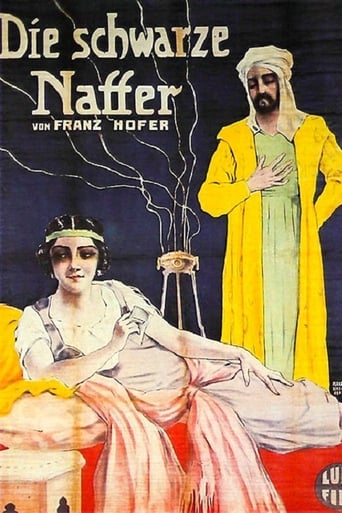
About Emmerich Hanus
Emmerich Hanus was a silent-era film actor and director active in German-language cinema during the 1910s, a period when the medium was still defining its visual language and industrial structure. The surviving filmography that can be securely tied to him places him in two known acting credits, Die schwarze Natter (1913) and Die Liebe der Maria Bonde (1918), and also identifies him as the director of Die Liebe der Maria Bonde (1918). His career therefore appears to have unfolded entirely within the early, formative years of European cinema, before the transition to synchronized sound. Because documentation on many personnel from this period is incomplete, relatively little biographical information survives about his life outside these credits, and no widely verified record of his birth, death, family, or education is readily established. Even so, his dual role as both performer and director suggests he was part of the small, flexible creative workforce characteristic of early film production, when artists often moved between acting, directing, writing, and production duties. His name remains of interest primarily to historians of early German and Austrian cinema who study the careers of lesser-documented figures who helped build the silent film era. In film history, he represents the many craftsmen whose contributions are preserved mainly through scattered credits rather than extensive archival biography.
More about Emmerich Hanus
On screen
No detailed contemporary critical description of Emmerich Hanus's acting style is securely documented in surviving sources. Based on the conventions of his period, his performances would likely have relied on expressive silent-era physicality, clear gesture, and face-driven emotional clarity rather than dialogue. As with many early screen performers, the emphasis would have been on visual legibility and heightened expression suitable for intertitles and silent storytelling.
Behind the camera
No verified critical accounts of his directing style have survived in accessible reference sources. Since his known directorial credit dates to 1918, his approach would have belonged to the late silent period's pragmatic, studio-based European production model. On the evidence of his limited surviving record, he appears to have been a working director rather than a nationally prominent auteur, and any stylistic assessment beyond that would be speculative.
In film history
Emmerich Hanus's cultural impact is best understood in the context of early European silent cinema, where many practitioners contributed to the growth of a new art form without becoming internationally famous. His documented work reflects the collaborative, fluid nature of the industry in the 1910s, when actors commonly shifted into directing and other creative roles. Although he does not appear to have left behind a large body of surviving films or a substantial critical reputation, his credits help preserve the history of regional cinema development in the German-language sphere. Figures like Hanus matter because they fill out the industrial and artistic ecosystem that made later, more celebrated achievements possible. In a broader sense, his career underscores how much of silent film history remains dependent on fragmentary evidence. Many early filmmakers have been remembered only through surviving credits, production records, and archival catalogs, and Hanus is one of those names that signals the richness and incompleteness of the period. His presence in both acting and directing roles suggests the versatility demanded of early cinema professionals, and his work contributes to the map of personnel who shaped silent-era storytelling even when their names did not become widely canonical.
Later reputation
Hanus's legacy lies primarily in historical documentation rather than mainstream fame. He is part of the cohort of early screen artists whose work is significant to scholars because it illustrates how silent-era filmmaking functioned across national and regional industries. His directorial credit on Die Liebe der Maria Bonde (1918) gives him a small but meaningful place in the history of early German-language film production. For researchers, he remains a useful example of the many semi-obscure figures who participated in the medium's formative decade and whose work survives mainly in reference records rather than popular memory.
Influence
There is no secure evidence that Emmerich Hanus directly mentored major later filmmakers or that he exerted a documented personal influence on well-known actors or directors. His influence is therefore indirect: he stands as part of the workforce of silent cinema whose collective labor established performance and production norms later generations inherited. By participating as both actor and director, he exemplifies the early multi-hyphenate filmmaker, a model that remained important in cinema's development. His historical influence is thus structural and contextual rather than individually famous.
Off screen
No reliable biographical record of Emmerich Hanus's personal life is readily available in standard film-reference sources. His marriages, family background, residence, and later-life circumstances are not clearly documented in the accessible historical record. This is not unusual for early silent-era figures whose careers were recorded in trade listings and film credits but whose private lives were not widely chronicled. As a result, any detailed account of his personal life would be speculative rather than factual.
Education
No verifiable information about his education is currently available in accessible historical film references.
Credits
- Appeared in the silent film Die schwarze Natter (1913), one of his earliest known screen credits
- Acted in and directed Die Liebe der Maria Bonde (1918), showing a dual creative role
- Worked during the foundational era of European silent cinema, when filmmaking conventions were still emerging
- Represents the class of early film practitioners whose careers crossed acting and directing
- Maintained a screen presence across the 1910s, indicating continued involvement in the industry through the World War I era
Roles
- Unnamed role in Die schwarze Natter (1913)
- Unnamed role in Die Liebe der Maria Bonde (1918)
Films
- Die Liebe der Maria Bonde (1918)
- Die schwarze Natter (1913)
Notes
- His known career window, based on surviving film credits, spans only five years: 1913 to 1918.
- He is documented as both an actor and a director, which was relatively common in early cinema but still noteworthy for a lightly recorded figure.
- One of his known films, Die Liebe der Maria Bonde (1918), is also his only securely identified directing credit.
- The surviving record suggests he worked entirely in the silent era before synchronized sound cinema emerged.
- He is a good example of an early film personality whose biography is far less documented than his filmography.
- No standard-reference awards or honors are associated with him in available records.
- His name is preserved mainly through film databases and historical cataloging rather than through broad popular recognition.
Questions
Who was Emmerich Hanus?
Emmerich Hanus was a silent-era film actor and director active in German-language cinema in the 1910s. He is known from surviving credits for appearing in Die schwarze Natter (1913) and Die Liebe der Maria Bonde (1918), and for directing the latter film.
What films is Emmerich Hanus best known for?
His best-documented films are Die schwarze Natter (1913) and Die Liebe der Maria Bonde (1918). The 1918 title is especially notable because it was both an acting credit and his known directing credit.
When was Emmerich Hanus born and when did he die?
His birth date and death date are not securely documented in the accessible historical record. The surviving filmographic evidence places his active career between 1913 and 1918, but his exact life dates are currently unavailable.
What awards did Emmerich Hanus win?
No awards or major honors are known to be associated with Emmerich Hanus in the available record. This is common for many early silent-era film workers whose careers were documented through credits rather than awards culture.
What was Emmerich Hanus's acting or directing style?
No detailed contemporary criticism of his style has survived in standard references. As a silent-era performer and director, his work would likely have depended on expressive visual acting and practical, studio-based direction typical of the 1910s.
What is Emmerich Hanus's legacy in film history?
His legacy is primarily historical and archival. He represents the many early cinema professionals whose work helped shape silent film production even though they did not become widely famous.