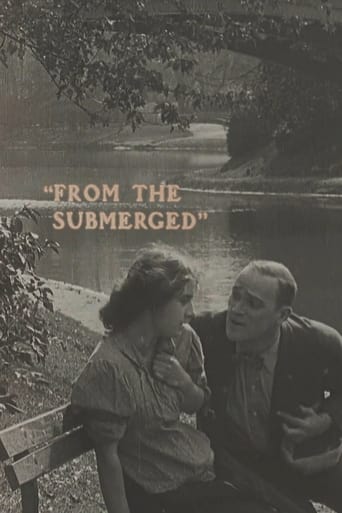
Theodore Wharton
Director
- Active
- 1912-1912
Films directed 1
About Theodore Wharton
Theodore Wharton was an American silent-era director, screenwriter, and producer best remembered as one of the early craftspeople of the motion-picture industry in the 1910s. He worked during cinema's formative years, when narrative film grammar was still being invented and filmmakers often wore multiple hats across writing, directing, and producing. Wharton is associated with a number of early short subjects and features, including From the Submerged (1912), but much of his career is documented in fragments because studio record-keeping from the period was inconsistent and many films are now lost. He belonged to the generation of independent filmmakers who helped establish the professional practices of the American film business before the full consolidation of the studio system. His work is significant more for its place in the development of early narrative filmmaking than for surviving titles that remain widely seen today. Because his filmography is sparse in surviving public documentation and he appears to have been active only briefly under his own name in the available record, many details of his personal life and later career are not readily verifiable. Nonetheless, he remains a representative figure of the silent era's experimental and transitional period, when directors helped define the visual and storytelling vocabulary that later cinema would inherit.
More about Theodore Wharton
Behind the camera
As with many directors from the earliest years of silent cinema, Wharton's specific style is difficult to reconstruct in detail because so many surviving prints and production records are incomplete or lost. The available record places him in the period when directors relied on clear visual storytelling, tableau staging, expressive blocking, and concise melodramatic structure rather than elaborate camera movement or complex editing. His work likely reflected the practical, efficient approach common to early 1910s productions, where clarity of action and strong pictorial composition were paramount. Any assessment of his style must therefore be cautious and rooted in the conventions of the era rather than in a large accessible body of surviving work.
In film history
Theodore Wharton's cultural importance lies in his participation in the formative, experimental period of American silent cinema rather than in celebrity status or a large surviving canon. Directors like Wharton were part of the generation that helped transform film from brief novelties into structured dramatic storytelling, establishing workflows and visual conventions that later filmmakers refined. Even when individual titles have not survived or are difficult to access, these early creators contributed to the grammar of screen storytelling through their daily industrial practice. His filmography therefore has value as evidence of how cinema developed in the 1910s, especially in the years before feature-length production and studio standardization became dominant. For historians, Wharton stands as a reminder that cinema history is built not only on famous auteurs, but also on numerous working filmmakers whose efforts laid the foundation for the medium's later artistic achievements.
Later reputation
Wharton's legacy is primarily archival and historical: he belongs to the group of silent-era filmmakers whose names survive in credits and trade references even when their films are missing, fragmentary, or rarely screened. This makes him part of the essential but often overlooked infrastructure of early American film history. His work helps document the rapid evolution of production practices in the 1910s, a decade in which directors, writers, and producers were still defining their roles. For modern scholars, names like Wharton are important because they help reconstruct the broader ecology of early filmmaking beyond the handful of directors who became household names. His enduring legacy is thus tied to preservation, research, and the ongoing effort to recover and contextualize silent cinema's lost bodies of work.
Influence
Direct influence is difficult to document because of the limited surviving record, but Wharton's work contributed to the broader silent-era tradition that influenced later directors through established narrative techniques and production models. Early filmmakers like him helped normalize visual economy, clear staging, and melodramatic storytelling that became foundational to classical Hollywood cinema. Even without a large body of extant films to study, his place in the early industry situates him among the pioneers whose collective work shaped what audiences and filmmakers later understood as cinematic storytelling. His influence is therefore best understood as part of an industrial and aesthetic continuum rather than through identifiable protégés or a traceable school of followers.
Off screen
Very little reliably documented information survives about Theodore Wharton's personal life, family background, education, or later years. He appears in film-history records primarily through his screen credits rather than through biographical profiles, interviews, or studio publicity that might illuminate his private life. No verifiable information is readily available here regarding marriages, children, residences, or post-film career activities. As with many early silent-era figures, the historical record is incomplete enough that even basic personal details may remain uncertain unless uncovered in archival sources such as census records, trade publications, or contemporary newspapers.
Credits
- Directed From the Submerged (1912), one of the titles associated with his known filmography
- Worked in the silent-film era during the crucial early development of American feature filmmaking
- Contributed to the multi-hyphenate production culture of early independent cinema as a director and likely writer/producer on various projects
- Represents the many early filmmakers whose work helped shape narrative film language even when much of the footage has been lost
- Associated with the transitional years before Hollywood's studio system became dominant
Films
- From the Submerged (1912)
Notes
- He is associated with the very early silent period, when film credits were often sparse and records were not always systematically preserved.
- From the Submerged (1912) is one of the few titles specifically linked to him in readily accessible film-history references.
- Many early filmmakers, including Wharton, worked across multiple jobs such as directing, writing, and producing.
- Because so many silent films are lost, it is often difficult to reconstruct the full creative contribution of filmmakers from this era.
- His filmography reflects the transition from short-form early cinema toward more organized narrative production in the 1910s.
- He is an example of a working director whose historical importance is greater than his present-day public recognition.
- Archival research in trade papers and studio records may yield additional credits beyond the brief filmography commonly cited today.
Questions
Who was Theodore Wharton?
Theodore Wharton was an American silent-era filmmaker best known as a director, and also associated with screenwriting and producing. He worked during the formative years of the U.S. film industry, when many creators handled several jobs at once and helped define early cinematic storytelling.
What films is Theodore Wharton best known for?
He is most commonly linked to From the Submerged (1912), which appears in his known filmography. Because many early films are lost or poorly documented, additional titles may exist in archival records, but this is the best-documented association in the available record.
When was Theodore Wharton born and when did he die?
Reliable public biographical sources do not consistently provide verified birth and death dates for Theodore Wharton. In many early silent-era cases, the historical record is incomplete, so those details remain unconfirmed unless found in archival documents.
What awards did Theodore Wharton win?
No major awards or nominations are readily documented for Theodore Wharton. This is not unusual for filmmakers of the silent era, especially those whose work predates the modern awards system.
What was Theodore Wharton's directing style?
His exact style is hard to reconstruct because of the scarcity of surviving material, but as a 1910s silent-era director he would have worked within the period's emphasis on visual clarity, tableau composition, and straightforward melodramatic storytelling. His films would likely have relied on expressive staging and concise narrative construction rather than later sound-era techniques.
What is Theodore Wharton's legacy in film history?
Wharton's legacy lies in his contribution to the earliest development of American cinema. He represents the many working filmmakers whose efforts helped build the language and production practices of silent film, even when their individual works are not widely available today.