Films
1 film
About Elsie Esmond
Prominent American stage and screen actress during the early 20th century, primarily active in the theatrical stock circuit and the silent film industry. She gained significant attention for her involvement with the Wharton Studio in Ithaca, New York, where she appeared in several high-profile productions directed by Theodore and Leopold Wharton. Her most enduring and controversial screen credit is the 1917 eugenics-themed drama 'The Black Stork', in which she played the female lead opposite Allan Murnane. Throughout the 1900s and 1910s, Esmond — staple of the Broadway stage and regional stock companies, often earning high salaries that reflected her status as a reliable leading lady. Her career transitioned from the stage to the screen during the formative years of the American film industry, though she returned to Broadway in the mid-1920s for character roles. Despite her prolific work in the silent era, much of her personal history remains obscured by the passage of time, typical of many performers from the pre-talkie period.
The Craft
On Screen
Esmond was known for her versatility as a 'stock' actress, a discipline that required performers to master a wide variety of roles in quick succession. Her screen presence in 'The Black Stork' was noted for its emotional intensity, as she portrayed a mother grappling with the moral and medical dilemmas of the eugenics movement. On stage, she was equally adept at melodrama and light comedy, often described in contemporary reviews as a 'hit' or a 'favorite' of the audience.
Milestones
- Starring role in the controversial silent film 'The Black Stork' (1917)
- Featured performer in the Wharton Studio's 'The Lottery Man' (1916) alongside Oliver Hardy
- Leading lady in the stage production of 'Anson' (1901) at the Theatre Francais
- Appeared in the Broadway comedy 'The Book of Charm' (1925)
- Member of the Imperial Stock Company and other major regional theatrical troupes
- Featured in the 1916 film 'The City', an adaptation of the Clyde Fitch play
Best Known For
Iconic Roles
Must-See Films
Accolades
Special Recognition
- Voted a favorite in various regional stock company popularity polls in the early 1900s
- Recognized as a leading talent of the Ithaca-based Wharton Studio during its peak years
Working Relationships
Worked Often With
Studios
Why They Matter
Impact on Culture
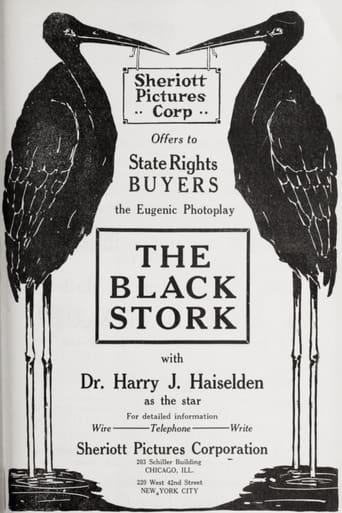
Elsie Esmond's primary cultural impact stems from her role in 'The Black Stork',. The film was a piece of eugenics propaganda that sparked nationwide debate and faced significant censorship for its depiction of 'defective' infants and its advocacy for euthanasia. As the female lead, Esmond became the face of the film's domestic tragedy, helping to bring a sensitive and inflammatory social issue to the mainstream public consciousness. Her work in Ithaca with the Wharton Brothers also contributed to the city's brief but significant status as a 'Hollywood of the East' before the industry centralized in California.
Lasting Legacy
Esmond represents the 'missing' history of early cinema—the prolific stock actors who were essential to the industry's growth but whose names faded as the star system became more rigid. Her legacy is preserved primarily through the survival of 'The Black Stork', which remains a key text for film historians studying social hygiene films and the intersection of cinema and science. She is also remembered in the history of the Wharton Studio as one of the key players who helped establish Ithaca as a major production hub during the 1910s.
Who They Inspired
While she did not found a specific school of acting, her transition from the highly stylized world of 19th-century stock theater to the more naturalistic demands of the silent screen influenced the development of early film acting techniques. She was part of the cohort that proved stage-trained actors could successfully adapt their craft to the camera, a move that paved the way for the Broadway-to-Hollywood pipeline.
Off Screen
Elsie Esmond's personal life was closely tied to her professional travels in the theatrical stock circuit. Records indicate she was born Elsie Moors and adopted Esmond as her stage name. She was frequently mentioned in trade publications like The Billboard and The New York Clipper as a high-earning performer, sometimes commanding salaries between $1,000 and $5,000 weekly during her peak years in stock. She was part of a generation of actors who moved frequently between New York City, Chicago, and regional hubs like Ithaca and Baltimore.
Education
Trained in the American theatrical stock system, which served as the primary 'school' for actors of the era.
Did You Know?
- She appeared in 'The Lottery Man' (1916), which featured a young Oliver Hardy in a minor role as a female cook.
- Her real name was Elsie Moors, though she was almost exclusively known by her stage name.
- She was one of the highest-paid stock actresses of her time, reportedly earning up to $5,000 a week.
- The film 'The Black Stork' was so controversial that it was later re-released under the title 'Are You Fit to Marry?' in 1927.
- She was a featured performer in the J. Willis Sayre collection, a famous archive of theatrical photographs from the late 19th and early 20th centuries.
- She performed in Ithaca, New York, during the summer of 1916, a period when the city was a major rival to Hollywood.
- In 1901, she played the role of Bonita in the melodrama 'Anson' in Montreal, Canada.
In Their Own Words
I have always found that the audience in the smaller cities is just as discerning as the one on Broadway, if not more so. (Attributed context: Discussing her time in regional stock companies)
Frequently Asked Questions
Who was Elsie Esmond?
American stage and silent film actress active in the early 20th century. She is best remembered for her leading roles in films produced by the Wharton Studio and her extensive career in theatrical stock companies.
What is Elsie Esmond's most famous film?
She is most famous for 'The Black Stork' (1917), a highly controversial film about eugenics that sparked national debate and censorship battles.
Did Elsie Esmond work with any famous actors?
Yes, she appeared in 'The Lottery Man' (1916), which featured a young Oliver Hardy (later of Laurel and Hardy fame) in a small role.
What was Elsie Esmond's real name?
Her birth name was Elsie Moors, but she adopted the stage name Elsie Esmond for her professional career.
Where did Elsie Esmond perform most of her work?
She was a prominent figure in the New York and Ithaca film scenes, as well as a regular performer in regional stock theaters across the United States and Canada.
What was the controversy surrounding 'The Black Stork'?
The film advocated for eugenics and the euthanasia of 'defective' infants, leading to widespread bans and its use as a propaganda tool, which made it.