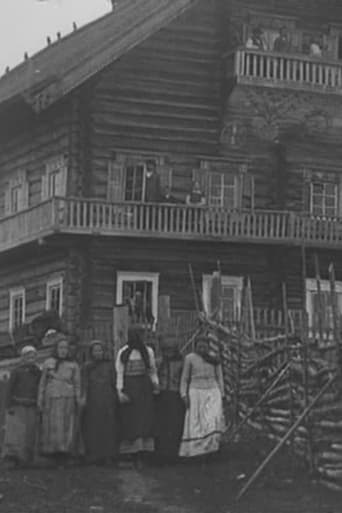
A.O. Väisänen
Director
- Active
- 1921-1921
Films directed 1
About A.O. Väisänen
A.O. Väisänen is an elusive early Finnish film personality associated with the silent era, best known for directing the 1921 film Karelian Wedding in the Land of the Kalevala. Because surviving documentation on him is extremely sparse, he is generally treated in film-history references as a little-documented practitioner from the formative years of Finnish cinema rather than as a widely celebrated director. His credited work falls at a time when Finnish filmmaking was still developing its identity, and his name is preserved primarily through the surviving film record rather than through extensive contemporary publicity or later retrospective scholarship. The available evidence suggests that his career in cinema was brief, or at least only briefly documented, with no reliably verified long-term filmography beyond the 1921 title. As a result, his significance lies less in a broad body of work than in his participation in the earliest phase of Finnish national screen culture. In the absence of dependable biographical records, it is not possible to reconstruct his private life, training, or later career with confidence. He remains a figure of historical interest for researchers of Nordic silent cinema, especially those studying the relationship between national folklore, regional identity, and early screen production.
More about A.O. Väisänen
Behind the camera
No detailed contemporary criticism of Väisänen's directing style appears to survive in widely accessible sources, but his lone known credit suggests an approach grounded in early silent-cinema storytelling and culturally specific material. The subject matter of Karelian Wedding in the Land of the Kalevala indicates an interest in folkloric or ethnographic presentation, which was common in early Nordic screen production. His work likely relied on visual tableau, straightforward narrative progression, and strong local color rather than highly elaborate cinematic technique, though this can only be inferred from the era and title rather than verified by detailed reviews.
In film history
A.O. Väisänen's cultural impact is best understood in the context of early Finnish silent cinema, when filmmakers often turned to national legends, rural customs, and regional traditions to create a distinctly Finnish screen identity. Even though his surviving footprint is minimal, his association with Karelian Wedding in the Land of the Kalevala places him within an important cultural movement that sought to translate folklore and heritage into the new medium of film. Such works helped define cinema as a vehicle for national self-representation in a young film culture, and they contributed to the preservation and popularization of folkloric imagery. Väisänen's importance is therefore archival and cultural rather than celebrity-based: he represents a generation of early filmmakers whose contributions are known primarily through the historical record they left behind.
Later reputation
His legacy is that of a documented but sparsely known pioneer from the silent era, preserved in film-history indexes through a single surviving credit. For historians, names like Väisänen matter because they mark the existence of early local production networks, regional storytelling traditions, and the fragile survival of Nordic film heritage. Even without a large body of work or extensive critical commentary, his credit on a folklore-themed film situates him within the foundational phase of Finnish cinema. His lasting legacy is thus tied to the broader history of lost, fragmentary, or minimally documented silent films and the scholars who reconstruct them.
Influence
There is no verifiable evidence of a wide direct influence on later directors or performers, and no documented mentorship network has survived in accessible sources. His influence is best understood indirectly: by contributing to one of the early Finnish films rooted in national folklore, he participated in a template that later filmmakers could build upon. In that sense, his work belongs to a lineage of culturally inflected Nordic filmmaking that valued local subjects and heritage themes.
Off screen
No reliable public information is readily available about A.O. Väisänen's personal life, including his family background, marriages, children, residence, or later occupations. Surviving film references do not appear to preserve enough biographical detail to reconstruct his off-screen life with confidence. For database purposes, his personal history should therefore be treated as currently undocumented rather than assumed from similarly named individuals.
Credits
- Directed the silent-era Finnish film Karelian Wedding in the Land of the Kalevala (1921), his only securely documented screen credit
- Participated in the earliest decades of Finnish national cinema, when filmmakers were adapting folklore and regional traditions for the screen
- Left a surviving historical footprint in film databases and archival references despite extremely limited biographical documentation
Films
Notes
- A.O. Väisänen is chiefly known from a single surviving film credit, which makes him a rare example of an extremely lightly documented silent-era filmmaker.
- His credited film, Karelian Wedding in the Land of the Kalevala, links him to the Kalevala tradition, one of the most important pillars of Finnish national culture.
- Because the available record is so limited, many standard biographical fields such as birth date, death date, and family background remain unverified.
- He is associated with the earliest phase of Finnish cinema, when many films were made under conditions of limited archival preservation.
- His name survives largely through film databases and historical reference works rather than through extensive press coverage or memoir literature.
- The subject matter of his known film suggests an interest in ethnographic or folkloric representation, a common theme in Nordic silent cinema.
- He should not be confused with other historical figures who share similar Finnish surnames or initials.
Questions
Who was A.O. Väisänen?
A.O. Väisänen was a Finnish early-cinema director known for the 1921 silent film Karelian Wedding in the Land of the Kalevala. He is a little-documented figure whose historical importance comes from his place in the formative years of Finnish film rather than from a large surviving body of work.
What films is A.O. Väisänen best known for?
He is best known for Karelian Wedding in the Land of the Kalevala (1921), which appears to be his only securely documented film credit. No other major films can be confidently attributed to him from the readily available record.
When was A.O. Väisänen born and when did he die?
His birth date and death date are not reliably documented in the available sources. The surviving record confirms his activity as a director in 1921, but not the broader details of his life.
What awards did A.O. Väisänen win?
No awards or formal honors are currently verifiable for A.O. Väisänen in the accessible historical record. This is common for many early silent-era filmmakers whose work predates modern awards documentation.
What was A.O. Väisänen's directing style?
His exact directing style is not documented in detail, but his known work suggests the conventions of early silent filmmaking and a likely emphasis on folklore and regional subject matter. The film's title indicates a culturally rooted approach that fit the era's interest in national identity and visual storytelling.
What is A.O. Väisänen's legacy in film history?
His legacy lies in his participation in the earliest phase of Finnish cinema and in the preservation of a folklore-themed silent film credit. Even with sparse documentation, he remains part of the historical record of Nordic film pioneers.