Films
1 film
About Lewis H. Moomaw
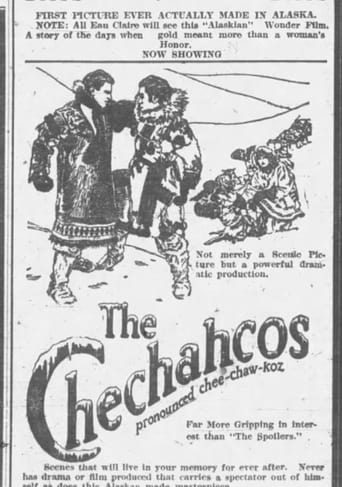
American director active during the silent film era, best known for directing 'The Chechahcos' in 1924. This film holds the distinction of being the first feature-length motion picture produced entirely in Alaska, showcasing the territory's unique landscapes and spirit. Moomaw worked with the Alaska Moving Picture Corporation to create this ambitious project that captured the essence of Alaskan frontier life during the gold rush era. His directorial approach emphasized authenticity, filming on location in Alaska rather than using studio backdrops. The film was notable for its portrayal of the struggles and adventures of newcomers to Alaska, with 'Chechahcos' being the term used for greenhorns or newcomers in the region. Despite the historical significance of his work, Moomaw's career appears to have been brief, with 'The Chechahcos' standing as his sole known directorial credit. His contribution to cinema history, while limited in scope, represents an important chapter in regional American filmmaking and the early days of location shooting.
The Craft
Behind the Camera
Known for authentic location shooting and realistic portrayal of frontier life
Milestones
- Directed 'The Chechahcos' (1924), the first feature film produced entirely in Alaska
- Pioneered location filming in the Alaskan territory
- Collaborated with the Alaska Moving Picture Corporation
- Documented Alaskan frontier life during the silent era
Best Known For
Must-See Films
Accolades
Special Recognition
- Recognized for directing the first feature film made entirely in Alaska
Working Relationships
Studios
Why They Matter
Impact on Culture
Lewis H. Moomaw's work on 'The Chechahcos' represents an important milestone in American regional cinema, particularly in the documentation and preservation of Alaskan frontier culture during the early 20th century. The film serves as a valuable historical document capturing the unique challenges, landscapes, and social dynamics of Alaska during the gold rush period. By choosing to film entirely on location rather than using studio sets, Moomaw helped establish practices that would later become standard in authentic filmmaking. His work contributed to bringing Alaskan stories and landscapes to national audiences at a time when the territory was still largely mysterious to most Americans. The film has since been recognized for its historical and cultural significance, providing modern viewers with a window into early Alaskan life and the spirit that defined the era.
Lasting Legacy
Lewis H. Moomaw's legacy is intrinsically tied to 'The Chechahcos,' which stands as a achievement in American regional cinema. Though his directorial career appears to have been limited to this single film, its historical significance has ensured his place in cinema history as a filmmaker who captured the essence of Alaskan frontier life. The film has been preserved and studied by film historians and archivists interested in early American regional productions and the development of location filming techniques. Moomaw's work represents an early example of independent filmmaking outside the Hollywood system, demonstrating how regional stories could be brought to the screen with authenticity and artistic vision. His contribution, while brief, exemplifies the diverse landscape of American silent cinema beyond the major studio productions.
Who They Inspired
While Lewis H. Moomaw's influence on subsequent filmmakers appears limited due to his brief career, his work on 'The Chechahcos' demonstrated the power of authentic location shooting and regional storytelling. His approach to capturing the Alaskan landscape and culture on film prefigured later documentary and narrative filmmaking techniques that emphasized authenticity over studio artifice. The film stands as an early example of how regional American stories could be told with cultural specificity and artistic integrity, potentially influencing later filmmakers interested in capturing local stories and landscapes. His work represents an important chapter in the broader history of American independent and regional filmmaking.
Off Screen
Very little is known about Lewis H. Moomaw's personal life, as he appears to have been a relatively obscure figure in early cinema history whose career was limited to a single significant directorial effort.
Did You Know?
- 'The Chechahcos' was the first feature film produced entirely in Alaska
- The word 'Chechahcos' comes from the Russian word 'novichok,' meaning newcomer or greenhorn
- The film was shot entirely on location in Alaska, unusual for the time period
- The Alaska Moving Picture Corporation was formed specifically to produce this film
- The film was rediscovered and preserved in the 1970s after being thought lost
- The movie featured actual Alaskan scenery and local residents as extras
- The film's budget was approximately $150,000, a substantial sum for a regional production in 1924
- The story follows the adventures of newcomers to Alaska during the gold rush era
- The film was considered lost for decades before a copy was found in Alaska
- The production faced numerous challenges due to the harsh Alaskan weather conditions
Frequently Asked Questions
Who was Lewis H. Moomaw?
American on YTB.my. His career appears to have been brief but significant in the context of regional American cinema.
What films is Lewis H. Moomaw best known for?
Titles linked here include The Chechahcos (1924).
When was Lewis H. Moomaw born and when did he die?
Unfortunately, specific birth and death dates for Lewis H. Moomaw are not readily available in historical records, reflecting his status as an obscure figure from early cinema whose career was limited to a single significant directorial effort in 1924.
What awards did Lewis H. Moomaw win?
There are no records of Lewis H. Moomaw receiving formal awards or nominations during his career. His recognition comes primarily from the historical significance of 'The Chechahcos' as the first feature film produced entirely in Alaska and its contribution to regional American cinema.
What was Lewis H. Moomaw's directing style?
Moomaw's directing style emphasized authenticity and location shooting, choosing to film 'The Chechahcos' entirely on location in Alaska rather than using studio backdrops. He focused on realistic portrayals of frontier life and used the actual Alaskan landscape as an integral part of the storytelling.
Why is 'The Chechahcos' historically significant?
'The Chechahcos' is historically significant as the first feature-length film produced entirely in Alaska, representing an important milestone in American regional cinema. The film provides valuable documentation of Alaskan frontier life during the silent era and showcases early examples of authentic location filming in challenging conditions.