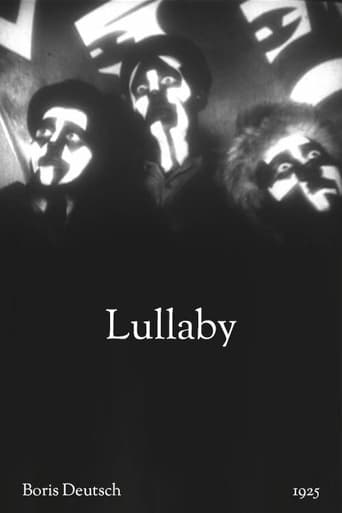
Boris Deutsch
Director
- Active
- 1925-1925
Films directed 1
About Boris Deutsch
Boris Deutsch is a very obscure early motion-picture director whose credited film work is known to have reached the screen in 1925, when he directed the silent feature Lullaby. Beyond that single surviving credit, reliable biographical records are extremely sparse, and he remains one of the many minor names in silent-era film history whose broader life story has not been fully preserved in standard reference sources. Because of the limited documentation, it is not possible to confidently reconstruct his full career arc, training, or later activities without risking confusion with similarly named individuals. What can be stated with confidence is that Deutsch worked in the silent film industry during the mid-1920s and was active at least during the year associated with Lullaby. His presence in surviving filmographies suggests he was part of the large network of directors, technicians, and craftsmen whose work helped shape early cinema even when their personal histories were not extensively recorded. In the absence of verifiable evidence about additional productions, nationality, or later life, he should be treated as a minimally documented silent-era filmmaker. His historical interest today lies chiefly in the fact that he directed a feature during the mid-silent period, a time when many smaller production companies and regional filmmakers contributed to the medium's rapid evolution.
More about Boris Deutsch
Behind the camera
No verifiable descriptions of Boris Deutsch's directing style survive in standard reference sources. Based on the era in which he worked, his direction would have depended on visual storytelling, expressive performance, intertitles, and careful scene construction typical of silent features. However, without additional surviving films, reviews, or production notes, any more specific characterization would be speculative. His style therefore cannot be reliably assessed beyond the fact that he worked within the conventions of mid-1920s silent cinema.
In film history
Boris Deutsch's cultural impact is primarily archival rather than celebrity-based. He stands as a representative of the many early film workers whose names appear in period filmographies even though their personal histories and broader bodies of work have not been widely preserved. In silent-era studies, such figures matter because they illustrate how large and decentralized the film industry was during the 1920s, when numerous short-lived productions and smaller directing careers contributed to the growth of the medium. While he does not appear to have left a widely recognized legacy in popular culture, his credited direction of Lullaby places him within the historical record of early narrative cinema and the industrial development of the silent feature.
Later reputation
Deutsch's legacy is one of documentary presence rather than fame. For film historians, his name serves as a reminder that the silent era included many directors whose careers were brief, localized, or poorly archived, yet who still participated in the creation of cinema as an art form and industry. The fact that his documented output is so limited makes him significant mainly to researchers tracing production histories, lost films, and the scattered personnel records of the 1920s. If more prints, reviews, or studio records emerge in the future, his place in film history could become clearer, but at present he remains a little-known figure preserved chiefly by filmography listings.
Influence
No direct influence on later directors or filmmakers can be verified from available records. Any claim about artistic influence would be speculative given the lack of documented collaborations, interviews, or critical commentary. His influence is therefore best understood indirectly: he forms part of the broader silent-era workforce whose combined efforts established filmmaking practices, narrative grammar, and production methods that later directors inherited and refined. In that sense, his contribution belongs to the collective evolution of classic cinema rather than to a clearly traceable personal school of influence.
Off screen
No reliable biographical information about Boris Deutsch's personal life has been found in standard classic-cinema reference sources. Details such as marriage, family, residence, education, and post-film career are not currently documented with sufficient certainty to state as fact. Because the historical record is so limited, it is impossible to provide a trustworthy personal biography without conflating him with unrelated people of similar names. He should therefore be regarded as an obscure, minimally documented silent-era figure whose private life remains unknown to the public record.
Credits
- Directed the silent feature Lullaby (1925), the sole surviving screen credit commonly associated with him
- Worked in the American silent-film era during the mid-1920s, a period of intense creative expansion and experimentation
- Represents the many lesser-documented filmmakers whose contributions formed part of the broader silent-cinema production landscape
Films
- Lullaby (1925)
Notes
- He is credited with directing only one film that is commonly documented: Lullaby (1925).
- He is a good example of how many silent-era filmmakers remain obscure despite having worked on feature films.
- No widely accepted birth or death dates are currently established for him in standard reference sources.
- His surviving public record is so limited that even his nationality and personal background are not securely documented.
- Because of the lack of source material, Boris Deutsch is often of interest mainly to historians and database researchers rather than general audiences.
- His name appears in filmographic records from the mid-1920s, one of the last full flowering years of the American silent feature before sound transformed the industry.
Questions
Who was Boris Deutsch?
Boris Deutsch was an obscure silent-era film director known for directing Lullaby (1925). Very little reliable biographical information has survived about him, so he is best understood as a minimally documented early cinema figure rather than a widely known industry personality.
What films is Boris Deutsch best known for?
He is primarily known for Lullaby (1925), which is the main film credit associated with his name. No additional confirmed directing credits are readily established in standard classic-cinema reference sources.
When was Boris Deutsch born and when did he die?
At present, his birth date and death date are not reliably documented in standard reference sources. The historical record available for him is too limited to state those details with confidence.
What awards did Boris Deutsch win?
No awards or major nominations are currently documented for Boris Deutsch. As with many obscure silent-era filmmakers, his surviving record consists mainly of filmography information rather than honors or publicity.
What was Boris Deutsch's directing style?
His directing style cannot be specifically verified because so little of his work and commentary on it survives. Since he worked in the silent era, his film would have relied on visual storytelling and performance-driven expression typical of the period.
What is Boris Deutsch's legacy in film history?
His legacy is mainly historical and archival: he represents the many early filmmakers whose names appear in period records even though their lives are poorly documented. His single known credit places him within the development of silent cinema, a foundational era for the medium.