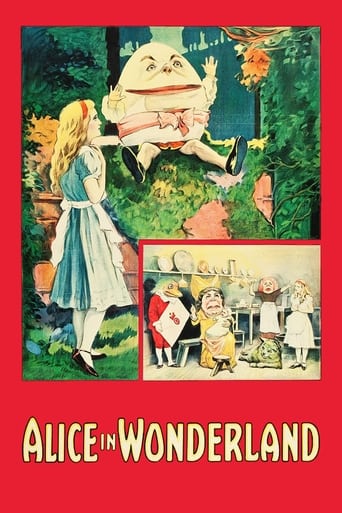
Films
1 film
About W.W. Young
American film director active during the silent era, best known for directing the 1915 adaptation of Lewis Carroll's 'Alice in Wonderland.' His career appears to have been extremely brief, with film records indicating activity only during the year 1915. The 1915 'Alice in Wonderland' was one of the earliest feature film adaptations of the classic literary work, showcasing early cinema's fascination with fantasy and literary adaptations. Little is documented about Young's background or other potential works, suggesting he may have been a journeyman director who worked briefly in the burgeoning film industry. His version of 'Alice in Wonderland' starred Viola Savoy in the title role and was produced by the Nonpareil Feature Film Corporation. The film represented the ambitious scope of early American cinema, attempting to bring Carroll's imaginative world to life with the limited technical resources available at the time.
The Craft
Behind the Camera
W.W. Young's directing style, as evidenced by his 1915 'Alice in Wonderland,' reflected the theatrical approach common in early silent cinema, with exaggerated performances and static camera positioning typical of the era's technical limitations.
Milestones
- Directed the 1915 feature film adaptation of 'Alice in Wonderland'
Best Known For
Must-See Films
Working Relationships
Studios
Why They Matter
Impact on Culture
W.W. Young's 1915 'Alice in Wonderland' represents an important milestone in cinema history as one of the earliest feature-length adaptations of Lewis Carroll's beloved work. The film demonstrates how early filmmakers attempted to translate complex literary fantasies to the screen, paving the way for future interpretations. Though Young himself remains obscure, his contribution to the early fantasy genre and literary adaptations on film is historically significant, showing the ambition of silent-era filmmakers to tackle challenging source material despite technical limitations.
Lasting Legacy
W.W. Young's legacy is primarily tied to his role in bringing 'Alice in Wonderland' to the silver screen during cinema's formative years. While the director himself faded into obscurity, his 1915 film stands as an artifact of early American cinema's attempts at fantasy storytelling. The film is studied by film historians interested in the evolution of literary adaptations and the technical challenges faced by early filmmakers in creating magical worlds on screen.
Who They Inspired
Due to the brevity of his documented career and limited surviving information about his work, W.W. Young's direct influence on subsequent filmmakers is difficult to trace. However, his early adaptation of 'Alice in Wonderland' contributed to the foundation of fantasy filmmaking that would later be built upon by more prominent directors in the decades that followed.
Off Screen
Very little is documented about W.W. Young's personal life, which is not uncommon for directors from the earliest days of American cinema who often worked behind the scenes without receiving significant public attention.
Did You Know?
- The 1915 'Alice in Wonderland' was one of the first feature-length films to adapt Lewis Carroll's classic novel
- The film starred Viola Savoy as Alice, who was only 16 years old at the time of filming
- W.W. Young's entire known directorial career appears to be confined to the single year of 1915
- The film was produced by the Nonpareil Feature Film Corporation, a relatively obscure early production company
- The 1915 adaptation preceded Disney's famous animated version by 36 years
- Like many films from this era, much of Young's 'Alice in Wonderland' is now considered lost or survives only in fragments
- The film was released during the height of the silent era, before the advent of synchronized sound in cinema
Frequently Asked Questions
Who was W.W. Young?
American on YTB.my.' His documented career appears to have been extremely brief, with records showing activity only during 1915.
What films is W.W. Young best known for?
Titles linked here include Alice in Wonderland (1915).
When was W.W. Young born and when did he die?
Unfortunately, specific birth and death dates for W.W. Young are not documented in historical records, which is common for many figures who worked in the earliest days of American cinema.
What awards did W.W. Young win?
There are no recorded awards or honors for W.W. Young, which is not surprising given his brief career in the silent era when formal award systems for cinema were not yet established.
What was W.W. Young's directing style?
Based on his 1915 'Alice in Wonderland,' Young's directing style reflected the theatrical approach common in early silent cinema, featuring the exaggerated performances and static camera work typical of the era's technical limitations.
Why is so little known about W.W. Young?
The scarcity of information about W.W. Young is typical of many early film industry figures who worked behind the scenes during cinema's formative years, when comprehensive documentation of filmmakers was not standard practice.