Films
2 films
About Luigi Romano Borgnetto
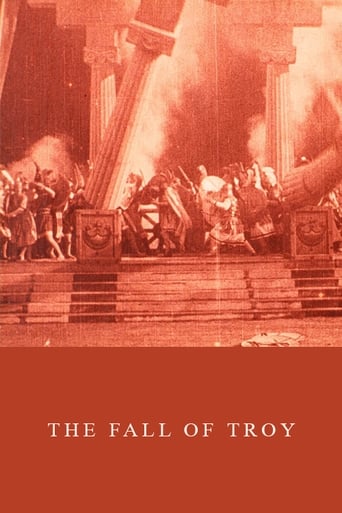
Italian filmmaker and actor who emerged during the era of cinema, best known for his ambitious 1911 silent epic 'The Fall of Troy.' Working during a period when Italian cinema was establishing itself as a major force in international film production, Borgnetto contributed to the early development of the historical epic genre. His sole known directorial effort, 'The Fall of Troy,' was part of Italy's early wave of spectacular productions that competed with French and American films for global audiences. As both director and actor in this production, Borgnetto exemplified the multi-talented nature of early cinema pioneers who often wore multiple hats due to the industry's nascent state. The film was notable for its elaborate sets and large-scale battle sequences, characteristics that would define Italian epics of the silent era. Unfortunately, like many early cinema figures, Borgnetto's career appears to have been brief, with his known filmography limited to this single production from 1911.
The Craft
Behind the Camera
Known for grand, theatrical presentations typical of early Italian epics, with emphasis on elaborate set pieces and large-scale crowd scenes
Milestones
- Directed and acted in 'The Fall of Troy' (1911)
- Contributed to early Italian historical epic genre
Best Known For
Must-See Films
Working Relationships
Studios
Why They Matter
Impact on Culture
Luigi Romano Borgnetto represents the generation of filmmakers who helped establish cinema as a legitimate art form in Italy during its earliest years. His work on 'The Fall of Troy' contributed to Italy's reputation for producing spectacular historical epics that would influence filmmakers worldwide. Though his career was brief, his participation in the early Italian film industry places him among the foundational figures who helped develop the language of cinematic storytelling, particularly in the historical epic genre that would become a hallmark of Italian cinema.
Lasting Legacy
Borgnetto's legacy is primarily preserved through his contribution to early Italian cinema and the historical epic genre. 'The Fall of Troy' stands as an example of the ambitious scale and artistic aspirations of early Italian filmmakers, even if much of the film may be lost or fragmented as is common with works from this period. His work represents the experimental and spirit of cinema's first decade, when filmmakers were still discovering the medium's potential for grand storytelling.
Who They Inspired
Due to the brevity of his known career and the scarcity of surviving documentation, specific details about Borgnetto's influence on other filmmakers are difficult to trace. However, like all early cinema pioneers, his work contributed to the collective development of filmmaking techniques and narrative approaches that would be built upon by subsequent generations of directors and actors in the Italian film industry.
Off Screen
Very little is documented about Luigi Romano Borgnetto's personal life, which is common for many early cinema pioneers whose records were not as meticulously preserved as those of later film stars. His brief appearance in film history suggests he may have been primarily involved in the theatrical world before transitioning to cinema during its early boom period.
Did You Know?
- 'The Fall of Troy' was produced during the golden age of Italian silent epics, alongside other famous productions like 'Cabiria' (1914)
- Early Italian epics like Borgnetto's were known for their massive sets and thousands of extras
- Many films from 1911 are now considered lost, making Borgnetto's work particularly rare if any copies survive
- Italian cinema of this period was among the most technologically advanced in the world
- The fall of Troy was a popular subject for early filmmakers due to its epic scale and dramatic potential
Frequently Asked Questions
Who was Luigi Romano Borgnetto?
Italian actor and on YTB.my.' He was part of the generation of Italian filmmakers who helped establish the country's reputation for spectacular historical epics in the early 20th century.
What films is Luigi Romano Borgnetto best known for?
Titles linked here include The Fall of Troy (1911).
When was Luigi Romano Borgnetto born and when did he die?
Specific birth and death dates for Luigi Romano Borgnetto are not documented in available historical records, which is common for many early cinema pioneers. He was active in the film industry only during the year 1911, suggesting a very brief career in motion pictures.
What awards did Luigi Romano Borgnetto win?
No awards or nominations are documented for Luigi Romano Borgnetto, which is typical for filmmakers from the very early period of cinema (1911) when formal award systems had not yet been established in the film industry.
What was Luigi Romano Borgnetto's directing style?
Based on his known work 'The Fall of Troy,' Borgnetto's directing style aligned with the grand, theatrical approach of early Italian epics, emphasizing elaborate sets, large-scale battle sequences, and dramatic historical storytelling that characterized Italian cinema of this period.