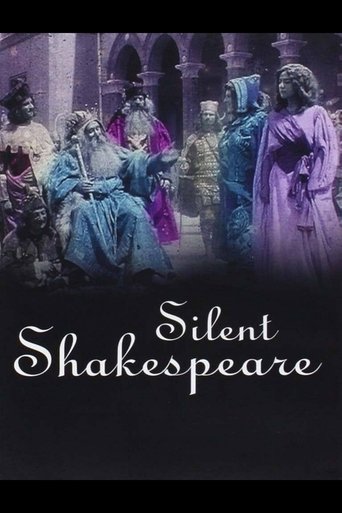
Alfred Brydone
Actor
- Active
- 1911-1911
Films 1
About Alfred Brydone
Alfred Brydone appears in surviving film records as a very early British screen actor, known primarily for his participation in the 1911 silent adaptation Richard III. Beyond this single credited appearance, readily accessible historical sources preserve very little biographical detail about his life, suggesting that he was one of many stage or general performers who briefly entered the pioneering years of cinema before moving on or being lost to the historical record. His screen career, at least as currently documented, falls entirely within the formative period of British film production, when companies were adapting major literary and theatrical works for short silent films. Because the available record is so limited, it is not currently possible to confirm his birth date, death date, birthplace, family background, or later career with confidence. What can be said with confidence is that Brydone belongs to the generation of performers who helped bring Shakespearean material to the screen during cinema's earliest decade. His surviving filmography underscores the fragmentary nature of silent-era documentation, where many contributors to early film history remain known only through cast listings and production credits. As a result, Alfred Brydone is best understood as a minor but authentic figure in the history of early British cinema rather than as a widely documented star.
More about Alfred Brydone
On screen
No detailed contemporary reviews of Alfred Brydone's performance style are readily available in accessible historical sources. Given the conventions of 1911 silent cinema, his work would likely have relied on stage-trained expressiveness, pronounced gesture, and clear visual characterization suited to the brief, title-card-driven format of early films. Any assessment beyond that would be speculative, as his surviving documentation does not preserve performance descriptions or criticism.
In film history
Alfred Brydone's cultural impact is best understood as part of the broader contribution made by early silent-era actors who helped establish screen Shakespeare and literary adaptation as viable cinema forms. Although he is not known as a major star, his credited participation in Richard III places him within a historically important moment when British filmmakers were translating canonical drama into the new medium of film. These productions helped legitimize cinema for audiences who still associated prestige with the stage, and even small or obscure roles contributed to that process. Brydone's presence in the record also reminds researchers that early film history was built not only by famous names but by a large number of performers whose careers are now difficult to reconstruct.
Later reputation
Brydone's lasting legacy lies primarily in his documentary value as an early British screen actor rather than in a widely celebrated body of work. For historians, his name survives as evidence of the many performers who took part in the silent era's first experiments with literary adaptation and Shakespeare on film. His limited surviving record highlights a major feature of film history: the uneven preservation of information about early performers, especially those whose careers were brief or outside the star system. In that sense, Brydone is representative of a much larger, often under-acknowledged cohort whose labor helped shape early cinematic culture. His legacy is therefore archival and historical, serving as a small but real thread in the fabric of silent-era film scholarship.
Influence
There is no evidence that Alfred Brydone directly influenced later actors or directors in a documented, traceable way. However, by participating in an early Shakespeare adaptation, he contributed to the performance traditions that later silent and sound filmmakers continued to develop. Early screen actors like Brydone helped define how theatrical material could be translated into purely visual storytelling, influencing the grammar of performance in silent cinema more generally. His influence is thus indirect and collective rather than individually attributable.
Off screen
No reliable biographical information about Alfred Brydone's personal life is readily available in standard film reference sources. His marriages, family background, education, and later life are not well documented in the surviving public record currently accessible. This scarcity of information is common for early film actors who did not have long or highly publicized screen careers.
Credits
- Appeared in the 1911 silent film Richard III, one of the early screen adaptations of Shakespeare.
- Worked during the formative years of British cinema, when film companies were experimenting with literary and theatrical subjects.
- Represents the class of early silent-era performers whose work survives mainly through cast credits and archival film listings.
Roles
- Unnamed role in Richard III (1911)
Films
- Richard III (1911)
Collaborators
- Unknown
Studios
- Unknown
Notes
- Alfred Brydone is primarily associated with a single surviving screen credit, Richard III (1911).
- He worked at a time when many film performers were unbilled or minimally documented, making research difficult.
- His career falls into the earliest phase of British narrative filmmaking.
- The film Richard III places him within the tradition of Shakespeare on screen, a prestigious early genre for cinema.
- No verified public record currently confirms whether he came from stage work before film.
- His sparse documentation makes him a typical example of an early silent-era actor whose identity survives mainly through filmography databases.
Questions
Who was Alfred Brydone?
Alfred Brydone was a British silent-era actor best known for appearing in the 1911 film Richard III. Very little biographical information about him survives in standard reference sources, so his historical importance is mainly tied to his early film credit.
What films is Alfred Brydone best known for?
He is best known for Richard III (1911), which is the principal surviving credit associated with his name. No additional well-documented film appearances are readily confirmed in accessible sources.
When was Alfred Brydone born and when did he die?
His birth and death dates are not currently verified in readily accessible historical sources. Likewise, his birthplace and later life details remain unknown in the surviving public record.
What awards did Alfred Brydone win?
No awards or formal honors are currently documented for Alfred Brydone. This is not unusual for early film performers, many of whom worked before modern awards systems were established.
What was Alfred Brydone's acting style?
No contemporary reviews describing his individual performance style have been located in accessible sources. As an actor in a 1911 silent film, his work would have relied on expressive physical acting and visually clear characterization typical of early screen performance.
What is Alfred Brydone's legacy in film history?
His legacy is that of an early British screen actor who contributed to one of the silent era's Shakespeare adaptations. Even though he was not a major star, his credit helps document the ensemble of performers who shaped the beginnings of British cinema.