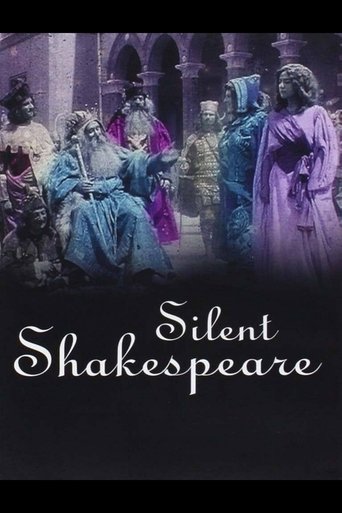
Murray Carrington
Actor
- Active
- 1911-1911
Films 1
About Murray Carrington
Murray Carrington is an obscure early film actor whose documented screen work is extremely limited and is currently best known for appearing in the 1911 silent production Richard III. Because surviving records from the earliest years of cinema are often fragmentary, very little biographical information about his life, training, or later career has been reliably preserved in standard film reference sources. His known screen activity places him in the pioneer period of American and British filmmaking, when actors often came from stage backgrounds and appeared in short, historically oriented one-reel productions. Carrington's credited presence in Richard III suggests he worked during a formative moment when Shakespearean material was being adapted for the screen as a way of lending prestige to the still-new medium. Beyond this film credit, no securely documented body of work, personal history, or later professional arc has been verified from widely available archival sources. As a result, he remains a little-recorded figure in silent-era film history, representative of many early screen performers whose contributions are acknowledged only through surviving cast lists and trade-paper references. Any fuller account of his life would require specialized archival research in studio records, newspaper databases, or theater rosters from the early 1910s.
More about Murray Carrington
On screen
No detailed contemporary descriptions of Murray Carrington's acting style have been verified, but as an actor in 1911 he would almost certainly have worked in the expressive, pose-driven silent-era manner common to early Shakespeare adaptations. Performers in this period typically relied on broad gesture, clear facial expression, and declamatory physicality to convey plot and emotion without synchronized sound. His performance context suggests a stage-influenced approach shaped by the conventions of early prestige film production rather than naturalistic screen acting.
In film history
Murray Carrington's cultural impact is primarily historical rather than popular, resting on his participation in one of the early efforts to adapt Shakespeare for the screen. Films like Richard III were important in demonstrating that cinema could handle canonical literary material and serious historical subjects, helping to elevate film's cultural standing in the 1910s. Even when an individual performer is poorly documented, such credits matter because they connect the names of working actors to the broader development of narrative cinema and prestige adaptations. Carrington therefore occupies a small but real place in early screen history as part of the workforce that made the silent repertoire possible.
Later reputation
His legacy is that of a largely lost early-film performer whose name endures through filmographic records rather than surviving fame. For historians, he illustrates the many cases in which early cinema preserved a title and a cast list while allowing the life of the performer to vanish from mainstream memory. The survival of his credit in Richard III gives researchers a point of entry into the labor and casting practices of the 1911 film industry. In that sense, his legacy lies in the documentary record of silent cinema itself and in the reminder that the medium was built by countless short-lived or poorly recorded participants.
Influence
There is no documented evidence that Murray Carrington directly influenced later actors or directors in a traceable way. His broader influence, if any, would have been indirect, through his participation in the early normalization of Shakespearean adaptation and stage-derived screen performance. Early performers like Carrington helped establish the visual vocabulary that later silent actors refined into more subtle film acting styles. He is better understood as part of the foundational background of silent cinema than as a named influence with an individually traceable artistic school.
Off screen
No reliable information about Murray Carrington's personal life, family background, marriages, or later years has been verified in accessible standard references. He appears to have left behind only minimal surviving documentation tied to his brief screen credit. Because of the scarcity of source material, any discussion of his private life would be speculative, so no claims should be made beyond what can be confirmed from archival evidence.
Credits
- Appeared in the 1911 silent film Richard III, one of the earliest screen adaptations of Shakespeare's play.
- Represents the generation of very early film performers whose work helped establish Shakespearean and literary cinema in the silent era.
- Survives in film history primarily through cast documentation rather than a large surviving filmography.
- Associated with the pioneering one-reel era, when historical drama and stage-derived performance styles dominated serious screen productions.
Roles
- Richard III production cast member
Films
- Richard III (1911)
Notes
- Murray Carrington is chiefly documented today through a single known film credit.
- His known screen work places him in 1911, one of the earliest periods of narrative cinema.
- Richard III was part of the silent-era tradition of adapting Shakespeare for film to lend cultural prestige to the medium.
- Because records from the era are incomplete, Carrington's birth and death details remain unverified.
- He is an example of an early film performer whose contribution survives mainly in cast lists and archival databases.
- No widely cited interviews, memoirs, or contemporary profiles of him are currently known.
- His obscurity is typical of many minor actors from the one-reel era, especially those not attached to long-running studio careers.
Questions
Who was Murray Carrington?
Murray Carrington was an early silent-film actor best known for appearing in Richard III (1911). Very little personal information about him has survived, so he is remembered primarily through his film credit and his place in the earliest years of screen Shakespeare.
What films is Murray Carrington best known for?
He is best known for Richard III (1911), the only securely documented screen credit associated with him in widely accessible sources. If he appeared in other productions, they have not been reliably confirmed in standard references.
When was Murray Carrington born and when did he die?
His birth and death dates are currently unavailable in verified public film-reference sources. The surviving record does not provide enough reliable biographical detail to state where or when he was born or whether he later died.
What awards did Murray Carrington win?
No awards or nominations are currently known for Murray Carrington. This is not unusual for early silent-era performers, many of whom worked before the modern awards system existed.
What was Murray Carrington's acting style?
No direct contemporary description of his style survives, but as a 1911 silent-film actor he would have worked in the expressive, gesture-based manner typical of early screen acting. Performers in Shakespeare adaptations of this period usually drew on theatrical training and used strong physical characterization to communicate without sound.
Why is Murray Carrington important in film history?
He is important as part of the early workforce that helped establish prestige literary filmmaking in the silent era. Even though he is obscure, his credit in Richard III connects him to the period when cinema was proving it could adapt major dramatic works.