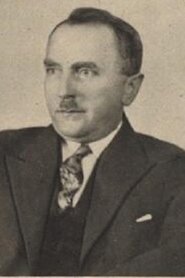
Joseph Delmont
Actor & Director
- Active
- 1913-1913
Films 2
About Joseph Delmont
Joseph Delmont was an early silent-era filmmaker and performer whose documented screen career appears to have been concentrated in 1913, the period when film production was rapidly shifting from short, theatrical one-reel subjects toward more elaborate narrative filmmaking. He is credited both as a director and as an actor in The Mysterious Club (1913) and On a Lonely Island (1913), indicating that he worked in the flexible, multi-tasking environment typical of early cinema, where filmmakers often served in several capacities on the same production. Surviving reference sources provide very limited biographical detail, and his birth, death, family background, and later life are not readily documented in standard film histories. Because of that scarcity of information, he is best understood today as one of the many craftsmen of the silent era whose contribution is visible through film credits rather than through a well-preserved personal record. His name survives primarily in historical filmographies and archival databases, where he is recognized for these early 1913 credits. The available evidence suggests a very brief or at least very sparsely documented film career, making him a minor but authentic figure in the foundational years of screen storytelling.
More about Joseph Delmont
In film history
Joseph Delmont's cultural impact lies less in fame or a large surviving body of work than in what his credit record reveals about the earliest years of cinema. His presence as both actor and director on two 1913 films reflects a transitional production culture in which the boundaries between performance, staging, and direction were still fluid. For historians and database researchers, figures like Delmont are important because they help reconstruct the labor structure of silent-era filmmaking, when many contributors worked briefly and left only fragmentary archival traces. Even without a documented star persona, he belongs to the generation of early practitioners who helped define the practical language of screen production before the studio system fully standardized roles. His surviving filmography also serves as a reminder that film history includes many working artists whose influence is embedded in the medium's development rather than in celebrity. In that sense, his legacy is archival and historical: he is part of the foundational workforce that made early narrative cinema possible.
Later reputation
Joseph Delmont's legacy is that of a documented but elusive early cinema professional whose name endures through film credits rather than through a broad public profile. He stands as an example of how many silent-era contributors remain partially visible, their careers compressed into a few surviving titles and a small cluster of database entries. For historians, such figures are valuable because they illuminate the collaborative and often anonymous nature of film production in 1913, when credits were less standardized and records were far less complete than in later decades. His place in film history is therefore modest but real: he is part of the early screen culture that preceded the feature-length era and helped establish filmmaking as a distinct artistic profession. The lasting importance of names like Delmont is that they preserve the connective tissue of cinema's origins, allowing scholars to map the industry beyond its major stars and directors. His legacy is mainly one of historical documentation and filmographic significance.
Influence
No direct influence on later actors or directors can be confidently documented from the surviving record. However, his work exemplifies the early cinema model of versatile personnel who moved between acting and directing, a pattern that influenced the later understanding of filmmakers as multi-hyphenate artists. In a broader sense, people like Delmont contributed to the professionalization of screen production by participating in the experiments that shaped silent-era storytelling and film crew organization. His example helps illustrate the collaborative foundations on which later, more specialized Hollywood roles were built.
Off screen
No reliable biographical record has been located in standard classic-cinema references regarding Joseph Delmont's personal life, including marriage, children, residence, or later career. The available surviving information is essentially confined to his 1913 film credits, which leaves his off-screen life undocumented in the historical record used by most film databases. As a result, any detailed account of family background or private life would be speculative and is not included here.
Credits
- Credited as both director and actor on The Mysterious Club (1913), demonstrating multi-role participation in early film production
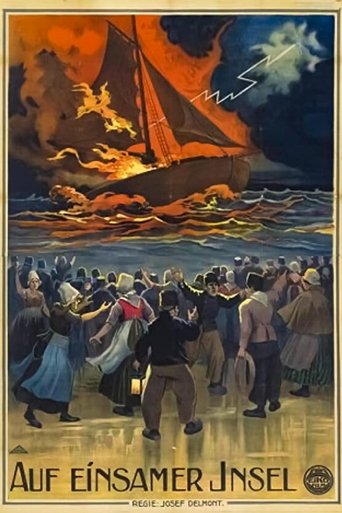
- Credited as both director and actor on On a Lonely Island (1913), a second surviving filmography entry from the same year
- Represents the early silent-cinema practice of filmmakers taking on multiple creative responsibilities within compact production units
- Documented in historical film records as an active screen personality during the formative pre-feature era of American and international cinema
- Associated with two 1913 titles that preserve his name in film history despite the scarcity of surviving biographical documentation
Films
- The Mysterious Club (1913)
- On a Lonely Island (1913)
Notes
- Joseph Delmont is credited as both actor and director on the same two known films from 1913.
- His surviving filmography is extremely small, making him a rare example of a silent-era figure known almost entirely through two credits.
- Because his documentation is sparse, he is a useful case study for the limits of archival survival in early cinema history.
- He worked during 1913, a year when the film industry was still evolving rapidly toward more complex narrative forms.
- The titles The Mysterious Club and On a Lonely Island are the only clearly identified screen works associated with him in the supplied filmography.
- No widely cited biographical source has preserved his birth or death information in standard classic-cinema references.
- His career suggests the common early-film practice of creatives taking on multiple responsibilities on a production.
- He should not be confused with any later or similarly named individuals, as the available record points specifically to this early silent-era film credit listing.
Questions
Who was Joseph Delmont?
Joseph Delmont was an early silent-era film personality credited as both an actor and a director. The surviving record places him in 1913, with credits on The Mysterious Club and On a Lonely Island. Beyond those film entries, his biography is not well documented in standard sources.
What films is Joseph Delmont best known for?
He is best known for The Mysterious Club (1913) and On a Lonely Island (1913). These are the two clearly documented titles associated with his name in the available filmography. Both films are important mainly because they preserve his place in early cinema history.
When was Joseph Delmont born and when did he die?
No reliable birth or death dates are readily available in standard classic-cinema references. His surviving record is limited to his 1913 film credits, so his exact lifespan remains undocumented in the source material used here.
What awards did Joseph Delmont win?
No awards or formal honors are known to be documented for Joseph Delmont. This is not unusual for many very early silent-era film workers, especially those whose careers are only partially preserved in surviving records.
What was Joseph Delmont's acting and directing style?
There is not enough surviving information to describe a specific personal style with confidence. As an early 1913 filmmaker, he likely worked within the concise, direct performance and staging conventions of silent shorts, where clarity of action and strong visual storytelling were essential. Any more detailed stylistic characterization would be speculative.
What is Joseph Delmont's legacy in film history?
His legacy is primarily archival and historical. He represents the many early cinema professionals whose names survive in credits even when personal biographical details have been lost. For historians, that makes him part of the essential record of how silent-era filmmaking was built.