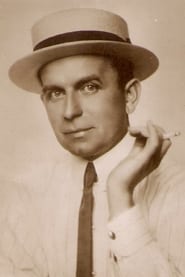
Viggo Larsen
Actor & Director
- Active
- 1907-1907
Films 1
About Viggo Larsen
Viggo Larsen was a Danish actor, screenwriter, and film director who belongs to the very earliest generation of European cinema. He emerged during the silent era and is best remembered today as one of the first directors and screen performers associated with the formative years of Scandinavian filmmaking. His documented screen and directing activity is sparse in surviving filmographies, but he is credited with directing and appearing in Lion Hunting (1907), a title that places him firmly in the pioneering period of film production. Because records from this era are incomplete, much of his personal life and later career remain difficult to reconstruct with certainty, but his work reflects the experimental, short-form nature of early 1900s cinema. Larsen's importance lies less in a long mainstream career than in his presence at the birth of narrative filmmaking, when actors often doubled as directors, writers, and production collaborators. He represents the kind of versatile early film artisan who helped establish the language and craft of motion pictures before the studio system standardized film production. Surviving references to him are mainly filmographic, which is typical for many silent-era pioneers whose contributions were historically significant even when biographical details were not extensively preserved.
More about Viggo Larsen
On screen
Specific descriptions of Viggo Larsen's acting style are not well preserved in surviving historical sources. As a performer from the earliest silent-film period, his work would have depended on expressive gesture, clear physical motivation, and highly legible facial expression rather than naturalistic dialogue-based performance. His acting likely reflected the concise, theatrical manner common to one-reel films of the mid-1900s, in which emotions and story points had to be communicated quickly and unmistakably. Because so little of his screen output is securely documented, any more detailed assessment would be speculative.
Behind the camera
Viggo Larsen's directing style is not extensively documented in modern reference sources, but as an early silent-era filmmaker he would have worked within the conventions of brief, compact storytelling and visually direct staging. Directors of his period often emphasized simple action, clear composition, and economical scene construction, since films were typically short and production methods were still evolving. His credited role on Lion Hunting (1907) suggests participation in the practical, exploratory mode of early cinema, when directors frequently shaped material through basic mise-en-scène rather than elaborate editing systems. A more specific stylistic profile cannot be reliably established from the surviving evidence.
In film history
Viggo Larsen's cultural impact is best understood within the context of cinema's formative years rather than through a large surviving body of work. As a Danish actor-director active in 1907, he participated in the crucial experimental phase when motion pictures were transforming from novelty attractions into structured storytelling forms. Even a small surviving credit from this period contributes to the historical record of how European filmmakers developed the grammar of screen performance and direction. His presence in the early Scandinavian cinema landscape also underscores the international nature of film innovation, which was not limited to Hollywood but was being advanced simultaneously across Europe. For film historians, Larsen is valuable as part of the foundational generation whose names appear in the archives of silent cinema and whose work helped make later film artistry possible.
Later reputation
Viggo Larsen's legacy is archival and historical: he is remembered primarily as an early silent-era Danish film figure whose surviving credits document the beginnings of screen acting and directing in the 1900s. Although he is not a household name, his filmography has value because it preserves evidence of how early cinema relied on versatile creators who moved fluidly between acting and directing. His documented association with Lion Hunting (1907) makes him part of the pioneering period that film scholars study to understand the evolution of narrative cinema. In the broader history of classic film, Larsen stands as one of many important but lightly documented contributors whose work helped shape the medium before detailed studio records became common. His name endures mainly through film databases and scholarly compilations that keep early cinema personnel from being forgotten.
Influence
Larsen likely influenced the early development of Danish screen production through direct participation in the practical, collaborative methods of silent filmmaking. While there is no secure record of protégés or a clearly traceable school of followers, his work exemplifies the multi-role creative labor that later became less common as cinema professionalized. The influence of figures like Larsen is often indirect: they helped establish production habits, performance conventions, and the viability of locally made films in Europe. His documented involvement in both acting and directing is itself a model of the early filmmaker as an adaptable craftsman rather than a narrowly specialized studio employee.
Off screen
Very little reliable information about Viggo Larsen's personal life is readily available in standard film reference sources. His biography is poorly documented compared with later film stars, and surviving records do not clearly establish details such as marriage, family, or private interests. This is common for early silent-era personnel whose work preceded the era of extensive publicity stills, fan magazines, and studio record preservation. As a result, his personal history remains largely unknown outside of his film credits.
Credits
- Credited as both director and cast member on Lion Hunting (1907), reflecting the multi-hyphenate nature of early film production
- Worked during the formative years of Scandinavian and European silent cinema
- Represents one of the early creative figures who helped establish short narrative filmmaking in the 1900s
- Documented as an actor-director at a time when film personnel often performed multiple production roles
- Associated with one of the earliest surviving entries in his known filmography
Roles
- Role in Lion Hunting (1907)
Films
- Lion Hunting (1907)
Notes
- He is credited as both actor and director on the same film, Lion Hunting (1907).
- His active period in surviving filmography is extremely short, at least in currently documented records.
- He belongs to the earliest generation of Danish silent-film personnel.
- Because of incomplete archival records, many standard biographical details about him are still unknown.
- His surviving legacy is mainly preserved through film databases and historical reference work rather than contemporary fame.
- Early film careers like his often involved multiple jobs on the same production, which was common before studio specialization developed.
Questions
Who was Viggo Larsen?
Viggo Larsen was a Danish silent-era film actor and director active in the earliest years of cinema. He is best known for his credit on Lion Hunting (1907), where he worked both behind and in front of the camera. Much of his life is poorly documented, but he remains an important early figure in Scandinavian film history.
What films is Viggo Larsen best known for?
He is primarily known for Lion Hunting (1907), which is the key surviving title in his documented filmography. Because records from this period are incomplete, additional film credits may exist, but this is the most securely associated work in available reference sources.
When was Viggo Larsen born and when did he die?
His birth and death dates are not clearly established in the readily available historical record. Many early silent-era film workers were not documented as thoroughly as later stars, which makes exact biographical verification difficult. At present, reliable standard sources do not consistently provide those details.
What awards did Viggo Larsen win?
No known awards or major formal honors are documented for Viggo Larsen in the surviving record. This is not unusual for performers and directors from the earliest years of cinema, when the modern awards culture had not yet developed.
What was Viggo Larsen's acting and directing style?
His style is not described in detail by surviving sources, but as an early silent-film artist he would have relied on expressive physical performance and straightforward visual storytelling. Early directors like Larsen typically favored simple, direct staging suited to short films and the technical limitations of the era. Any more precise description would be speculative because so little of his work is fully preserved or analyzed.
What is Viggo Larsen's legacy in film history?
His legacy is that of an early Danish cinema pioneer whose documented work helps chart the birth of narrative film in Europe. Even though his surviving filmography is small, his dual role as actor and director on a 1907 production shows how filmmakers worked at cinema's beginning. He remains significant to historians because he represents the foundational generation that helped establish the medium.