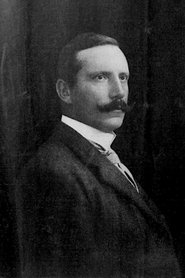
Cherry Kearton
Director
- Born
- November 11, 1871, Thwaite, Yorkshire, England
- Died
- March 13, 1940
- Active
- circa 1890s-1930s
Films directed 1
About Cherry Kearton
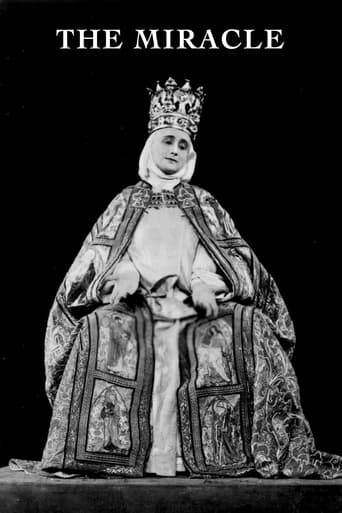
Cherry Kearton was a pioneering British filmmaker, wildlife photographer, and natural-history documentarian whose name is closely associated with the earliest attempts to film animals in their natural habitats. Born in England in the late Victorian era, he first gained prominence alongside his brother Richard Kearton as part of the broader turn-of-the-century movement that popularized nature photography and brought public attention to wildlife study. As motion-picture technology developed, Kearton adapted his fieldcraft and observational eye to film, helping define a documentary approach that emphasized patience, concealment, and respect for living subjects rather than staged animal scenes. He is credited with directing The Miracle (1912), a title that appears in his limited surviving filmography and underscores his brief but important involvement in early cinema. Much of his reputation, however, rests on his trailblazing work outside mainstream fiction filmmaking, especially in natural history and educational film production. His career helped bridge photography, scientific observation, and cinema at a time when film was still proving itself as a serious record-making medium. Kearton’s contributions are now viewed as part of the foundation of wildlife filmmaking and visual documentary practice.
More about Cherry Kearton
Behind the camera
Kearton’s directing is best understood through his natural-history work rather than conventional studio dramatics. His approach favored observation, authenticity, and technical ingenuity, with an emphasis on recording real behavior in the field instead of creating artificial scenes. He was associated with the practical challenges of filming wildlife, which required concealment, endurance, and an eye for composition under difficult outdoor conditions. This gave his work a documentary sensibility that was unusually modern for the silent era and aligned him with the earliest traditions of nonfiction cinema.
In film history
Cherry Kearton occupies an important place in the history of nonfiction screen media because he helped shift attention toward filming animals in the wild as subjects worthy of sustained cinematic study. At a time when much motion-picture output was theatrical or novelty-driven, his work demonstrated that film could serve scientific, educational, and observational purposes. His methods anticipated later wildlife and nature filmmakers who would build entire careers around patient field production, long lenses, concealment devices, and an ethic of depicting animals in their environments. Even though his filmography is small by feature-film standards, his influence extends beyond individual titles because he helped legitimate a mode of filmmaking that became central to documentary and television natural history.
Later reputation
Kearton’s legacy lies less in a large body of surviving fiction films than in the foundational techniques and attitudes he brought to early wildlife cinematography. He stands as part of the lineage that led from still nature photography to moving-image documentary and eventually to modern wildlife film and television. Historians of early cinema and natural-history media regard figures like Kearton as essential innovators because they proved that the camera could be used to observe, not merely to stage. His name remains associated with the transitional moment when film was becoming a tool for education, exploration, and the visual record of the natural world.
Influence
Kearton influenced later wildlife photographers, documentary filmmakers, and natural-history producers by demonstrating the value of authenticity and patience in field filming. His example helped shape the visual grammar of nature documentaries, especially the practice of capturing animals with minimal disturbance and presenting their behavior as a subject in itself. While he was not a mainstream studio director whose style was widely imitated in fiction cinema, his practical methods and respect for real-world observation resonated strongly with later nonfiction filmmakers and broadcast naturalists.
Off screen
Cherry Kearton came from a rural English background and developed an early fascination with birds, animals, and the natural world. He is best remembered as part of a family of nature image makers, particularly his collaboration and association with his brother Richard Kearton, with whom he helped bring wildlife photography to a much wider audience. His private life is far less documented than his professional achievements, and surviving historical summaries focus mainly on his work in the field rather than on detailed domestic biography. Because he worked in the early decades of visual media, many personal details common for later film figures are not well preserved in accessible sources.
Education
No formal education is widely documented in surviving film and biographical summaries; his expertise appears to have been developed largely through self-education, field observation, and practical experience in photography and natural history.
Credits
- Became one of the earliest and most influential wildlife photographers and natural-history image makers in Britain
- Helped popularize close, observational photography of birds and animals in the wild rather than posed studio imagery
- Expanded his work into motion pictures as film technology matured, contributing to early nature and documentary filmmaking
- Directed The Miracle (1912), one of the few film credits associated with his early cinematic activity
- Helped establish field techniques for filming elusive wildlife subjects using concealment and patient observation
- Played a major role in the broader public fascination with natural history imagery in the Edwardian period
Films
- The Miracle (1912)
- Wildlife and natural-history films associated with his early documentary work
Honors
- Recognized historically as a pioneer of wildlife photography and natural-history filmmaking
Collaborators
- Richard Kearton
- Natural-history publishers and photographers associated with early wildlife illustration
Studios
- Independent and educational film production
- Early British natural-history filmmaking circles
Notes
- Cherry Kearton is most often discussed alongside his brother Richard Kearton, with whom he was associated in early wildlife photography and natural-history work.
- He was part of the generation that helped turn bird and animal photography into a popular public interest rather than a niche scientific pursuit.
- His film-related reputation is tied more to documentary and nature imagery than to commercial fiction filmmaking.
- The title The Miracle (1912) appears in his filmography, but his broader significance comes from his early work in wildlife and educational cinema.
- Kearton’s methods relied heavily on fieldcraft, concealment, and patience, reflecting the difficulty of photographing and filming wary animals before modern telephoto equipment.
- He is considered one of the early figures who helped legitimize cinema as a medium for observing nature rather than only for entertainment.
- His career sits at the intersection of photography, science, journalism, and film history.
Questions
Who was Cherry Kearton?
Cherry Kearton was a British wildlife photographer and early filmmaker best known for pioneering natural-history imagery and for his contribution to the development of wildlife cinematography. He is also credited with directing The Miracle (1912), though his broader importance lies in nonfiction and educational film history.
What films is Cherry Kearton best known for?
He is chiefly associated with The Miracle (1912) in conventional filmographies, but his deeper reputation comes from early wildlife and natural-history films rather than standard studio features. Many of his most significant works are discussed as part of the evolution of documentary and educational cinema.
When was Cherry Kearton born and when did he die?
Cherry Kearton was born on November 11, 1871, in Thwaite, Yorkshire, England. He died on March 13, 1940.
What awards did Cherry Kearton win?
No major formal awards are widely documented for Cherry Kearton in the surviving historical record. His recognition is primarily historical and scholarly, based on his pioneering role in wildlife photography and early documentary filmmaking.
What was Cherry Kearton's style?
His work emphasized direct observation, authenticity, and technical ingenuity in the field. Rather than staging nature, he sought to film animals in their own environments, using patience and concealment to capture behavior as naturally as possible.
What is Cherry Kearton's legacy in film history?
Kearton is remembered as an early pioneer of wildlife and natural-history filmmaking. His work helped prove that cinema could be used for observation, education, and documentation, influencing later nature filmmakers and documentary traditions.