Films
1 film
About David Yashin
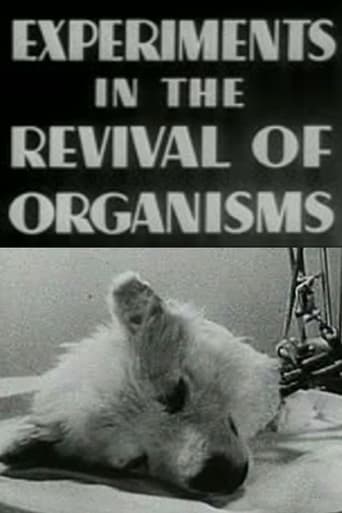
Soviet film director active in the early 1940s, best known for directing the controversial documentary 'Experiments in the Revival of Organisms' in 1940. This film documented the yet disturbing scientific work of Sergei Brukhonenko, who developed an early heart-lung machine called the autojektor. Yashin's work captured the Soviet Union's fascination with scientific advancement and medical experimentation during this period. The film became notorious for its graphic demonstrations of reviving severed animal heads and organs, showcasing techniques that were both and ethically questionable. Unfortunately, detailed biographical information about Yashin's life, career, and other works remains scarce in historical records, suggesting he may have been primarily a documentary or educational filmmaker rather than a prominent feature director. His legacy is intrinsically tied to this single, shocking documentary that continues to circulate in academic and film circles decades after its creation.
The Craft
Behind the Camera
Documentary/educational filmmaking with scientific focus, characterized by direct and unflinching documentation of medical experiments
Milestones
- Directed 'Experiments in the Revival of Organisms' (1940)
- Documented Soviet medical research
- Created
Best Known For
Must-See Films
Working Relationships
Worked Often With
Studios
Why They Matter
Impact on Culture
David Yashin's documentary 'Experiments in the Revival of Organisms' has had a profound and lasting cultural impact, far beyond what might be expected from a Soviet educational film. The film's shocking content - showing the revival of severed animal heads and organs - has made it a subject of fascination and horror for decades. It continues to be referenced in discussions about medical ethics, the boundaries of scientific experimentation, and the history of Soviet science. The documentary has become a cult classic in certain circles, frequently screened in university courses on medical ethics, film history, and Soviet studies. Its influence extends to modern discussions about organ transplantation, life support systems, and the definition of death, making Yashin's work unexpectedly relevant to contemporary bioethical debates.
Lasting Legacy
David Yashin's legacy is defined almost entirely by his single documented work, 'Experiments in the Revival of Organisms,' which has achieved a peculiar form of immortality in film history. While little is known about Yashin himself, his documentary continues to shock, educate, and provoke discussion more than 80 years after its creation. The film serves as a time capsule of Soviet scientific ambition and the era's different attitudes toward medical experimentation. Yashin's straightforward, unflinching directorial approach created a document that transcends its original educational purpose to become a meditation on the boundaries between life and death. His work represents a unique intersection of cinema, science, and ethics that continues to resonate with modern audiences, ensuring that this obscure Soviet director maintains an unexpected place in film history.
Who They Inspired
While David Yashin's influence on other filmmakers is difficult to trace due to the limited documentation of his career and the specialized nature of his work, his documentary has influenced generations of medical professionals, ethicists, and documentary filmmakers. The film's direct, unembellished approach to documenting scientific procedures has been cited as an example of pure observational documentary technique. Medical educators have used the film to demonstrate the history of resuscitation techniques, while documentary filmmakers studying the genre reference it as an example of science communication from the early 20th century. The film's shocking content has also influenced horror filmmakers and those exploring body horror, though often indirectly through its cultural reputation rather than direct study of Yashin's techniques.
Off Screen
Very little personal information about David Yashin is available in historical records, which suggests he was not a prominent public figure in Soviet cinema beyond his work on scientific documentaries.
Did You Know?
- The film 'Experiments in the Revival of Organisms' was considered lost for decades before resurfacing in the 1990s
- The documentary features real experiments by Soviet scientist Sergei Brukhonenko with his 'autojektor' device
- The film's most famous sequence shows a severed dog head responding to stimuli
- The experiments documented in the film were genuine scientific research, though the ethical standards would be unacceptable today
- The film was created for educational and propaganda purposes to showcase Soviet scientific advancement
- The techniques shown in the film were precursors to modern heart-lung machines
- The documentary has been described as
- Despite its graphic content, the film was shown to Soviet medical students and scientists
- The film's existence was largely unknown in the West until after the Cold War
- Modern medical historians still debate the scientific validity and ethical implications of the experiments shown
Frequently Asked Questions
Who was David Yashin?
Soviet documentary on YTB.my.
What film is David Yashin best known for?
Yashin is exclusively known for directing 'Experiments in the Revival of Organisms' (1940), a documentary that showed the revival of organs and animal heads using an early heart-lung machine developed by Sergei Brukhonenko.
When was David Yashin active as a filmmaker?
David Yashin's only documented work as a director was in 1940, though he may have been active in other capacities within the Soviet film industry before or after this date.
What was the purpose of 'Experiments in the Revival of Organisms'?
The film was created as an educational and propaganda documentary to showcase Soviet scientific advancement, specifically the work of Sergei Brukhonenko in developing resuscitation techniques and early life support technology.
Is 'Experiments in the Revival of Organisms' considered a horror film?
While not intended as horror, the film's graphic content showing revived severed animal heads has led to its classification by many viewers as.
What happened to David Yashin after 1940?
There is no documented information about David Yashin's career or life after 1940, suggesting he may have worked under different names, focused on other aspects of filmmaking, or left the industry entirely.