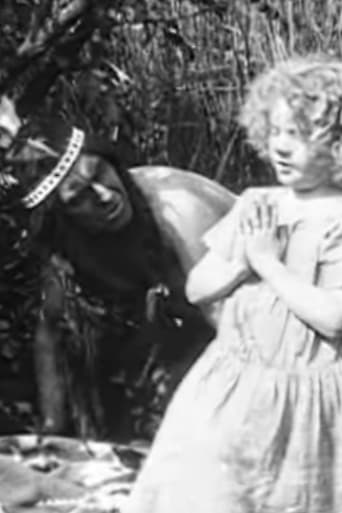
George Holt
Actor
- Active
- 1913-1913
Films 1
About George Holt
George Holt was an American silent-era screen actor whose surviving film record places him in the earliest years of commercial motion pictures. He is documented in the cast of When the West Was Young (1913), indicating that he was active at least by the formative period of the Western genre on film. Beyond this credit, reliable biographical information about him is scarce, which is not unusual for performers from the earliest decade of the American film industry, when credits were often incomplete and many studio records have not survived. Because the surviving evidence is limited, it is difficult to reconstruct his full career arc, personal background, or later life with certainty. What can be said with confidence is that George Holt belongs to the large group of working silent-film actors who helped establish screen performance traditions before the rise of the feature-length star system. His documented presence in an early Western suggests that he participated in the development of frontier subjects that became a foundational part of American popular cinema. He should not be confused with later performers or filmmakers of the same name; the available evidence points specifically to a very early film actor associated with 1913-era production.
More about George Holt
On screen
No detailed contemporary acting description survives for George Holt specifically. Based on the era in which he worked, his performance would likely have relied on the expressive, physically legible style typical of silent cinema: clear gesture, emphatic facial expression, and direct visual storytelling rather than spoken dialogue. Because he appears in an early Western, his role likely required sturdy, economical screen presence suited to action-driven outdoor filmmaking and quick character readability.
In film history
George Holt's cultural impact lies less in celebrity than in historical significance as part of the labor force that built the silent film industry from the ground up. Performers like Holt contributed to the visual grammar of early American cinema at a time when filmmakers were learning how to tell stories efficiently without synchronized sound. His documented participation in a 1913 Western connects him to one of the most enduring genres in film history, a genre that helped define American cinematic identity both domestically and abroad. Even when an individual actor's name does not survive in popular memory, their work helped populate and legitimize the screen worlds that audiences came to recognize as cinema. His legacy is therefore archival and industrial as much as artistic. He stands as evidence of the many working players whose contributions made the silent era possible, even if the surviving record preserves only a fragment of their careers. For film historians, such names matter because they help map the personnel networks of early production and remind us that the studio system was built on countless performers whose identities were often only partially recorded. In that sense, George Holt's legacy is part of the broader preservation of silent film history itself.
Later reputation
George Holt's lasting legacy is as a documented participant in the silent Western era, a foundational period in American film history. Although he is not known to modern audiences as a major star, his surviving credit places him among the early screen actors who helped establish the Western as a cinematic staple. His name survives as a historical trace of the many performers whose work supported the development of narrative filmmaking before standardized credits, publicity systems, and star biographies became common. For researchers and database users, he is important precisely because his career illuminates the scale and anonymity of early film labor. In broader film history, figures like Holt are essential to understanding how the silent industry functioned at its earliest stages. They remind us that classic cinema was not built only by marquee names but also by the countless supporting actors who appeared in short subjects, genre pieces, and rapidly produced features. That contribution gives Holt an archival legacy even in the absence of extensive biographical detail. His presence in 1913 cinema underscores the roots of screen acting and the emergence of the Western as a lasting American genre.
Influence
There is no documented evidence that George Holt directly influenced later named performers in a traceable, personal sense. However, by participating in early silent Western production, he contributed to the performance norms that later actors inherited: broad but controlled physical expression, efficient storytelling, and the ability to communicate character quickly in visually driven scenes. In that indirect way, his work belongs to the lineage that shaped subsequent screen acting in the silent and early sound eras. His influence is therefore best understood as part of the collective foundation of early American film performance rather than as a formally documented mentorship or star-to-star impact.
Off screen
No dependable public record has been found that clearly documents George Holt's personal life, family background, marriages, or later activities. This absence of information is common for many minor or short-lived silent-era performers, especially those whose credits survive only in scattered filmographies. At present, there is not enough verified evidence to identify spouses, children, education, or detailed non-professional biography without risking confusion with another person of the same name.
Credits
- Appeared in the 1913 silent Western When the West Was Young, a surviving documented credit from the earliest phase of American narrative film production
- Worked during the period when the Western genre was being codified as a major screen form in the United States
- Represents the class of early studio-era supporting players whose work helped shape silent performance conventions even when their names were not widely publicized
Roles
- Cast member in When the West Was Young (1913)
Films
- When the West Was Young (1913)
Notes
- George Holt is specifically documented in the 1913 film When the West Was Young.
- He is associated with the silent era, before synchronized sound became standard in film production.
- His surviving record is extremely limited, which is common for many early 1910s screen actors.
- He appears to have worked at a time when Westerns were becoming one of the most popular American film genres.
- No reliable evidence has been found linking him to later sound-era stardom, suggesting he was a minor or short-term silent-era performer.
- Because of the commonness of the name George Holt, he is easy to confuse with other individuals unless the 1913 credit is used for identification.
- His filmography illustrates how many early actors are known today primarily through surviving cast lists rather than extensive studio publicity.
- His career helps document the broad pool of working players who populated short silent films in the 1910s
Questions
Who was George Holt?
George Holt was an American silent-film actor documented in early cinema, including the 1913 Western When the West Was Young. Very little biographical information survives about him, but he belongs to the generation of performers who helped establish the visual language of silent-era screen acting.
What films is George Holt best known for?
The only securely identified credit available here is When the West Was Young (1913). Because surviving records are sparse, it is difficult to confirm additional titles without risking confusion with other people of the same name.
When was George Holt born and when did he die?
At present, no reliable birth or death dates have been verified for this George Holt. The historical record available for him is limited, which is common for lesser-documented silent-era performers.
What awards did George Holt win?
No awards or formal nominations are currently documented for George Holt. His historical importance comes from his participation in the silent film industry rather than from documented prize recognition.
What was George Holt's acting style?
There is no detailed surviving criticism of his style specifically, but as a 1913 silent-film actor he would have worked in the expressive, physically clear performance tradition required before sound. That meant using gesture, facial expression, and body language to communicate character and emotion on screen.
What is George Holt's legacy in film history?
George Holt's legacy is primarily archival: he represents the many early performers whose work helped build silent cinema, especially the Western genre. Even though he is not a major star, his documented presence in a 1913 film makes him part of the foundation of American screen history.