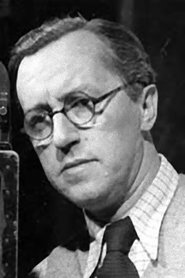
Hans H. Zerlett
Director
- Born
- October 17, 1892, Wiesbaden, Germany
- Died
- July 6, 1949
- Active
- 1921-1945
- Birth name
- Hellmuth Hans Carl Zerlett
Films directed 2
About Hans H. Zerlett
Hans Heinz Zerlett, born Hellmuth Hans Carl Zerlett, was a prominent German screenwriter and film director whose career was deeply intertwined with the cinema of the Third Reich. Born in Wiesbaden in 1892, he began his artistic journey as a theater actor and cabaret writer before transitioning to screenwriting in the late 1920s, often collaborating with star Anny Ondra. Zerlett's directorial debut came in 1934, and he quickly established himself as a versatile filmmaker capable of handling both lighthearted comedies and heavy-handed propaganda. He became a key figure in the Nazi film industry, joining the NSDAP in 1937 and maintaining a close personal friendship with cultural official Hans Hinkel. His filmography includes over 25 directorial efforts, ranging from the successful revue film 'Es leuchten die Sterne' to notorious anti-Semitic and anti-modernist works like 'Robert und Bertram' and 'Venus vor Gericht'. Following the end of World War II, Zerlett was arrested by Soviet authorities in 1946 due to his political affiliations and involvement in state propaganda. He spent his final years interned in Soviet special camps, eventually succumbing to tuberculosis in the Buchenwald camp in 1949.
More about Hans H. Zerlett
Behind the camera
Zerlett was known for a versatile directing style that bridged the gap between popular entertainment and state-mandated ideology. He excelled in the 'slapstick' comedy genre and large-scale revue films, utilizing high production values and rhythmic editing to create engaging spectacles. However, his work also demonstrated a clinical precision when handling propaganda, often using humor and musical numbers to mask or normalize exclusionary political messages. His films frequently featured elaborate set designs and a focus on 'völkisch' (populist) values, making him a reliable director for the 'middle tier' of the Nazi film industry.
Impact on culture
Zerlett's cultural impact is primarily viewed through the lens of his role as a 'system director' during the National Socialist era. He was instrumental in shaping the 'entertainment as distraction' policy of the Third Reich, producing high-quality musicals and comedies that served to maintain public morale while subtly reinforcing state ideology. His film 'Robert und Bertram' remains a significant subject for film historians studying the intersection of musical theater and anti-Semitic propaganda, illustrating how the regime utilized popular genres to disseminate hate.
Lasting legacy
Hans H. Zerlett's legacy is a controversial one, characterized by his technical proficiency as a filmmaker and his deep complicity with the Nazi regime. While his revue films like 'Es leuchten die Sterne' are noted for their scale and choreography, his name is inextricably linked to the 'Vorbehaltsfilme' (reserved films)—works so ideologically charged that their public screening remains restricted in Germany today. He is remembered as a director who successfully married the aesthetics of Hollywood-style entertainment with the requirements of a totalitarian state.
Who they inspired
Zerlett influenced the development of the German revue film, pushing the boundaries of scale and musical integration in the late 1930s. His work provided a template for how propaganda could be effectively embedded within 'light' entertainment, a technique studied by film historians to understand the mechanics of media manipulation.
Off screen
Hans H. Zerlett was the son of a musical director, Johann Baptist Zerlett, and the brother of fellow screenwriter Walter Zerlett-Olfenius. He was part of an elite social circle in Berlin that included famous athletes like Max Schmeling and actors like Hans Albers. In 1942, he became the father of Wolfgang Zerlett, who would later follow in his footsteps as an actor.
Education
He initially studied to be a theater actor and worked as a traveling performer after abandoning formal academic studies.
Career milestones
- Sold first screenplay 'Höhere Töchter' in 1927
- Directorial debut with the Karl Valentin short 'Im Schallplattenladen' (1934)
- Directed the massive revue success 'Es leuchten die Sterne' (1938)
- Appointed to the Tobis Film art committee and board of directors in 1937
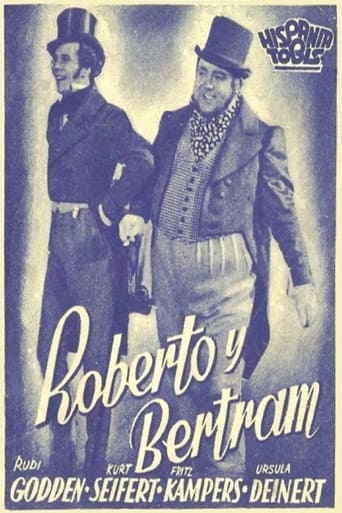
- Directed 'Robert und Bertram' (1939), the only anti-Semitic musical comedy of the era
- Directed 'Venus vor Gericht' (1941), a cinematic attack on 'Degenerate Art'
Must-see films
- Arzt aus Leidenschaft (1936)
- Truxa (1937)
- Es leuchten die Sterne (1938)
- Robert und Bertram (1939)
- Venus vor Gericht (1941)
- Meine Freundin Josefine (1942)
Awards
- Prädikat 'volkstümlich wertvoll' for Venus vor Gericht (1941)
Special recognition
- Member of the Board of Directors at Tobis Film (1937)
- Member of the Tobis Art Committee (Kunstausschuss)
Worked often with
- Anny Ondra (Actress)
- Max Schmeling (Athlete/Actor)
- Hans Hinkel (Political Patron)
- Leo Leux (Composer)
- La Jana (Actress/Dancer)
Studios
- Tobis Film
- UFA
- Bavaria Film
Family
- Information on specific spouse names is not widely documented in available records.
Did you know?
- He used the pseudonym 'Hans Hannes' when writing song lyrics.
- He bought the villa of his close friend, boxing champion Max Schmeling, in Bad Saarow just before WWII.
- A heated political argument at the 'Roxy-Sportbar' in 1938 led to the arrest of his friends after a denunciation.
- He directed the official documentary of Max Schmeling's victory over Joe Louis in 1936.
- His film 'Venus vor Gericht' was a direct response to the 'Degenerate Art' exhibition of 1937.
- He died in the same Soviet special camp (Buchenwald) as the famous actor Heinrich George.
- He was a 'Duzfreund' (close personal friend) of Hans Hinkel, a high-ranking official in Goebbels' Ministry of Propaganda.
In their own words
Information regarding specific documented quotes from Zerlett is sparse due to the nature of his career and subsequent internment.
Questions and answers
Who was Hans H. Zerlett?
Hans H. Zerlett was a prominent German film director and screenwriter active during the 1930s and 1940s. He is best known for his work within the Nazi film industry, where he directed both popular musical revues and notorious propaganda films.
What films is Hans H. Zerlett best known for?
He is most famous for the grand revue film 'Es leuchten die Sterne' (1938) and the controversial propaganda films 'Robert und Bertram' (1939) and 'Venus vor Gericht' (1941). He also directed several films starring boxing legend Max Schmeling.
When was Hans H. Zerlett born and when did he die?
He was born on October 17, 1892, in Wiesbaden, Germany, and died on July 6, 1949, in the Soviet Special Camp No. 2 (the former Buchenwald concentration camp) from tuberculosis.
What awards did Hans H. Zerlett win?
While he did not win international film awards, his work was highly regarded by the Nazi state; his film 'Venus vor Gericht' was granted the official distinction of 'volkstümlich wertvoll' (of value to the people).
What was Hans H. Zerlett's directing style?
Zerlett specialized in slapstick comedy and lavish musical revues, often employing high production values and rhythmic pacing. He was skilled at blending popular entertainment with political messaging, making him a key 'middle-tier' director for the Third Reich.