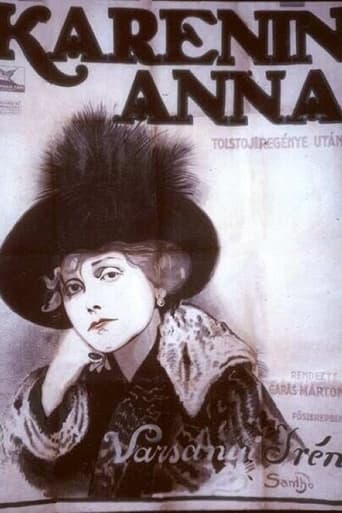
Márton Garas
Director
- Active
- 1918-1918
Films directed 1
About Márton Garas
Márton Garas is a little-documented figure from the Hungarian silent film era, known primarily for directing the 1918 production of Anna Karenina. Available historical film references suggest that his career belongs to the brief but active period of Hungary's World War I-era cinema, when filmmakers adapted major literary works for the screen and worked under the constraints of a small, rapidly changing national industry. Beyond this single credited directorial work, surviving mainstream references provide very limited information about his life, making it difficult to reconstruct a full personal or professional biography with certainty. He appears to have been part of the generation of early Hungarian filmmakers whose contributions were often overshadowed by better-documented contemporaries and by the upheavals that affected Central European film production after the war. Because extant records are sparse, many details such as his birth, death, training, and later career remain unverified in readily accessible film reference sources. What can be stated confidently is that he was active in silent-era cinema and participated in the adaptation of one of the great novels of world literature during a formative period for Hungarian film. His surviving screen credit places him within the important early tradition of literary adaptation in European silent cinema.
More about Márton Garas
Behind the camera
No detailed contemporary critical descriptions of Márton Garas's directing approach survive in widely accessible sources. Based on the nature of his only widely documented credit, his work can be placed within the silent-era literary-adaptation tradition, which typically emphasized visual storytelling, expressive performance, and faithful condensation of well-known novels for screen audiences. His known film association suggests a director working in the restrained, tableau-based or narratively economical style common to European cinema of the 1910s. However, any more specific assessment of his personal style would be speculative without additional archival evidence.
In film history
Márton Garas's cultural impact is best understood through the historical significance of the film he directed rather than through a large body of surviving work. By directing Anna Karenina in 1918, he contributed to the early cinematic translation of one of literature's most enduring novels, helping to establish the legitimacy of film as a medium capable of tackling serious literary material. His career also illustrates how many silent-era filmmakers, especially in smaller national industries, made important but now under-credited contributions to the development of European cinema. Even when individual records are sparse, directors like Garas form part of the foundation upon which later Hungarian and continental film cultures were built.
Later reputation
Márton Garas's legacy is that of an early Hungarian film director whose name remains attached to a significant literary adaptation from the silent era. His surviving credit is valuable to film historians because it documents the presence of active directors in Hungary's wartime film industry and helps map the production history of early adaptations of Tolstoy's Anna Karenina. Although he does not appear to have left a large or widely preserved body of work, his filmography contributes to the broader understanding of how European cinemas engaged with canonical literature in the 1910s. In film history, even brief careers can matter when they preserve evidence of industrial practice, artistic trends, and national production contexts.
Influence
There is no well-documented evidence of Márton Garas exerting direct influence on later directors in the way major canonical filmmakers did, but his work belongs to a broader current that influenced European silent cinema. By participating in literary adaptation, he contributed to a mode of filmmaking that would remain central to prestige cinema for decades. His film is part of the historical record that later scholars use to study the emergence of narrative feature filmmaking in Hungary and Central Europe. Indirectly, directors like Garas helped normalize the idea that cinema could adapt complex psychological and literary narratives, a practice that became a defining feature of world cinema.
Off screen
No reliable public biographical information about Márton Garas's personal life is readily available in standard film reference sources. His family background, marriages, children, and later life are not well documented in accessible English-language references. As a result, only minimal verified information can be provided without risking confusion with similarly named individuals. He remains a largely obscure figure whose career survives primarily through his film credit rather than through extensive biographical record.
Credits
- Directed the 1918 silent film adaptation of Anna Karenina
- Worked during the significant wartime era of Hungarian silent cinema
- Participated in the early European tradition of adapting major literary works for film
- Represents one of the lesser-known directors active in Hungary's pre-1920 film industry
Films
- Anna Karenina (1918)
Notes
- Márton Garas is most securely identified through a single known directorial credit rather than a large surviving filmography.
- His only widely documented film association is a silent adaptation of Leo Tolstoy's Anna Karenina from 1918.
- He worked during a period when Hungarian cinema was producing ambitious literary adaptations despite wartime disruptions.
- Historical records available in mainstream reference sources provide very little information about his personal life.
- He is an example of how many silent-era directors remain obscure even when they contributed to culturally important films.
- Because his name is uncommon and his career brief in surviving records, he is sometimes difficult to research without confusion with similarly named individuals.
Questions
Who was Márton Garas?
Márton Garas was a Hungarian silent-era film director best known for directing Anna Karenina in 1918. He is one of the lesser-documented figures of early Hungarian cinema, with very limited biographical information surviving in widely accessible sources.
What films is Márton Garas best known for?
He is best known for Anna Karenina (1918), the silent film adaptation of Leo Tolstoy's famous novel. No other widely verified film credits are commonly cited in major reference sources.
When was Márton Garas born and when did he die?
His birth date, birth place, and death date are not reliably documented in accessible mainstream film references. As a result, those details remain unknown with confidence.
What awards did Márton Garas win?
No awards or formal honors are currently documented for Márton Garas in the sources commonly used for film history research. This is not unusual for early silent-era filmmakers whose records were often incomplete or lost.
What was Márton Garas's directing style?
Specific contemporary descriptions of his directing style have not survived in readily available sources. Based on his known 1918 silent literary adaptation, his work likely followed the visual and narrative conventions of early European silent cinema.
What is Márton Garas's legacy in film history?
His legacy lies in his contribution to early Hungarian cinema and to the silent-era tradition of adapting major novels for film. Even with a sparse record, his name helps document the development of feature filmmaking in Hungary during the 1910s.