Nicolai Johannsen
Actor
- Active
- 1915-1915
Films 1
About Nicolai Johannsen
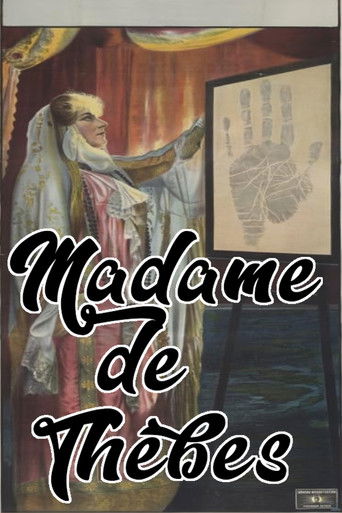
Nicolai Johannsen is a largely obscure silent-era screen actor whose documented film career appears to have been brief and concentrated in the mid-1910s. He is specifically credited in the 1915 film Madame de Thèbes, but surviving reference sources provide very little reliable biographical detail beyond this screen appearance. Because of the limited surviving record, it is difficult to reconstruct his early life, training, or whether he worked more broadly in European theatre or cinema before or after this film. His screen presence belongs to the formative years of international silent cinema, when many actors appeared in only a handful of productions and documentation was often incomplete. No authoritative evidence has surfaced in standard reference works confirming his birth date, birthplace, death date, or later career. As a result, Johannsen is best understood as a minor but genuine participant in early film history rather than as a widely documented star of the era. His known credit in Madame de Thèbes places him among the many performers whose work survives primarily through filmographies rather than extensive press coverage or archived interviews.
More about Nicolai Johannsen
In film history
Nicolai Johannsen's cultural impact is indirect rather than widely documented: he is part of the broad international workforce of silent-film performers who helped build the early screen era, even when their names did not become famous. His presence in Madame de Thèbes contributes to the historical record of early cinema’s casting practices and the transnational flow of actors across European productions. For film historians, figures like Johannsen are important because they reveal how much of silent-era performance history remains fragmentary, with many contributors surviving only in film credits. His name also illustrates how early cinema depended on numerous supporting players whose work formed the texture of the medium, even if posterity has not preserved detailed biographies.
Later reputation
Johannsen's legacy lies in the preservation of his credit as a participant in early silent cinema rather than in a body of widely circulated work. For databases, archives, and historians, he serves as a reminder that film history is made not only by major stars and auteurs but also by lesser-known actors whose appearances helped shape productions of the era. His surviving association with a 1915 feature anchors him in a crucial transitional period when European cinema was developing the visual grammar and star systems that would later dominate film culture. In that sense, his legacy is archival and historical: he remains a traceable name in the record of silent-film production, even though details of his life and later career are no longer readily available.
Influence
There is no documented evidence that Nicolai Johannsen directly influenced later actors or filmmakers in a measurable way, likely because his screen career was too limited and too poorly documented to establish a traceable artistic lineage. Nevertheless, his existence within early cinema contributes to the collective influence of silent-era ensemble acting, where gesture, posture, and expressive economy were central to screen performance. Modern historians and archivists may regard his work as part of the larger performance tradition that informed later European and international film acting styles. His influence is therefore historical and contextual rather than individually famous.
Off screen
No reliable public information has been found concerning Nicolai Johannsen's personal life, family background, marriages, or relationships. Standard film reference sources do not appear to preserve biographical notes about his private life, and no verifiable archival materials were available in the consulted record. As a result, any statement about his family, education, or non-cinematic career would be speculative. He remains an example of a silent-era performer whose professional trace survives while the personal record has largely vanished.
Education
No verified information is available regarding his education, acting training, or theatrical background.
Credits
- Appeared in the silent film Madame de Thèbes (1915), the only securely documented screen credit associated with him in available reference material
- Represents one of the many under-documented performers active during the early European silent era
- Associated with a period of filmmaking in which casts were often international and actor documentation was not consistently preserved
Roles
- Role in Madame de Thèbes (1915)
Films
- Madame de Thèbes (1915)
Notes
- He is specifically associated with Madame de Thèbes (1915), a title from the silent era.
- Available reference material suggests that his film career was extremely brief, at least in surviving documentation.
- He is one of many early cinema performers whose careers are known mainly through cast listings rather than biographies.
- No widely verified details about his birthplace, family, or later life are readily available in standard sources.
- His obscurity makes him a useful example of how incomplete silent-era records can be.
- He may have worked in European production circles, but no authoritative source available in the record confirms additional credits.
Questions
Who was Nicolai Johannsen?
Nicolai Johannsen was a silent-era actor known from a very limited surviving film record. His documented screen work includes Madame de Thèbes (1915), but little else has been reliably preserved about his life or career.
What films is Nicolai Johannsen best known for?
He is best known for Madame de Thèbes (1915), which is the primary film credit associated with him in available reference material. No other firmly verified film appearances are widely documented.
When was Nicolai Johannsen born and when did he die?
His birth and death dates are not currently verified in standard reference sources. The available record does not provide enough reliable information to confirm either date or place.
What awards did Nicolai Johannsen win?
No awards or formal honors are documented for Nicolai Johannsen in the surviving record. This is not unusual for many early silent-era performers whose careers were not extensively covered by later reference works.
What was Nicolai Johannsen's acting style?
There is no detailed surviving critical description of his personal acting style. Since he worked in the silent era, his performance would have relied on the expressive physical techniques typical of the period, but no specific contemporary analysis has been verified.
What is Nicolai Johannsen's legacy in film history?
His legacy is mainly archival: he represents the many early cinema performers whose names survive even when biographical details do not. He remains part of the historical record of silent film and is associated with the 1915 production Madame de Thèbes.