Films
1 film
About Grigori Lomidze
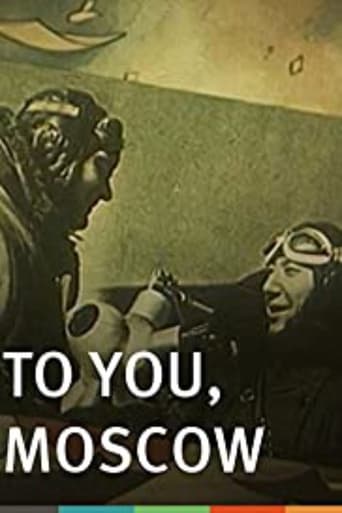
Soviet film director: brief but notable career emerged during the post-World War II era of Soviet cinema. His most significant and only credited directorial work is 'To You, Moscow' (1947), a patriotic film that celebrated the Soviet capital and its resilience during the war. Lomidze worked within the state-controlled film industry of the USSR, where cinema was heavily utilized as a tool for political messaging and cultural reinforcement. His directorial approach reflected the Socialist Realism style mandated by Soviet authorities, emphasizing optimistic portrayals of Soviet life and collective achievements. Despite the limited scope of his filmography, 'To You, Moscow' demonstrated his ability to orchestrate large-scale productions that aligned with the ideological requirements of the time. The film featured a blend of documentary footage and staged sequences, showcasing Lomidze's skill in creating emotionally resonant propaganda. Unfortunately, detailed records of his broader career, potential earlier works, or activities beyond 1947 are scarce, suggesting he may have been primarily active within the specific context of post-war Soviet film production.
The Craft
Behind the Camera
Grigori Lomidze's directing style was characteristic of the Socialist Realism doctrine prevalent in the Soviet Union during his active period. His work, particularly 'To You, Moscow,' combined elements of documentary realism with staged, emotionally charged sequences to create a powerful patriotic narrative. He utilized grand scale cinematography to capture the majesty of Moscow and the spirit of its people, often employing sweeping aerial shots and large crowd scenes. His approach was didactic, aiming to inspire and reinforce Soviet values rather than explore individual character psychology. The film's structure was episodic, weaving together multiple stories to celebrate the city's wartime sacrifices and postwar reconstruction efforts.
Milestones
- Directed 'To You, Moscow' (1947), his only known credited film
Best Known For
Must-See Films
Working Relationships
Studios
Why They Matter
Impact on Culture
Grigori Lomidze's cultural impact is intrinsically tied to his sole directorial effort, 'To You, Moscow,' which serves as a historical artifact of post-war Soviet sentiment and cinematic propaganda. The film contributed to the state-sponsored narrative of Soviet resilience and triumph, reinforcing the image of Moscow as the heart of an unbreakable nation. While not a widely known director internationally, his work provides modern scholars and film enthusiasts with a valuable window into the aesthetic and ideological priorities of Soviet cinema during the late 1940s. The film itself shows the power of cinema as a tool for nation-building and collective memory formation in the Soviet context, capturing a specific moment of patriotic fervor and reconstruction.
Lasting Legacy
Grigori Lomidze's legacy is that of a filmmaker who created a significant piece of Soviet propaganda art during a pivotal historical moment. His primary contribution to film history is 'To You, Moscow,' a film that encapsulates the post-war mood and the Soviet state's desire to celebrate its survival and strength. While his name may not be widely recognized outside of specialized circles studying Soviet cinema, his work remains an important example of the Socialist Realist genre and the role of film in the USSR. His legacy is defined not by a prolific career, but by a single, powerful film that continues to be studied for its historical and artistic value within its specific political and cultural framework.
Who They Inspired
Due to the limited scope of his known work, Grigori Lomidze's direct influence on subsequent generations of filmmakers is difficult to trace. He operated within a highly structured and ideologically rigid system, where individual artistic expression was often secondary to state directives. His film, 'To You, Moscow,' can be seen as part of a broader tradition of Soviet patriotic cinema that influenced the visual language of propaganda films both within and beyond the USSR. However, there is no documented evidence of him mentoring other directors or of specific filmmakers citing him as a primary influence. His influence is therefore best understood as being part of the collective impact of Soviet-era directors who contributed to the state's cinematic narrative.
Off Screen
Very little is documented about the personal life of Grigori Lomidze, which is not uncommon for Soviet-era filmmakers who were not part of the highest echelons of the artistic elite. His career appears to be concentrated around a single significant project, suggesting he may have been a director assigned to a specific state-commissioned film rather than a prolific auteur. Details regarding his family, relationships, or life outside of his work on 'To You, Moscow' are not readily available in historical records or Western film databases.
Did You Know?
- 'To You, Moscow' (1947) is Grigori Lomidze's only known credited directorial work, making him a one-film director in most international film databases.
- The film he directed was a large-scale production, blending documentary footage with dramatized scenes to create a portrait of the Soviet capital.
- His career appears to be almost exclusively tied to the post-World War II period in the Soviet Union, a time of intense reconstruction and nationalistic fervor.
- Like many Soviet films of the era, 'To You, Moscow' was likely heavily supervised by state authorities to ensure it adhered to the principles of Socialist Realism.
- Information about Lomidze is scarce in Western film literature, highlighting the often-overlooked nature of many Soviet-era filmmakers who were not internationally celebrated figures like Eisenstein or Vertov.
Frequently Asked Questions
Who was Grigori Lomidze?
Soviet on YTB.my. He is known almost exclusively for directing the 1947 patriotic film 'To You, Moscow,' which was produced within the state-controlled Soviet film industry.
What films is Grigori Lomidze best known for?
Titles linked here include To You, Moscow (1947).
When was Grigori Lomidze born and when did he die?
The specific birth and death dates for Grigori Lomidze are not widely documented in available historical or filmographic records. He is known to have been active as a director in 1947.
What awards did Grigori Lomidze win?
There are no widely documented records of Grigori Lomidze receiving major international or national film awards. His recognition would have been primarily within the context of the Soviet film industry's own system of honors.
What was Grigori Lomidze's directing style?
Lomidze's directing style was aligned with the Socialist Realism doctrine of the Soviet Union. His work blended documentary realism with staged, emotionally resonant scenes to create patriotic narratives that served the state's ideological goals.