Films
1 film
About Addi Homburg
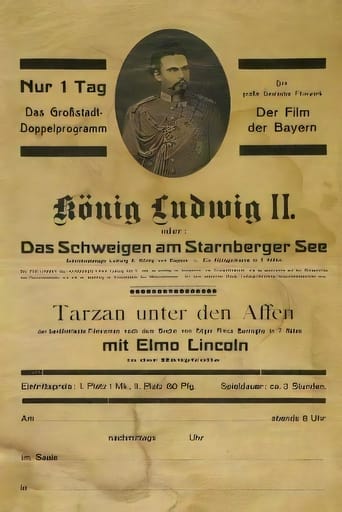
Addi Homburg appears once in this catalog: Das Schweigen am Starnbergersee (1920). His entire known filmography consists of a single appearance in the 1920 German drama 'Das Schweigen am Starnbergersee' (The Silence at Lake Starnberg), directed by Robert Reinert. This film, based on the tragic fate of King Ludwig II of Bavaria, was a significant production of its time, known for its atmospheric cinematography and psychological depth. Homburg's role, while not a leading part, placed him within the context of Germany's post-World War I cinematic renaissance, a period that saw the rise of German Expressionism. Like many actors from this specific transitional period, his career appears to have been extremely brief, possibly limited to this one film before fading into obscurity. The lack of further film credits suggests he may have been a stage actor who made a one-time foray into cinema, or his career was cut short by the rapidly changing film industry or other historical circumstances. His legacy is therefore inextricably linked to this single, notable work of early German cinema.
The Craft
Milestones
- Appeared in the 1920 German silent film 'Das Schweigen am Starnbergersee'
Best Known For
Must-See Films
Working Relationships
Worked Often With
Why They Matter
Impact on Culture
Addi Homburg's cultural impact is minimal and directly tied to his participation in a single film of historical significance. 'Das Schweigen am Starnbergersee' is studied by film historians as an example of early German psychological drama and its visual representation of national history. While Homburg himself was not a major cultural figure, his contribution, however small, is part of the fabric of this important film. His existence serves as a reminder of the thousands of anonymous actors and crew members who contributed to the golden age of silent film, many of whom are now lost to history.
Lasting Legacy
The legacy of Addi Homburg is that of a representative figure for the countless one-film actors of the silent era. He exemplifies the transient nature of early film careers, where many individuals participated in the burgeoning art form without achieving lasting fame. His name survives in film databases and archives, proof of the efforts of historians to document even the most minor contributors to cinema's history. His primary legacy is his association with 'Das Schweigen am Starnbergersee', ensuring his name is mentioned whenever the film's cast is discussed.
Who They Inspired
Given his extremely limited filmography, there is no evidence to suggest that Addi Homburg directly influenced other actors or directors. His influence is passive, existing only as part of the ensemble that brought a specific historical film to life. He stands as a historical footnote rather than an active agent of influence within the film industry.
Off Screen
Very little is known about the personal life of Addi Homburg. His brief film career and the passage of time have resulted in a scarcity of documented biographical details. Information regarding his family, relationships, or life outside of his single film appearance is not available in historical or filmographic records.
Did You Know?
- Addi Homburg's entire known film career consists of one film made in a single year, 1920.
- His only film, 'Das Schweigen am Starnbergersee', was a German historical drama about King Ludwig II of Bavaria.
- The director of his only film, Robert Reinert, was a significant figure in early German cinema known for his grand-scale, psychologically intense productions.
- Like many actors from the silent era, especially those with minor roles, detailed biographical information about Homburg has been lost to time.
- His name appears in cast lists but the specific character he portrayed is not widely documented in easily accessible film databases.
- He was active during the period of German Expressionism, though his film leaned more towards psychological realism than the stylized visuals of Expressionism.
Frequently Asked Questions
Who was Addi Homburg?
German with credits in this catalog. His career appears to have been extremely brief, with no other known film credits to his name.
What films is Addi Homburg best known for?
Titles linked here include Das Schweigen am Starnbergersee (1920).
When was Addi Homburg born and when did he die?
Unfortunately, the birth and death dates for Addi Homburg are not known. Detailed biographical information about actors with minor roles from this period is often scarce and has been lost over time.
What awards did Addi Homburg win?
There are no records of Addi Homburg receiving any major awards or nominations for his work. His brief career in the early 1920s predates many of the formalized award systems that exist today.
What was Addi Homburg's acting style?
Due to the lack of surviving films and detailed documentation of his performance, it is difficult to define Addi Homburg's specific acting style. As a performer in a German psychological drama, he likely employed the typical dramatic and expressive gestures common in silent film acting of the era.
Why is so little known about Addi Homburg?
The scarcity of information about Addi Homburg is common for actors who had very brief or minor roles in the silent era. Many records were not preserved, and individuals who did not achieve stardom were often not documented in detail by contemporary press or later historians.