
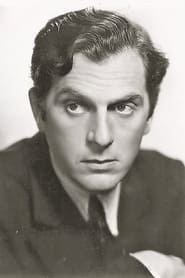
Walter Woolf King
Actor
Born: November 2, 1899 in San Francisco, California, USA Died: October 24, 1984 Active: 1918-1977
Films
1 film
About Walter Woolf King
American actor and baritone singer: career transitioned from the heights of Broadway operettas to the silver screen during the early sound era. Born in San Francisco, he began his musical journey singing in churches before finding success in vaudeville alongside pianist Charles LeMaire. He made his Broadway debut in 1919 and quickly became a leading man in numerous musical comedies and operettas throughout the 1920s, often billed simply as Walter Woolf. His film career was launched with a starring role in the early Technicolor musical 'Golden Dawn' (1930), though he is perhaps most enduringly remembered for his roles as the sophisticated yet villainous foil to the Marx Brothers in 'A Night at the Opera' (1935) and 'Go West' (1940). As the era of the grand screen musical shifted, King reinvented himself as a versatile character actor and later a successful talent agent. He remained active in the industry for over six decades, appearing in dozens of television programs through the 1970s before his passing in 1984.
The Craft
On Screen
King was known for his commanding presence and a rich, operatic baritone voice that made him a natural fit for the 'matinee idol' roles of the 1920s. In film, he often utilized a polished, somewhat haughty delivery that allowed him to excel as sophisticated villains or authoritative figures. His ability to balance genuine musical talent with comedic timing made him an ideal straight man for chaotic comedy troupes like the Marx Brothers.
Milestones
- Broadway debut in the 1919 production of 'The Lady in Red'
- Starring role in the early Technicolor operetta film 'Golden Dawn' (1930)
- Portrayed the villainous Rodolfo Lassparri in the Marx Brothers classic 'A Night at the Opera' (1935)
- Introduced the jazz standard 'Don't Blame Me' in the 1932 musical 'Clowns in Clover'
- Successfully transitioned from leading man to a prolific television guest star and talent agent in his later years
Best Known For
Iconic Roles
Must-See Films
Accolades
Special Recognition
- Recognized as a premier Broadway baritone of the 1920s
- Inducted into the collective memory of the Golden Age of Comedy for his work with the Marx Brothers and Laurel & Hardy
Working Relationships
Worked Often With
Studios
Why They Matter
Impact on Culture
Walter Woolf King represents the bridge between the grand stage operettas of the early 20th century and the evolving medium of sound cinema. His performance in 'A Night at the Opera' is considered one of the definitive 'villain' roles in comedy history, providing the necessary high-stakes antagonism that allowed the Marx Brothers' anarchy to flourish. He also played a role in the early experimentation with color film through his work in 'Golden Dawn'.
Lasting Legacy
His legacy is preserved primarily through his contributions to the 'Golden Age of Comedy.' While he began as a romantic lead, his willingness to play the 'heavy' in classic comedies ensured his face and voice would be recognized by generations of film students and fans. His transition into a talent agent also highlights the adaptability required of performers during the studio system's decline.
Who They Inspired
He influenced the archetype of the 'singing villain' or the 'pompous antagonist' in musical comedies, a trope that persisted in both film and animation for decades.
Off Screen
Walter Woolf King was the son of a San Francisco saloon keeper and grew up in a musical environment. He was married to Ernestyne Bachrach, with whom he had two children. Later in his life, he shifted his focus from performing to the business side of Hollywood, working as a talent agent while continuing to take occasional character roles in television.
Education
Self-taught and trained through early church choir performances and the vaudeville circuit.
Family
- Ernestyne Bachrach (married 1930s)
Did You Know?
- He was originally billed as 'Walter Woolf' or 'Walter King' before combining them into his full three-part name in the mid-1930s.
- He introduced the famous song 'Don't Blame Me' to audiences in a 1932 stage production.
- His film 'Golden Dawn' (1930) was one of the early 'all-talking, all-color' features, though it is now often cited for its bizarre and dated plot.
- After his acting career slowed down, he became a successful Hollywood agent.
- He appeared as George Washington in the very first episode of 'The Munsters' (1964).
- He had a long television career, guest starring in hits like 'The Beverly Hillbillies', 'The Virginian', and 'Alfred Hitchcock Presents'.
- He died of a heart attack in Beverly Hills at the age of 84.
In Their Own Words
"I am the greatest tenor in the world!" (As Rodolfo Lassparri in 'A Night at the Opera', context: asserting his dominance over the opera house.)
Frequently Asked Questions
Who was Walter Woolf King?
Prominent American stage and film with credits in this catalog. He is best remembered for playing the villainous opera singer Rodolfo Lassparri in the Marx Brothers' 'A Night at the Opera'.
What films is Walter Woolf King best known for?
Titles linked here include A Night at the Opera (1935), Golden Dawn (1930).
When was Walter Woolf King born and when did he die?
Born November 2, 1899; died October 24, 1984.
What was Walter Woolf King's acting style?
King possessed a formal, operatic style characterized by a rich singing voice and a sophisticated, often arrogant screen persona. This made him the perfect 'straight man' and antagonist for the more chaotic comedians of his era.
Did Walter Woolf King have a career after acting?
Yes, in addition to continuing as a character actor in television throughout the 1950s and 60s, he became a well-regarded talent agent in Hollywood.