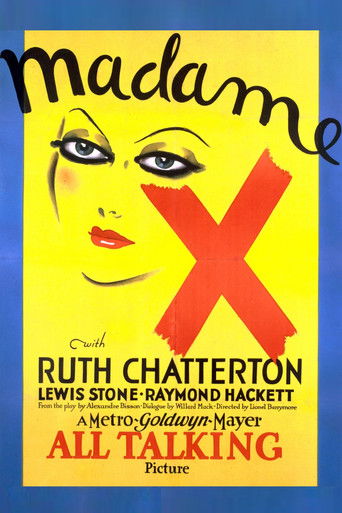
Films
1 film
About John P. Edington
John P. Edington appears once in this catalog: Madame X (1929). His brief but notable film career is primarily remembered for his role in the 1929 drama 'Madame X,' which was one of the early talkies that showcased the potential of synchronized sound in dramatic storytelling. Edington entered the film industry at a pivotal moment when Hollywood was rapidly adapting to new technologies, and his work reflects the acting styles of this transitional era. Though his filmography was limited to a single confirmed credit, 'Madame X' was a significant production that starred Ruth Chatterton and was directed by Lionel Barrymore. The film's success helped establish the conventions of early sound drama, and Edington was part of this cinematic evolution. Unfortunately, like many actors of this period, Edington's career did not extend beyond the initial transition to sound, and he disappeared from the film industry after 1929. His legacy remains tied to this important early talkie that demonstrated how emotional drama could be effectively conveyed through the new medium of sound cinema.
The Craft
On Screen
While specific details about John P. Edington's acting style are not extensively documented, his work in 'Madame X' would have been representative of the transitional acting style of 1929. Actors during this period were adapting from the exaggerated physical expressions required in silent films to the more nuanced vocal performances needed for sound pictures. His performance likely combined elements of both techniques, as was common in early talkies where actors were still mastering the balance between visual and vocal expression.
Milestones
- Appeared in 'Madame X' (1929), an early sound drama
- Part of the transitional era from silent to sound cinema
- Worked with director Lionel Barrymore
- Shared screen with star Ruth Chatterton
- Contributed to early talkie cinema during its formative years
Best Known For
Iconic Roles
Must-See Films
Working Relationships
Worked Often With
Studios
Why They Matter
Impact on Culture
John P. Edington's cultural impact is primarily tied to his participation in 'Madame X' (1929), a film that represents an important milestone in early sound cinema. As one of the early talkies, 'Madame X' demonstrated how dramatic storytelling could be enhanced through synchronized sound, and Edington was part of this cinematic evolution. Though his role was not a leading one, his contribution to this significant film places him within the broader context of actors who helped bridge the gap between silent and sound eras. The film itself was remade multiple times, becoming a classic melodramatic story, and Edington's involvement in the original sound version connects him to this enduring cinematic legacy.
Lasting Legacy
John P. Edington's legacy in film history is that of a representative figure from the transitional period of cinema, specifically the crucial year of 1929 when the industry was fully embracing sound technology. While he did not achieve lasting fame or build an extensive filmography, his appearance in 'Madame X' ensures his place in the historical record of early sound cinema. He represents the countless actors who participated in the formative years of talkies but whose careers were brief, yet collectively contributed to the development of cinematic art. His story illustrates the challenging nature of the transition period, where many actors struggled to adapt to the new demands of sound filmmaking.
Who They Inspired
Given the brief nature of his career, there is no documented evidence of John P. Edington directly influencing other actors or filmmakers. However, like all actors who worked during the transition to sound, he was part of the collective effort that helped establish new acting techniques and performance styles for the medium. His work in 'Madame X' contributed to the film's success, which in turn influenced how dramatic stories would be told in sound cinema, indirectly affecting subsequent generations of filmmakers and actors.
Off Screen
Very little information is available about John P. Edington's personal life, as his brief appearance in cinema history left minimal biographical records. Like many supporting actors from the early sound era, he appears to have been a private individual whose life outside of his single film credit remains undocumented in historical archives and film reference materials.
Did You Know?
- John P. Edington's entire known film career consists of a single film credit in 1929
- 'Madame X' was one of the first all-talking dramatic films produced by MGM
- The film 'Madame X' was based on a popular French play by Alexandre Bisson
- His film 'Madame X' has been remade multiple times, including versions in 1937, 1948, and 1966
- 1929, the year of his only known film, was a pivotal year in cinema history as it marked the full transition to sound
- Director Lionel Barrymore who directed 'Madame X' was also a prominent actor of the era
- The original story of 'Madame X' has been adapted for film at least eight times
- Edington represents the many actors who appeared briefly during the transition to sound but did not continue in film
- His film was released during the same year as the first Academy Awards ceremony
- The success of 'Madame X' helped establish the melodrama genre in early sound cinema
Frequently Asked Questions
Who was John P. Edington?
American with credits in this catalog. He is known for appearing in the early talkie 'Madame X,' which was his only confirmed film credit during his brief career in Hollywood.
What films is John P. Edington best known for?
Titles linked here include Madame X (1929).
When was John P. Edington born and when did he die?
Unfortunately, specific birth and death dates for John P. Edington are not documented in available historical records. Like many supporting actors from the early sound era, detailed biographical information about his life remains unavailable.
What awards did John P. Edington win?
There are no records of John P. Edington receiving any major awards or nominations for his work in cinema. His brief career consisted of a single film role in 1929, and no formal recognition of his performances has been documented.
What was John P. Edington's acting style?
While specific details about his acting technique are not documented, Edington's performance in 'Madame X' would have reflected the transitional acting style of 1929, combining elements from silent film expression with the new requirements of sound performance.
Why did John P. Edington's career end so quickly?
The exact reasons for John P. Edington's brief career are unknown, but many actors from this period struggled to adapt to the new demands of sound cinema. The transition period was challenging for many performers, and some, like Edington, did not continue in the evolving industry.
How significant was 'Madame X' in film history?
'Madame X' (1929) was significant as an early all-talking dramatic film that helped establish conventions for sound cinema. The film's success demonstrated the potential of sound for dramatic storytelling and became a classic story that would be remade multiple times in subsequent decades.