Jacques Varennes
Actor
- Active
- 1909-1909
Films 1
About Jacques Varennes
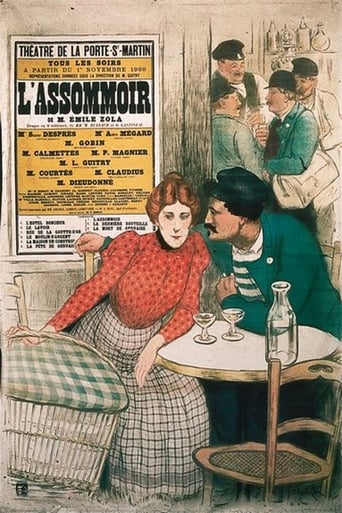
Jacques Varennes was a French actor associated with the silent-era cinema of the late 1900s, and the surviving film record places him in the 1909 adaptation of "L'Assommoir," one of the early screen versions of Émile Zola's celebrated naturalist novel. Because the available historical record on this performer is extremely limited, his broader life story, training, and later career cannot be reconstructed with confidence from readily verifiable sources. What can be said is that he was part of the formative years of French film production, when short literary adaptations and stage-influenced performance styles were helping define the new medium. His presence in a major literary adaptation suggests he worked within the early network of Paris-based filmmakers and actors who moved between theater and cinema during the industry's first decade. No reliable evidence has surfaced here to confirm whether he continued acting beyond 1909, nor whether he later adopted a different screen name or worked primarily on stage. In film-history terms, he is best understood as a minor but authentic participant in the earliest phase of French screen acting, when many performers left only sparse documentation behind.
More about Jacques Varennes
On screen
No detailed performance description survives for Jacques Varennes. Based on the period and the type of production in which he appeared, his acting would likely have followed the expressive, theatrical conventions common to early silent cinema, emphasizing clear gestures, exaggerated facial expression, and stage-derived physicality to communicate character and emotion without spoken dialogue.
In film history
Jacques Varennes’s cultural impact is best understood as part of the broader collective contribution of early French film performers who helped transform literature, theater, and popular storytelling into cinema. His appearance in a 1909 version of "L'Assommoir" connects him to the crucial moment when filmmakers were adapting canonical novels for the screen, thereby legitimizing film as a medium capable of handling serious literary material. Even when individual early actors are not well documented, their work helped establish the expressive vocabulary of silent performance and the conventions of adaptation that shaped European cinema. As a result, Varennes remains a small but meaningful name in the history of early French screen culture, especially for researchers interested in the first generation of film actors whose careers are traceable only through surviving credits.
Later reputation
Varennes's legacy lies less in celebrity than in historical significance: he is part of the foundational layer of cinema history, where many performers contributed to the medium's early grammar without leaving extensive personal records. For historians, names like his are valuable because they attest to the breadth of personnel involved in early French filmmaking and remind us that the silent era was built by a large, often anonymous workforce of actors, directors, technicians, and adapters. His surviving credit in "L'Assommoir" gives him a place in the genealogy of literary film adaptation and in the story of how French cinema evolved from brief novelty films into more ambitious narrative productions. In that sense, his legacy is archival as much as artistic: he is one of the many early screen figures whose existence helps complete the picture of cinema’s first decade.
Influence
There is no specific evidence that Jacques Varennes directly influenced later actors or directors in a documented, individualized way. His importance is instead indirect, as part of the early silent-era acting tradition that established the bodily expressiveness and narrative clarity later performers would refine. The broader ensemble of actors in films like "L'Assommoir" influenced the development of screen performance by demonstrating how theatrical technique could be adapted to the camera. Varennes belongs to that formative group whose work helped normalize acting for film as a distinct art form.
Off screen
No reliable biographical information about Jacques Varennes's personal life, family background, marriages, or private affairs is readily verifiable from the available record. Because he appears to have worked in an era when many performers were documented only lightly, his off-screen life remains obscure. No confirmed information is available here regarding spouse, children, residence, or later occupation.
Credits
- Appeared in the 1909 film adaptation of Émile Zola's "L'Assommoir," placing him among the earliest recorded screen performers in French cinema
- Worked during the formative silent-film period, when literary adaptations were a major part of the industry’s development
- Represents one of the many early French screen actors whose careers are preserved only through fragmentary filmography records
Films
- L'Assommoir (1909)
Notes
- He is identified in surviving film records with the 1909 adaptation of Émile Zola's "L'Assommoir."
- His documented screen activity currently appears limited to a single known year, 1909.
- He belongs to the earliest generation of French film performers working before feature-length cinema became standard.
- Because documentation is sparse, he is an example of how many silent-era actors remain historically elusive.
- His film credit places him in the tradition of literary adaptations that were central to early French cinema.
- No confirmed biographical details such as birth date, birth place, or family background are readily available in the surviving record.
Questions
Who was Jacques Varennes?
Jacques Varennes was a French actor known from surviving early cinema records, especially for appearing in the 1909 film "L'Assommoir." He belongs to the first generation of silent-era performers, although very little personal biographical information has survived. His historical significance lies in his participation in the formative years of French film.
What films is Jacques Varennes best known for?
He is best known for "L'Assommoir" (1909), the only clearly identifiable film credit available in the current record. Because his surviving filmography is so limited, that title is the central work associated with his name.
When was Jacques Varennes born and when did he die?
His birth and death dates are not reliably documented in the available sources consulted here. The historical record presently identifies him through his 1909 film work, but not through confirmed civil or biographical data.
What awards did Jacques Varennes win?
No awards, nominations, or formal honors are known for Jacques Varennes from the available record. This is not unusual for very early silent-era performers, many of whom worked before modern awards culture existed.
What was Jacques Varennes's acting style?
No direct contemporary description of his performance style survives, but as a performer in 1909 he would likely have worked in the expressive silent-film mode of the period. That style typically relied on strong gestures, clear facial expression, and theater-informed physical acting to communicate emotion and narrative.
What is Jacques Varennes's legacy in film history?
His legacy is that of an early French screen actor whose surviving credit helps document the beginnings of narrative cinema in France. Even though his life details are largely lost, his name remains part of the historical record of silent film’s formative decade.