
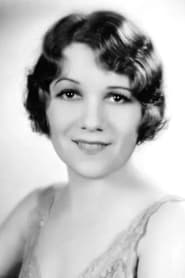
Vivienne Segal
Actor
Born: April 19, 1897 in Philadelphia, Pennsylvania, USA Died: December 29, 1992 Active: 1912-1966 Birth Name: Vivienne Sonia Segal
Films
1 film
About Vivienne Segal
Vivienne Sonia Segal — preeminent star of the American musical theater whose over five decades, transitioning from a classically trained operatic soprano to a sophisticated comedic actress. Born in Philadelphia to a physician who actively supported her early ambitions, she made a sensational debut at age 15 in a local production of 'Carmen' before moving to Broadway in 1915's 'The Blue Paradise.' Throughout the 1920s, she became a fixture of the New York stage, appearing in the Ziegfeld Follies and starring in landmark operettas like 'The Desert Song.' With the advent of sound in Hollywood, she was recruited for a series of early Technicolor musicals in 1930, most notably the controversial 'Golden Dawn,' though her film career was short-lived as the public's appetite for the genre waned. She returned to Broadway to achieve her greatest critical success, collaborating closely with Richard Rodgers and Lorenz Hart to create the role of the cynical Vera Simpson in 'Pal Joey' (1940). Her performance of the song 'Bewitched, Bothered and Bewildered' became a definitive moment in musical theater history, and she later won a Donaldson Award for reprising the role in a triumphant 1952 revival. Segal remained active in television and theater until the early 1960s, leaving a legacy as versatile and enduring performers of the Golden Age.
The Craft
On Screen
Segal was celebrated for her transition from a 'sweet' lyric soprano ingenue in her early career to a master of worldly, sophisticated cynicism in her later years. Her acting was characterized by impeccable enunciation, a sharp comedic wit, and a 'cool' stage presence that allowed her to play complex, often unsympathetic characters with charm. She was particularly noted for her ability to deliver the intricate, double-entendre lyrics of Lorenz Hart with a perfect balance of elegance and irony.
Milestones
- Broadway debut in 'The Blue Paradise' (1915) at age 18
- Starring as Margot Bonvalet in the original production of 'The Desert Song' (1926)
- Leading roles in four major Hollywood musicals released in 1930, including 'Golden Dawn'
- Created the iconic role of Vera Simpson in the original Broadway production of 'Pal Joey' (1940)
- Won the Donaldson Award and New York Drama Critics Circle Award for the 1952 revival of 'Pal Joey'
- Introduced the Great American Songbook standard 'Bewitched, Bothered and Bewildered'
Best Known For
Iconic Roles
Must-See Films
Accolades
Won
- Donaldson Award for Best Performance by an Actress in a Musical (1952)
- New York Drama Critics Circle Award for Best Actress (1952)
Nominated
- Nominated for various seasonal theater citations prior to the formal establishment of the Tony Awards in her peak years
Special Recognition
- Recognized as a 'Leading Figure in American Musical Theatre' by the Museum of the City of New York
- Interred at the prestigious Westwood Village Memorial Park Cemetery
Working Relationships
Worked Often With
Studios
Why They Matter
Impact on Culture
Vivienne Segal was instrumental in shifting the archetype of the musical theater leading lady from the innocent, operetta-style ingenue to the 'modern,' cynical, and sexually autonomous woman. By originating the role of Vera Simpson in 'Pal Joey,' she helped introduce adult themes and moral ambiguity to the Broadway musical, which had previously favored lighthearted romance. Her recording of 'Bewitched, Bothered and Bewildered' set the standard for the interpretation of Rodgers and Hart's work, influencing countless jazz and pop vocalists.
Lasting Legacy
Segal's legacy is defined by her longevity and her association with the 'Golden Age' of the American musical. She is remembered as the quintessential Rodgers and Hart heroine—intelligent, vocally gifted, and dramatically sharp. Her transition from the silent-era-style operettas of the 1920s to the gritty, realistic musical dramas of the 1940s mirrors the evolution of the art form itself. She remains a study in how a performer can reinvent themselves to stay relevant across changing cultural eras.
Who They Inspired
She directly influenced the performance style of musical theater 'dames' who followed, providing a blueprint for the witty, older female lead that would become a staple in the works of Sondheim and others. Her ability to handle sophisticated, adult lyrics with a 'deadpan' elegance influenced performers like Vera Zorina and later, Christine Baranski.
Off Screen
Vivienne Segal was born into a Jewish family; her father, Bernhard Segal, was a physician who famously underwrote her first Broadway show to ensure her success. She was known for her close, platonic friendship with lyricist Lorenz Hart, who reportedly proposed to her multiple times, though she declined due to his alcoholism and personal struggles. She was a known 'canasta crony' of Stephen Sondheim's mother, Etta Janet Fox.
Education
Sisters of Mercy Academy in Philadelphia; studied voice with the renowned Estelle Liebling (who also taught Beverly Sills).
Family
- Robert Ames (1923-1926; divorced)
- Hubbell Robinson Jr. (1950-1974; his death)
Did You Know?
- Her father reportedly paid $35,000 in 1915 to back 'The Blue Paradise' so she could have the lead role.
- She was the first person to ever sing 'Bewitched, Bothered and Bewildered' on stage.
- The film 'Golden Dawn' (1930) is now considered a 'camp' cult classic due to its bizarre plot where her character discovers she is white rather than African.
- She appeared in several early Technicolor films when the process was still experimental and prone to overheating the actors.
- Her last public performance was on a 1961 episode of 'Alfred Hitchcock Presents' titled 'The Horse Player'.
- She was a member of the Ziegfeld Follies in both 1924 and 1925.
- Despite her long career, she never appeared in a film version of her most famous stage roles; the film 'Pal Joey' (1957) cast Rita Hayworth in her role.
In Their Own Words
I've had enough of marriage. (In response to Lorenz Hart's marriage proposals)
I'm a very lucky woman. I've had two careers: one as a singer of operettas and one as a 'musical comedy' actress. (Reflecting on her career in later years)
Frequently Asked Questions
Who was Vivienne Segal?
Legendary American actress and singer who became a major star of Broadway and early sound films. She is best remembered for her sophisticated roles in Rodgers and Hart musicals, particularly 'Pal Joey'.
What films is Vivienne Segal best known for?
Titles linked here include Golden Dawn (1930), Viennese Nights (1930).
When was Vivienne Segal born and when did she die?
Born April 19, 1897; died December 29, 1992.
What awards did Vivienne Segal win?
She won the Donaldson Award and the New York Drama Critics Circle Award in 1952 for her iconic performance in the revival of 'Pal Joey'.
What was Vivienne Segal's acting style?
She was known for a transition from a sweet operatic soprano to a sophisticated, witty, and cynical comedic actress, noted for her perfect enunciation and 'cool' stage presence.
Did Vivienne Segal ever marry?
Yes, she was married twice: first to actor Robert Ames in the 1920s, and later to television executive Hubbell Robinson Jr. From 1950 until his death in 1974.